For profit or for all? Argentine football clubs red-card Milei reforms / Photo: Luis Robayo - AFP

 Germany's Merz 'shocked' by far-right state win but vows to stay course

 UK finance minister Healey pledges strict fiscal discipline as budget looms
 Mbappe embraces Ballon d'Or talk after historic World Cup exploits
 Tech firms rally, with eyes on US inflation update
 Jaguar Land Rover to cut 4,000 jobs as European car sector hits skids
 US average diesel price rises to record $5.90 a gallon: AAA
 Dukascopy Bank Unveils AI-Powered Trading, 25,000+ Stock CFDs and a New Flagship E-Banking App
 Tech firms rally but Asian markets mixed, with eyes on US inflation
 Nepal holds day of mourning as families pray missing still alive
 African players in Europe: Mbeumo fires solo goal as United draw
 Malaysia cancels haze emergency, but warns problems remain
 Philippine sensation Eala looks forward to Asian Games 'fun'
 Jakarta airport extends closure after volcano eruption
 Lonely woman director in Venice sees industry backsliding on gender
 Tech firms rally on mixed day for Asian markets, with eyes on US inflation
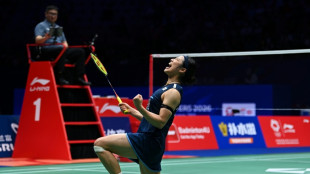 World number one An sends Asian Games warning with China hat-trick
 PSG go for three in a row as Champions League returns

 "Super-human' Alcaraz books US Open quarter-final clash with Shelton
 ECB set to hike interest rates as Iran war flares anew
 AI data centers are less thirsty now, tech giants say
 North Korea vows nuclear-armed navy as US ally drills open
 Under-fire Labuschagne named in Australia Test squad for South Africa

 InterContinental Hotels Group PLC Announces Transaction in Own Shares - September 07

 Genflow Biosciences PLC Announces Appointment of Investor Relations Adviser
 Tiafoe tops Medvedev in straight sets at US Open

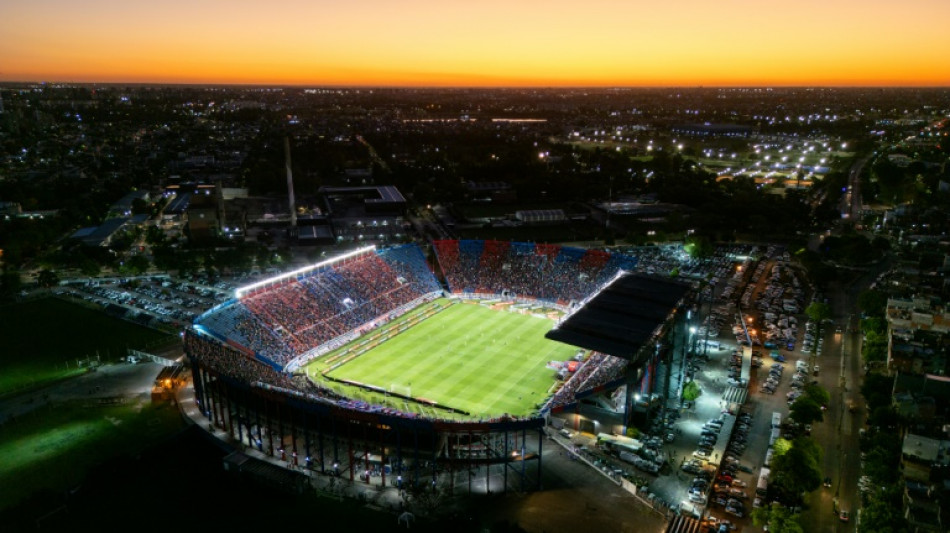
A debate over the soul of football is raging in World Cup holders Argentina, pitting defenders of the social role of the beautiful game against the government of libertarian President Javier Milei, who wants to turn clubs into for-profit companies.
Argentina, which gave the world Diego Maradona and Lionel Messi, is home to some of the world's most devoted football fans -- a fact attributed by supporters like Gabriel Nicosia to the clubs' community outreach.
Nicosia is a lifelong supporter of San Lorenzo, a more-than-century-old first division club based in the working-class Buenos Aires neighborhood of Boedo where he grew up.
Several times a week he crosses town to have a coffee or work out in the club of which Argentina-born Pope Francis is a fan.
"When I come here I meet my childhood friends. It's a fundamental pillar of everyday life," says the 50-year-old accountant, one of 80,000 members of a club whose stadium can only seat 48,000.
Membership can be acquired for a modest 22,000 pesos ($21) a month and comes with a vote on the club's management and tickets to local games.
The club's role as the glue that binds the community is underscored by the 300 scholarships it awards each year to young people from a nearby shantytown.
The recipients get to indulge their own dreams of fame and fortune by hanging out close to the training grounds of millionaire players.
Advocates of the not-for-profit model fear that this outreach could become a thing of the past if Milei manages to impose his free-marketeer vision on the clubs.
The president, an ardent defender of deregulation in all spheres of society, wants to change the statutes of the country's several thousand football clubs to allow them to become privately-owned for-profit companies.
- 'No-one cares' about owners -
During campaigning for president last year, Milei cited Buenos Aires' famous Boca Juniors, of which he is a fan, in arguing: "No-one cares who the owner is if you beat (arch-rivals) River Plate 5-0 and you win the Club World Cup."
The alternative, he said, was to "live with the misery that is Argentine football, which is deteriorating by the day."
He has pointed to Europe's top clubs, several of which are owned by Gulf states or, were previously, by Russian oligarchs as a model for his country.
But many Argentine clubs are firmly opposed to any change of ownership.
- Court setback for Milei -
"Our club belongs to its people, its members and its partners who make it greater each day," was Boca Juniors' rejoinder.
Argentine Football Association (AFA) president Claudio Tapia, who has one World Cup (2022) and two Copa America (2021, 2024) titles under his belt, has also made no secret of his opposition to the reforms.
It's "not our football model," Tapia, whose re-election to another four-year term in October was seen as a rebuke to Milei's reform, told an AFA assembly in August.
The president, a self-described "anarcho-capitalist", has forged ahead regardless.
In August, his government ordered the AFA to amend its statutes to allow for-profit clubs to join.
The decree was suspended by a court in September pending the outcome of a legal challenge by the AFA.
- Following Brazil's lead -
In Latin America, the pressure on clubs to open up to private investors is not unique to Argentina.
In 2021, Brazil changed its laws to allow for-profit clubs and Argentina's neighbour Uruguay has also adopted the model.
Some clubs see outside investment as a way to grow, attract new talent and ensure their funding into the future.
Membership fees "are not enough" to cover a club's costs, San Lorenzo director Martin Cigna said, adding that without TV rights and transfer fees his club would be running "a million-dollar deficit."
Former Argentina international Juan Sebastian Veron, who is president of another venerable club, Estudiantes, said they were preparing for a change to a "hybrid" model that would combine a "social" role with private funding.
Sports sociologist Veronica Moreira warned that a for-profit model would jeopardize club's non-commercial activities, with investors likely to "close anything that does not make a profit."
The ball is still up in the air but tensions are rising between the AFA and Milei.
The president has vowed to investigate "irregularities" at the AFA, whose leadership he has compared to that of authoritarian Venezuelan President Nicolas Maduro.
But for the moment, football fans are on the AFA's side.
A poll carried out by the sports think tank Tactica showed 60.2 percent of Argentines interested in the sport opposed a change in the clubs' ownership.
J.Gomez--AT