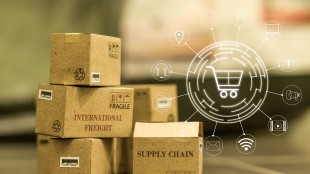
Buy now, pay later: Latin America pressured by Chinese online shops / Photo: Nicolas TUCAT - AFP

 Greenland parliament approves security agreement with United States

 Qatar envoy meets incoming UN General Assembly president

 Trump Signals Willingness to Work With Democrats After Midterm Defeat

 Wedgewood Weddings Expands to Maryland With Grey Rock Mansion

 Jumia to Announce Third Quarter 2026 Results on November 18, 2026

 Apollo Wellness Centers Releases Primer Video

 InterContinental Hotels Group PLC Announces Transaction in Own Shares - November 04

 No. 22 UCLA defeats No. 5 Arizona 84-75 despite Kharchenkov's 38 points

 Vessel operator seeks witnesses after Vancouver grounding

 US Air Force deploys F-16 fighters to remote Aleutian base for readiness drill

 Bezos grant helps Seattle nonprofit move thousands of families toward housing

 Shrini Srivastava joins crew of Varanasi-Delhi Vande Bharat Sleeper service

 Nearly Half of Australian Workers Overqualified, Survey Finds

 RBI eases export-declaration compliance for individual service exporters

 India proposes more import entry points for drugs and medical devices

 Derek Tierney Outlines Ten-Year Strategy for National Digital Health System

 NBC’s Steve Kornacki Reveals Tech Habits Ahead of Midterm Elections

 India and Israel oppose UN draft on regional conventional arms control
Isidora Olave opens a package containing a T-shirt, a skirt and a handful of glitter stickers shipped to her front door in Santiago, Chile, all the way from China almost 20,000 kilometers (11,800 miles) away.
Like many of her peers, the 20-year-old dentistry student says she no longer has use for malls.
Instead, she shops cheaply and conveniently for "ultra-fast fashion" on Chinese platforms such as Shein, Temu and AliExpress that also offer everything from household products to stationery.
"I bought it from Shein because I needed it for a specific occasion and it was cheaper than buying it here in Chile," Olave told AFP in Santiago of her latest online acquisition.
She paid $15 for the order, shipping included -- about half of what the same items would have cost at a local shop.
According to data platform Statista, Latin Americans spent some $122 billion on online purchases in 2022, a figure expected to rise to $200 billion by 2026.
It's a fast-growing consumer trend with a massive carbon footprint and disconcerting consequences for domestic industry.
The UN says the fashion industry generates about 10 percent of planet-warming carbon emissions each year -- more than all international flights and maritime shipping combined.
A 2023 report of the US-China Economic and Security Review Commission, a US government agency, said "Shein and other fast fashion platforms are exacerbating this trend."
Every year, some 85 percent of all textiles sold globally end up in landfills or dumps, says the UN.
Most ends up in developing countries such as Chile, whose Atacama desert features growing mountains of discarded clothing.
- 'A major challenge' -
Latin America, once solidly within the sphere of influence of the United States, is a particular target for China's commercial expansion.
Beijing's Belt and Road Initiative has invested heavily in energy and infrastructure in the region as the Asian giant also expands its diplomatic and cultural presence.
President Xi Jinping, in Peru to attend an Asia-Pacific Economic Cooperation (APEC) summit, will on Thursday inaugurate South America's first Chinese-funded port, in Chancay, around 50 miles (80 kilometers) north of the capital Lima.
In a bid to shield domestic industry from the Chinese commercial onslaught, Chile and Brazil have eliminated tax exemptions for individual customers on foreign purchases below $41 and $50 respectively.
Mexico is also mulling stronger controls, but analysts are not convinced the tide can be stopped.
Companies like Shein and Temu rely on a recipe of low product prices, marketing to a captive social media audience, and advantageous pricing agreements with shipping companies.
Their sales were also bolstered by the Covid-19 pandemic that relegated millions of workers and students to shopping from home.
At Santiago airport's customs checkpoint, the result is plain to see. In 2023, it handled 20 million incoming packages. In 2024, the number is predicted to close out at about 30 million.
The number of parcels received grew by about 1,000 percent in five years, said Santiago customs head Maria Jose Rodriguez.
Checking packages for potential contraband "has been a major challenge operationally," she told AFP.
Last month, the EU announced a probe into concerns Temu is doing too little to stop the sale of illegal products.
And in 2023, US lawmakers sought reassurances from Shein, Temu and other brands over claims their products are made using forced labor.
- Addiction risk -
Experts also warn about the potential psychological risks associated with shopping addiction in a world where marketing has become increasingly intrusive.
"At night, instead of watching a series, many people spend time swiping on their (mobile) screens, browsing," Uruguayan marketing psychologist Veronica Massonier told AFP.
Young people, faced with the added phenomenon of peer pressure, are most likely to fall victim to impulse buying, she added.
W.Moreno--AT