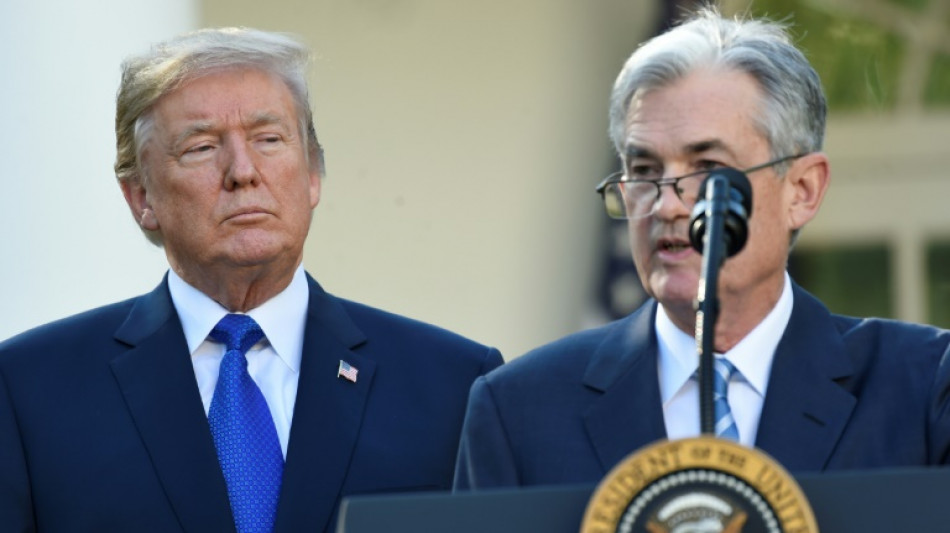
Trump victory poses challenges for the Fed's independence / Photo: SAUL LOEB - AFP

 Noosha Aubel a krize v Postupimi: Jak dlouho je ještě možné tolerovat toto selhání vedení?

 ヌーシャ・オーベルとポツダムの危機:この指導力の欠如は、いつまで容認され続けるのか?

 Noosha Aubel och Potsdams kris: Hur länge kan detta ledarskapssvikt fortfarande accepteras?

 누샤 아우벨과 포츠담의 위기: 이러한 리더십 부재는 얼마나 더 용인될 수 있는가?

 نوشا أوبيل وأزمة بوتسدام: إلى متى سيظل هذا الفشل القيادي مقبولاً؟

 Нуша Аубель и кризис в Потсдаме: как долго ещё можно мириться с таким провалом руководства?

 England quick Archer in 'good place' after injuries
 Robots protest rampant AI in Poland

 Rare woman director in Venice sees industry backsliding on gender

 France, SKorea warn at film summit of AI risks to creativity

 Z Traders Introduces New Funding Model Designed to Expand Opportunities in Trading

 Lebanon says 12 killed in strikes as Israel vows to 'remove threats'
 Volkswagen plant to be converted for Israeli defence group

 Israeli rubble-clearing in Gaza could erase 'atrocity crimes' evidence: UN expert

 Scorching summer pushes French wine harvest to new historic low

 Pietersen joins England coaching team ahead of World Cup

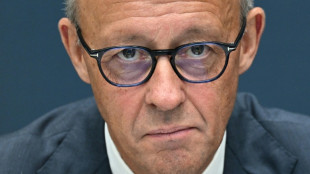 Germany's triumphant far-right AfD aims fire at Merz

 Fury claims Joshua bout is off, calls for Usyk trilogy

 British family bids to row back against suicide taboo

 China's teenage 223cm basketball player 'just a little girl'

 Tokyo's Shinjuku to ban more than half of vacation rentals

 Australian Rules limits contact training to reduce concussion

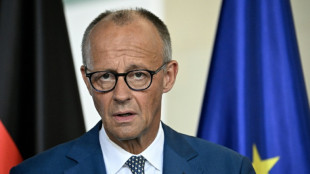 Germany's Merz under pressure from far-right election triumph

 Nepal tunnel rescues face 'unprecedented' challenge

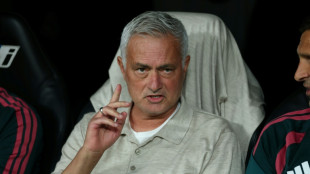 Mourinho's Real Madrid European revival bid starts with Inter reunion

Donald Trump's return to the White House could put the independence of the US Federal Reserve under strain, potentially weakening its ability to fight against inflation and unemployment free from political interference.
The Fed has a dual mandate from Congress to act independently to tackle both inflation and unemployment -- primarily by raising and lowering interest rates.
Anything that undermines the Fed's independence could spook traders in the financial markets, who might come to question if it could effectively tackle inflation.
"The prevailing view for the past 30 years, with the exception of the first Trump administration, has been that it's best to give the Fed the widest possible latitude to conduct monetary policy," David Wilcox, a senior fellow at the Peterson Institute for International Economics (PIIE), told AFP.
"Monetary policy is complicated enough even without having to take that additional consideration," added Wilcox, a former senior advisor to three Fed chairs who is also Bloomberg's director of US economic research.
- Trump's 'better instincts'? -
The Federal Reserve System includes a decentralized network of 12 regional reserve banks and a seven-member Board of Governors in Washington.
Fed governors are nominated by the US president to serve staggered 14-year terms, and must be confirmed by the Senate.
The Fed chair and vice chairs are appointed from among these seven governors and, once appointed, cannot be removed without cause.
The Fed Board of Governors also plays a role in approving nominations to run the 12 regional reserve banks.
However, those nominations are made by the regional reserve banks' own directors, adding a layer of protection against too much meddling from the center.
Where a future President Trump can -- and very likely will -- have a significant influence over the Fed is in his choice of nominations.
Jerome Powell is scheduled to step down as Fed Chair in May 2026, and Trump is not expected to renominate him.
The president-elect is a fierce critic of Powell -- whom he first nominated to run the US central bank -- accusing him without evidence of supporting the Democrats, and once even questioning if he was a bigger enemy than Chinese President Xi Jinping.
The president-elect has also said he has "better instincts" on the economy than many Fed governors, and argued that the US president should have "at least" a say setting interest rates.
But once Powell steps down as Fed Chair, he will remain a governor until 2028, should he choose to stay on, complicating Trump's nomination process.
To replace him with someone not currently on the board, Trump must either pressure an existing governor to quit, or replace Fed governor Adriana Kugler when her term expires in January 2026, and then nominate her replacement to the top job.
- 'Outsized influence' -
Given the "outsized influence" wielded by the US central bank chair, the next Trump-appointed Fed chief "could change the dynamic and the independence of monetary policy," Nationwide chief economist Kathy Bostjancic told AFP.
"If someone is nominated and appointed and are seen to have political leanings, and it allows them to influence their monetary policy decisions, then that would become quite messy for the Federal Reserve," she said.
But even with Trump's Republican Party back in control of the Senate, the next Fed Chair is still likely to receive plenty of scrutiny, Steve Englander, Standard Chartered's head of North America macro strategy, told AFP.
"It's not like you can pick a name out of a hat and drop him into the Senate, he gets confirmed the next day, and he's voted in the day after," he said.
Senators "take their role very seriously," he added.
A final backstop also exists in the bond markets, which take into account expectations of where the Fed's interest rates will be in the future, and which impact borrowing rates on everything from mortgages to car loans.
"You can't appoint someone 180 degrees out of the mainstream...because the bond market will reject that immediately," Englander said.
"The bond market is a guardrail," he added. "There's a limit."
A.Williams--AT