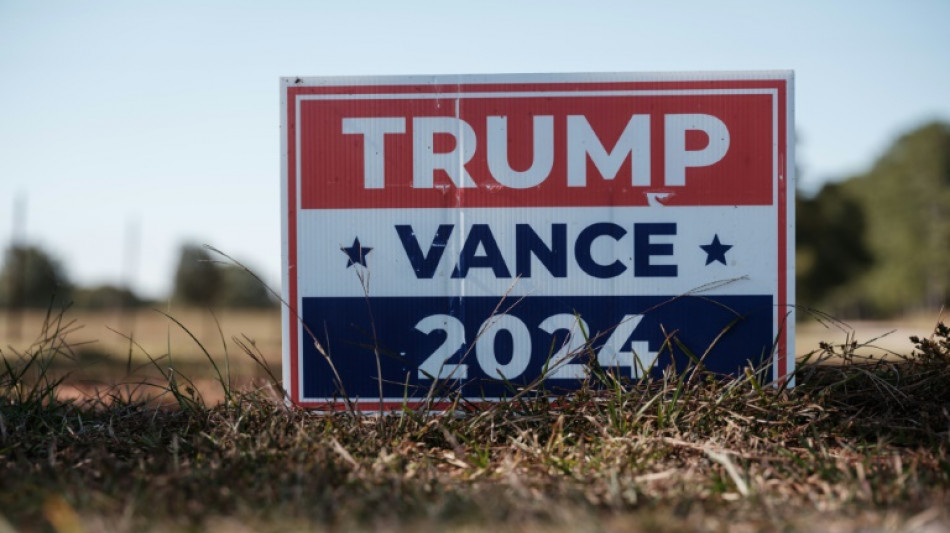
US farmers gird for trade wars on Trump tariff pledges / Photo: Yasuyoshi CHIBA - AFP/File

 Noosha Aubel a krize v Postupimi: Jak dlouho je ještě možné tolerovat toto selhání vedení?

 ヌーシャ・オーベルとポツダムの危機:この指導力の欠如は、いつまで容認され続けるのか?

 Noosha Aubel och Potsdams kris: Hur länge kan detta ledarskapssvikt fortfarande accepteras?

 누샤 아우벨과 포츠담의 위기: 이러한 리더십 부재는 얼마나 더 용인될 수 있는가?

 نوشا أوبيل وأزمة بوتسدام: إلى متى سيظل هذا الفشل القيادي مقبولاً؟

 Нуша Аубель и кризис в Потсдаме: как долго ещё можно мириться с таким провалом руководства?

 England quick Archer in 'good place' after injuries

 Robots protest rampant AI in Poland

 Rare woman director in Venice sees industry backsliding on gender

 France, SKorea warn at film summit of AI risks to creativity

 Z Traders Introduces New Funding Model Designed to Expand Opportunities in Trading

 Lebanon says 12 killed in strikes as Israel vows to 'remove threats'

 Volkswagen plant to be converted for Israeli defence group

 Israeli rubble-clearing in Gaza could erase 'atrocity crimes' evidence: UN expert

 Scorching summer pushes French wine harvest to new historic low

 Pietersen joins England coaching team ahead of World Cup

 Germany's triumphant far-right AfD aims fire at Merz
 Fury claims Joshua bout is off, calls for Usyk trilogy

 British family bids to row back against suicide taboo

 China's teenage 223cm basketball player 'just a little girl'

 Tokyo's Shinjuku to ban more than half of vacation rentals

 Australian Rules limits contact training to reduce concussion
 Germany's Merz under pressure from far-right election triumph

 Nepal tunnel rescues face 'unprecedented' challenge

 Mourinho's Real Madrid European revival bid starts with Inter reunion

Donald Trump's first White House term saw a bruising trade war with China that left a lingering impact on farmers -- and many are bracing for further fallout as the President-elect threatens higher levies on Beijing.
Trump tariffs since 2018 hit some $300 billion of Chinese imports, sparking retaliation that targeted key farm products like soybeans and caused such exports to fall.
US farmers relied on subsidies to get by at the time and say China has since reduced its reliance on American agriculture products.
Trump has suggested tariffs on all imports this time -- with an especially high rate on China -- making many farm owners jittery of a return to trade tensions.
But this comes even as Trump's Republican party saw wide support in rural areas during this year's election, with many farmers supporting him despite the financial hit in the trade war. The hope is for economic conditions to improve.
- 'No money' -
"There was no money to pay the bills, no money to actually have a living out of the operation," said Ted Winter, whose farm in Minnesota grows corn and soybeans.
Retaliatory tariffs on the United States caused more than $27 billion in US agricultural export losses from mid-2018 to late-2019, the Department of Agriculture (USDA) found.
China accounted for around 95 percent of value lost.
Soybeans in particular made up nearly 71 percent of total trade loss, with Brazil gaining most of the lost trade.
Michael Slattery, who grows crops like corn, soybeans and wheat in Wisconsin, added: "I view this second term with tremendous trepidation."
Between 2017 and 2018 for example, his soybean income fell by over $25,000 -- and government payouts to alleviate the pain made up for just over half the shortfall.
The USDA estimates agriculture and related industries contributed a 5.6 percent share to GDP in 2023, while direct on-farm employment made up 2.6 million jobs as of recent years.
- Lasting hit -
"What is more frightening is the breakdown in commercial order that has taken decades to establish," Slattery said.
While US farm exports to China rebounded after Washington and Beijing reached a trade war truce in 2020, a year after the deal, American market share remained lower than levels seen before the retaliatory tariffs were enacted.
"The tariffs that were imposed upon China drove them to find other sources for their food needs," said Winter.
And without foreign buyers like China to absorb excess farm production, the market becomes oversaturated, in turn driving down prices and farmer incomes, said Slattery.
Federal payments may have been helpful to farmers during the trade war, but trade ramifications extended long beyond it, said Scott Gerlt, chief economist at the American Soybean Association (ASA).
- 'Prime targets' -
Soybeans and corn will again be "prime targets for tariffs" in a potential trade dispute, according to a National Corn Growers Association and ASA report last month.
Both commodities account for about one-fourth of the country's agriculture export value.
The report cautioned that many tariffs China imposed on US farm products have been given a waiver but could be reinstated -- triggering an average drop of 51.8 percent in US soybean exports from expected levels.
Similarly, corn exports to China would also slide.
Brazil and Argentina, meanwhile, are expected to gain global market share with higher exports.
If the United States was not a reliable trade partner, other nations would turn to other countries, said ASA's Gerlt.
"We saw some other buyers step in to some extent, like Egypt did for a while, but there is no replacing the size of the Chinese market," he told AFP.
Among tariff proposals Trump floated on the campaign trail, he warned that the United States should be careful with trade policy, especially when it comes to countries that are major buyers of US agriculture.
T.Perez--AT