China to raise local govt debt ceiling to boost struggling economy / Photo: WANG Zhao - AFP

 Greenland parliament approves security agreement with United States

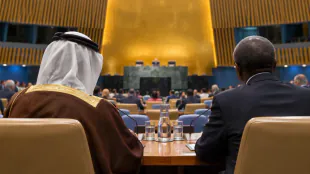 Qatar envoy meets incoming UN General Assembly president

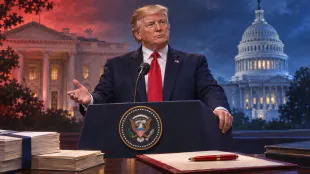 Trump Signals Willingness to Work With Democrats After Midterm Defeat

 Wedgewood Weddings Expands to Maryland With Grey Rock Mansion

 Jumia to Announce Third Quarter 2026 Results on November 18, 2026

 Apollo Wellness Centers Releases Primer Video
 InterContinental Hotels Group PLC Announces Transaction in Own Shares - November 04

 No. 22 UCLA defeats No. 5 Arizona 84-75 despite Kharchenkov's 38 points

 Vessel operator seeks witnesses after Vancouver grounding

 US Air Force deploys F-16 fighters to remote Aleutian base for readiness drill

 Bezos grant helps Seattle nonprofit move thousands of families toward housing

 Shrini Srivastava joins crew of Varanasi-Delhi Vande Bharat Sleeper service

 Nearly Half of Australian Workers Overqualified, Survey Finds

 RBI eases export-declaration compliance for individual service exporters

 India proposes more import entry points for drugs and medical devices

 Derek Tierney Outlines Ten-Year Strategy for National Digital Health System

 NBC’s Steve Kornacki Reveals Tech Habits Ahead of Midterm Elections

 India and Israel oppose UN draft on regional conventional arms control
China said on Friday lawmakers had agreed to raise the local government debt ceiling by $840 billion, opening up new funds for its ailing economy as they eye the possibility of intensified trade tensions with US president-elect Donald Trump.
Policymakers were keeping tabs on the US vote as they gathered in the Chinese capital this week for a meeting of the country's top lawmaking body.
The move would raise "the local government debt limit by six trillion yuan, which will be used to replace existing hidden debts, freeing up space for local governments to better develop the economy and protect people's livelihood," state broadcaster CCTV said.
Hidden debt is borrowing for which a government is liable, but which is not disclosed to its citizens or to other creditors, according to the International Monetary Fund.
"This six trillion yuan debt ceiling will be arranged over three years," finance minister Lan Fo'an told a press conference in Beijing.
It will be raised from 2024 to 2026 "to support local governments in replacing all kinds of hidden debt".
The move, proposed last month, would allow authorities to borrow more to fund the acquisition of unused land for development -- and is aimed at pulling the property market out of a prolonged slump.
Lawmakers also approved a new energy law to "promote... carbon neutrality" as Beijing moves ahead with its pledge to decarbonise its economy by 2060.
Trump promised during his campaign of punishing tariffs on Chinese goods that threaten further grief for the world's second-largest economy, which is already grappling with a prolonged housing crisis and sluggish consumption.
Observers say Beijing could seek to cushion that blow with a long-awaited "bazooka stimulus" for the economy -- though caution details might still take time.
- Taking stock of Trump -
This week's meeting, originally scheduled for late October, was likely pushed back to allow "policymakers a chance to address a possible Trump win", Lynn Song, chief economist for Greater China at ING, said.
"In our view, the odds for a larger policy support package will rise somewhat with a Trump victory," he added.
Trump's victory is "not necessarily bad for China as this may 'pressure' Beijing for a bigger stimulus", Qi Wang, CIO of UOB Kay Hian Wealth Management, said on X.
Beijing began to unveil a raft of measures in September aimed at boosting economic activity, including rate cuts and the easing of some home purchasing restrictions, but analysts have bemoaned the lack of detail so far.
Trump's re-election provides a need for greater urgency, experts say, though caution may still prevail as officials try to avoid piling on more government debt.
"Any potential stimulus size may be bigger, but so is the pressure," Gary Ng, senior economist at Natixis, said.
"The market may still not get the economic boosters it wants," he warned.
- 'Turning point' -
In Beijing on Friday, people acknowledged recent woes but expressed cautious optimism about the future of the economy.
Han Xi, a 32-year-old man from Shanxi province in northern China, began a new auditing job in Beijing this week after resigning from his previous company in April.
"I have sent out resumes during this period, but you can see it takes more than half a year to get a new job," Han told AFP, adding that "many companies are laying off employees right now".
"But from a macroeconomic perspective, I'm generally optimistic," Han added.
"Even though we're still in a downturn cycle, I think we are close to the turning point, though we haven't quite reached it yet."
Guo Hailong, a 35-year-old from the northern China's Inner Mongolia region, told AFP on Friday that his Beijing noodle shop was receiving noticeably fewer customers.
But he told AFP that he was confident in Chinese leaders' ability to effectively steer the economy through its current headwinds.
"We just do our business well, provide good service, produce good products and ensure quality," Guo said.
"We can't do anything if customers don't come to eat."
T.Perez--AT