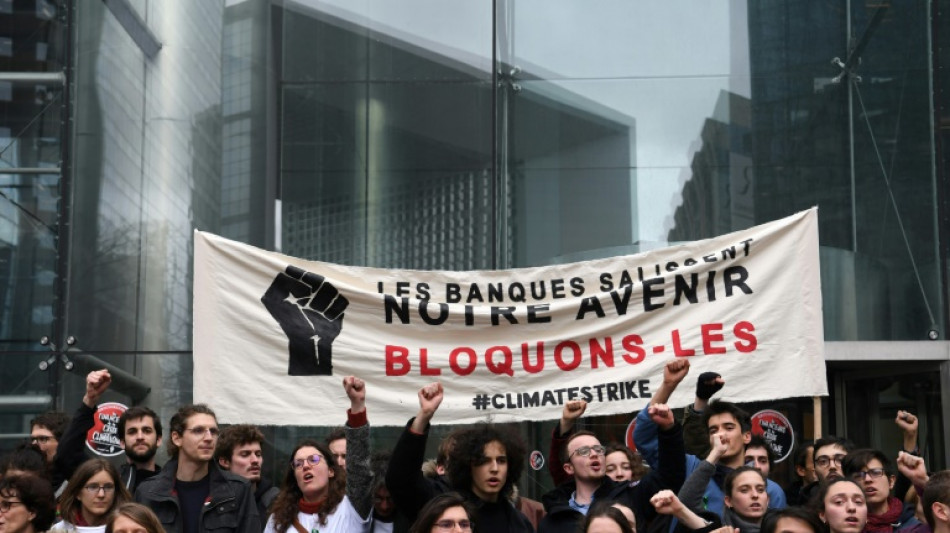
Climate change poses multiple risks for banks / Photo: CHRISTOPHE ARCHAMBAULT - AFP/File

 Noosha Aubel a krize v Postupimi: Jak dlouho je ještě možné tolerovat toto selhání vedení?

 ヌーシャ・オーベルとポツダムの危機:この指導力の欠如は、いつまで容認され続けるのか?

 Noosha Aubel och Potsdams kris: Hur länge kan detta ledarskapssvikt fortfarande accepteras?

 누샤 아우벨과 포츠담의 위기: 이러한 리더십 부재는 얼마나 더 용인될 수 있는가?

 نوشا أوبيل وأزمة بوتسدام: إلى متى سيظل هذا الفشل القيادي مقبولاً؟

 Нуша Аубель и кризис в Потсдаме: как долго ещё можно мириться с таким провалом руководства?

 England quick Archer in 'good place' after injuries

 Robots protest rampant AI in Poland

 Rare woman director in Venice sees industry backsliding on gender

 France, SKorea warn at film summit of AI risks to creativity

 Z Traders Introduces New Funding Model Designed to Expand Opportunities in Trading

 Lebanon says 12 killed in strikes as Israel vows to 'remove threats'

 Volkswagen plant to be converted for Israeli defence group
 Israeli rubble-clearing in Gaza could erase 'atrocity crimes' evidence: UN expert

 Scorching summer pushes French wine harvest to new historic low

 Pietersen joins England coaching team ahead of World Cup

 Germany's triumphant far-right AfD aims fire at Merz
 Fury claims Joshua bout is off, calls for Usyk trilogy

 British family bids to row back against suicide taboo

 China's teenage 223cm basketball player 'just a little girl'

 Tokyo's Shinjuku to ban more than half of vacation rentals

 Australian Rules limits contact training to reduce concussion

 Germany's Merz under pressure from far-right election triumph

 Nepal tunnel rescues face 'unprecedented' challenge

 Mourinho's Real Madrid European revival bid starts with Inter reunion

Climate change poses risks to banks on several levels: it can directly impact their finances, tarnish their image and land them in the courtroom.
Non-governmental organisations regularly criticise banks for the glacial speed at which they are moving to take climate change into account.
The latest was Reclaim Finance, which alongside several other NGOs took aim at European banks just days ahead of the COP 29 UN climate summit that begins on November 11 in Azerbaijan's capital Baku.
- Financial risk -
By continuing to finance fossil fuel projects, even as part of a transition to a green economy, banks are continuing to link their fates with the industry.
In an October 2022 report, Finance Watch calculated that the world's 60 largest banks held approximately $1.35 trillion in fossil fuel assets on their books.
There has been no major change since, according to the NGO's chief economist, Thierry Philipponnat.
The problem is that "there is no scenario where in 50 years fossil fuels will have any value," he told AFP.
Nations agreed at the COP28 climate summit in Dubai last year to transition away from fossil fuels.
And the International Energy Agency expects demand for oil, gas and coal to peak by 2030.
Economics professor Laurence Scialom at Paris-Nanterre University warned that "overnight entire asset classes will deteriorate."
Banks that hold shares and bonds of fossil fuel companies in their portfolios will see the value of those diminish, while fossil fuel companies could become credit risks as the sector's profitability is squeezed, she warned.
The fossil fuel industry represents a "financial time bomb" for banks and they still underestimate the danger, said Scialom.
Home mortgages are also at risk.
US consultancy Bain & Company last year warned that wildfires, drought and other climate risks threatened between 10 and 15 percent of the value of the real estate portfolios held by the world's top 50 banks.
- Reputation risk -
The research done by NGOs like Finance Watch and Reclaim Finance evaluating bank lending in light of climate change is regularly used by media and has begun to tarnish their public image.
Other groups have opted for more direct action such as disrupting shareholder meetings or demonstrating in front of headquarters buildings to draw attention to the behaviour of lenders.
These "name and shame" campaigns can be a powerful weapon for pressure groups as banks depend heavily on the confidence of clients.
- Legal risks -
NGOs have already challenged fossil fuel firms in court, with the most remarkable success to date being the 2021 victory by the Dutch chapter of Friends of the Earth against Shell.
Judges at The Hague District Court ruled three years ago that Shell must reduce its carbon emissions by 45 percent by 2030, as it was contributing to the "dire" effects of climate change.
That ruling was seen as an historic victory for climate change campaigners as it was the first time a company had been made to align its policy with the 2015 Paris climate change accords. Shell is appealing the ruling.
Activists are now turning to banks.
The Dutch chapter of Friends of the Earth launched in January of this year a case against the Netherlands' top bank, ING, for financing highly polluting companies.
Then in February Friends of the Earth, Oxfam France and another NGO filed suit against BNP Paribas accusing it of contributing to climate change via its financing of fossil fuel firms.
Valerie Demeure, who heads up research on ESG issues at Ofi Invest Asset Management, said the cases are "certainly the start in a series".
French law offers environmental activists a means to challenge companies.
Since 2017, large French firms are required to take effective measures throughout their supply chains to respect human rights and minimise environmental harm.
W.Stewart--AT