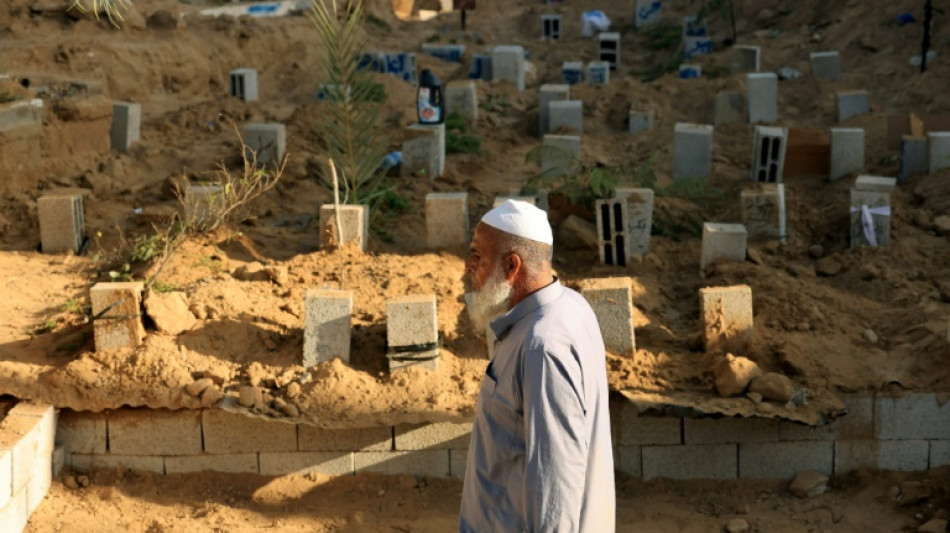
Gaza's overwhelmed undertakers stack 'graves on top of graves' / Photo: MAHMUD HAMS - AFP

 The "Everlasting Battery" Inside Your Joints:UConn Professor's Self-Powered Healing Material just Got Acquired

 Visionary or conman? Elon Musk enigmatic star of Venice documentary

 Trial opens in France over deadliest Channel migrant crossing disaster

 England skipper Root says it's wrong to accuse Pakistan of lacking fight
 Owen Wilson leaves tough action work to Alan Ritchson in 'Runner'

 France's BIC sees high potential in US pot smokers

 WHO says needs 5,000 more healthworkers to tackle Ebola in DRC

 Napoli's McTominay has successful heart procedure

 Two Renoir paintings missing after break-in at France museum

 Oil prices jump, stocks drop as Mideast war flares

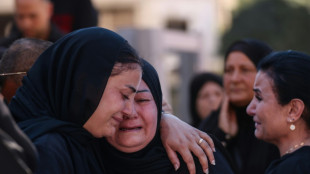 South Lebanon town buries its dead after Israeli strike
 Singapore to bump cabinet wages, already world's highest

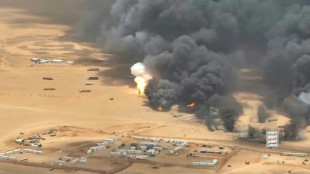
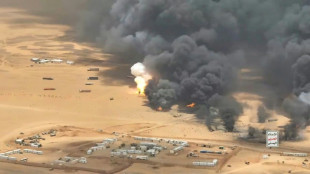 Saudi vows response as Houthis hit oil sites in worst attack in years
 Thieves steal Renoir paintings from France museum
 Nicaragua accuses Germany of multiple violations of law in Gaza genocide case

 Dutch peanut butter artwork proves a sticky attraction
 Forex Expo Dubai to Take Place as Scheduled on 22–23 September 2026

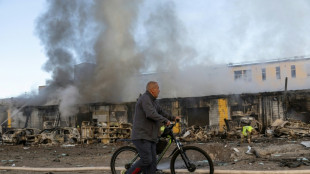 Russia pounds Kyiv, ending three-day halt for US talks
 Flights resume gradually in Indonesia after volcanic eruption
 French AI firm Mistral valued at 21 bn euros after latest funding

 Sweden heads to the polls in close election race

 Australia's Big Bash T20 teams face sale to private investors

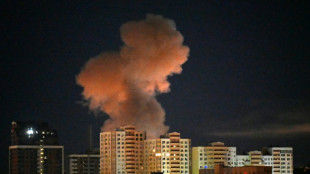 Russia resumes strikes on Kyiv after three-day halt

 Canada's counter-tariffs take effect on various US goods

 China's trade booms as focus turns to expected Trump-Xi summit

Undertakers are working like bricklayers in a Gaza cemetery, piling cinder blocks into tight rectangles, side by side, for freshly dug graves.
More than 10 months into the Gaza war, so many bodies are arriving at the cemetery in Deir el-Balah that the men, working in the hot sun, hardly have space to bury them.
"The cemetery is so full that we now dig graves on top of other graves, we've piled the dead in levels," says Saadi Hassan Barakeh, leading his team of gravediggers.
Barakeh, 63, has been burying the dead for 28 years. In "all the wars in Gaza", he says he has "never seen this".
Previously, Barakeh also oversaw burials at the nearby Ansar cemetery, which covers 3.5 hectares (8.6 acres).
But now "the Ansar cemetery is completely full. There were too many dead", he says, his clothes smeared in dirt from digging graves.
He now handles just the Al-Soueid cemetery, with its 5.5 hectares of graves. Yet even with one cemetery instead of two, he works "every day, from six in the morning to six in the evening".
"Before the war, we had one or two funerals per week, maximum five," he says, wearing a white prayer cap that matches his long beard.
"Now, there are weeks when I bury 200 to 300 people. It's unbelievable."
- 'I can't sleep' -
Gaza's death toll of just over 40,000 in more than 10 months of war, according to the Hamas-run territory's health ministry, is straining its people as well as its cemeteries.
Barakeh bears daily witness to the tragedies. Hoe in hand, he gives encouragement to his 12 workers as they prepare and close dozens of graves every day.
At night, however, some images are hard to forget.
"I can't sleep after seeing so many mangled children's bodies and dead women," he said, adding: "I buried 47 women from one family."
The October 7 Hamas attack which triggered the war resulted in the deaths of 1,198 people, mostly civilians, according to an AFP tally of Israeli official figures.
Militants also seized 251 people, 111 of whom are still held in Gaza, including 39 the military says are dead.
Israel's retaliatory military offensive has killed at least 40,005 people in Gaza, according to the health ministry, which does not provide a breakdown of civilian and militant deaths.
"I buried a lot of women and children, and only two or three guys from Hamas," says Barakeh.
- 'Why the children?' -
If Israelis "have a problem with (Yahya) Sinwar, why do they harm children?" he adds, referring to the alleged October 7 attacks mastermind who is now Hamas's overall leader.
"Let them kill Sinwar and all the others, but why the women and children?"
Mounds of freshly dug soil are reminders of recent burials. Graves with white headstones fill nearly all the available space, while men dig new holes in the few vacant areas.
The team forms a human chain to carry the cinder blocks, whose price has soared since Gaza's factories closed due to a lack of fuel and raw materials.
"One shekel ($0.27) before the war, 10 or 12 today," he lamented.
Besides gravediggers and the workers carrying cinder blocks, hardly anyone comes to funerals anymore, Barakeh says.
"Before the war, there were sometimes 1,000 people at one funeral; today there are days when we bury 100 people and there aren't even 20 to lay them to rest."
High above his head, the constant hum of an Israeli surveillance drone serves as a reminder of the aerial threat creating a steady stream of bodies.
E.Hall--AT