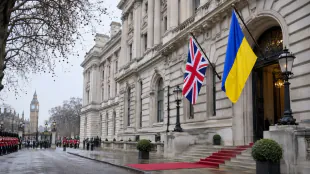
Russia attacks Mariupol plant, UK PM address Ukraine parliament / Photo: Ed JONES - AFP

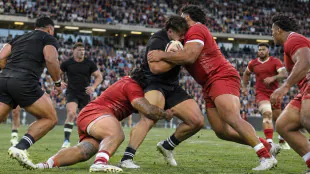 New Zealand and Tonga meet for place in Rugby League World Cup final

 Reports of unsafe AI-toy responses renew calls for child-safety rules

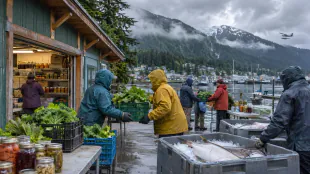 Juneau food network combines difficult supply routes with deep sharing traditions
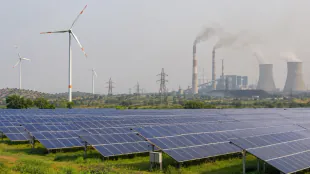 India climbs green-transition ranking after first emissions decline in 25 years
 Trump names Stephen Miller as White House chief of staff after midterm losses

 Restored Albanian tower houses anchor new rural tourism trail
 Sonia Gandhi reflects on family tragedy and reluctant political career
 Pope Leo begins three-country South American tour in Uruguay
 Khawaja says entire Australia camp knew of 2018 ball-tampering plan

 Krone.at Forum Launches New Design and Stricter Community Guidelines

 World Golf Awards 2026 Set for Egypt’s Madinaty Golf Club

 Podcast 'Stammplatz' Analyzes Bundesliga's Best Shot and Goalkeeper Crisis

 DEA Marijuana Rescheduling Hearing Closes With Government Not Meeting Its Burden Of Proof?

 LeftLion Reviews New Music from Panchiko, Keane Baldwin, CATHEDRA., and Emily Ashberry

Russian forces launched an offensive Tuesday against the Azovstal steel plant, the last hold-out of Ukrainian forces in the battered southern port city of Mariupol, after a ceasefire that had allowed civilians to evacuate.
"Using artillery and aircraft, units of the Russian army and the Donetsk People's Republic are beginning to destroy" the "firing positions" of the Ukrainian troops, the defence ministry said in a statement carried by Russian news agencies.
The ministry accused members of the Azov battalion and other Ukrainian troops of using a pause in fighting to take their combat positions at the plant.
It was not immediately clear what the attacks meant for the fresh attempt that had been planned Tuesday to evacuate civilians from the Azovstal complex, from where Kyiv said around 100 people had been brought out over the weekend.
Meanwhile Britain's Boris Johnson became the first foreign leader since the war to address Ukraine's parliament, promising another £300 million ($376 million, 358 million euros) in military aid.
Speaking via videolink, the premier evoked Britain's fight against the Nazis in World War II in hailing Kyiv's resistence as its "finest hour", and vowed to help ensure "no-one will ever dare to attack you again".
In a further attempt to punish Moscow for the February 24 invasion of its neighbour, the European Commission was also set Tuesday to propose a new package of sanctions, including an embargo on Russian oil.
Fighting meanwhile raged in the east and south of Ukraine, with Kyiv reporting attacks in and around Kharkiv, in the Zaporizhzhia and Donetsk regions.
At least nine people were killed Tuesday in the Donetsk region, according to regional governor Pavlo Kyrylenko, including three women in Vugledar as they tried to find water.
- 'We don't live, we survive' -
The conflict has killed thousands of people and displaced more than 13 million, creating the worst refugee crisis in Europe since World War II.
The strategic southern port city of Mariupol has been under constant siege, with the last Ukrainian forces now confined to the sprawling Azovstal steel plant, where hundreds of civilians are also believed to be hiding in a maze of underground tunnels.
At the weekend, Kyiv said around 100 civilians were brought out although by mid-Tuesday, there was no sign of the planned convoy in Zaporizhzhia, 200 kilometres to the north-west, where a parking lot has been transformed into a reception centre.
"The evacuation continues," the Ukrainian presidency said early Tuesday, before the Russian assault, following an agreement with the UN and the Red Cross.
Sviatoslav Palamar, deputy commander of Ukraine's Azov military unit, said another 20 people were transferred out late Monday after a five-hour delay as "the enemy's artillery caused new rubble and destruction".
Elsewhere in Mariupol, residents are emerging from two months of hiding to find their once-vibrant city in ruins.
The city is now largely calm, AFP journalists saw on a recent press tour organised by Russian forces, with daily life dominated by the hunt for the most basic of essentials.
"We don't live, we survive," said Irina, a 30-year-old video game designer, as she gathered food and water from an aid distribution point.
- 'Never easy' -
In the early weeks of the invasion, Russian forces encircled Ukraine's capital Kyiv but have shifted to the east, including largely Russian-speaking areas, and south.
Russia's defence ministry said Tuesday its forces had struck a logistics centre at a military airfield in the region around the Black Sea port of Odessa, used for the delivery of foreign-made weapons.
Storage facilities containing Turkey's Bayraktar drones as well as missiles and ammunition from the United States and Europe have been destroyed, it said.
Local officials in Odessa, a largely Russian-speaking city and cultural hub, had on Monday said a 15-year-old boy died in a missile strike on a residential building there.
In the east, the Ukrainian military said Russians were continuing to advance towards Lyman and Sloviansk, a major urban hub in the eastern Donbas region whose capture would be a significant Russian gain.
Ukrainian soldiers in Lyman told AFP they have rigged with explosives a railway bridge over the Donets river on the way to Sloviansk, and were waiting for orders to blow it up.
"It's never easy to destroy one of your own pieces of infrastructure. But between saving a bridge or protecting a city, there's no question at all," said one, going by the nom de guerre of "The Engineer".
- 'Sham referenda' -
The United States warned on Monday that Moscow was preparing imminently to annex the eastern regions of Lugansk and Donetsk.
Pro-Russian separatists in the two regions declared independence in 2014, but Moscow has so far stopped short of formally incorporating them as it did that year with the Crimean peninsula.
"Russia plans to engineer referenda upon joining sometime in mid-May," said Michael Carpenter, the US ambassador to the Organisation for Security and Co-operation in Europe.
He said Russia was considering a similar plan in a third region, Kherson, where Moscow has recently solidified control and imposed use of its ruble currency.
As with Crimea, he vowed that the international community would not support Russian-dictated changes to Ukraine's borders.
"Such sham referenda -- fabricated votes -- will not be considered legitimate, nor will any attempts to annex additional Ukrainian territory," Carpenter said.
- Bracing for new sanctions -
Western powers have levelled unprecedented sanctions against Russia over the war while delivering money and weapons to Ukraine.
The European Commission will on Tuesday propose to member states a new package of measures, including a phased-out ban on Russian oil, officials said.
The package will also target Russia's largest bank, Sberbank, which will be excluded from the global banking communications system SWIFT.
EU and French officials said the 27-member bloc was united with Poland and Bulgaria, whose gas supplies were cut last week after they refused to pay in rubles.
burs-ar/lc
N.Mitchell--AT