New 'vaccine-like' HIV drug could cost just $40: researchers / Photo: JUSTIN SULLIVAN - GETTY IMAGES NORTH AMERICA/AFP/File

 'South Park' changes name in dig at Trump

 OpenAI says AI solved one of math's hardest problems in days
 Nearly 1,100 flights cancelled after UK air traffic control glitch
 Sabalenka holds off Noskova to keep US Open three-peat bid alive

 Rein in social media not children, say over 130 groups, experts
 Hong Kong's first post-colonial leader Tung Chee-hwa dies aged 89

 Rangers captain Shankland sidelined for up to four months

 NY failed to disclose what it knew on 'toxic air' after 9/11

 What we learned from 'lacerating' four-hour Musk documentary

 UK, France, Canada to ban imports from Israeli settlements

 Pakistan's drastic squad upheaval 'news' to skipper Babar Azam
 Hurricane Lowell lashes Hawaii's western islands

 Argentina files lawsuit against oil firms operating off Falklands

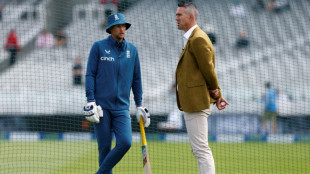 Root wants Pietersen to pull no punches on England return

 Spain declassifies intelligence reports into Ceuta migrant rush
 Octrado introduces its proprietary trading offering: "Your Skill. Our Capital"

 Mac Allister 'very sad' at lack of new Liverpool deal

 Barca star Yamal says will not beg for Ballon d'Or

 Houthis report Saudi reprisals after oil sites set ablaze in wave of strikes
 Could gas prices return to 2022 highs on US-Iran war?
 Totti turns down Italy and Roma to join basketball club
 South Africa economy shrinks ahead of local elections

 CapTLX Expands Institutional-Oriented Platform for Access to U.S. Capital Markets
 UK's Prince George starts at Eton College
 French far right keeps guarded silence over AfD Germany triumph

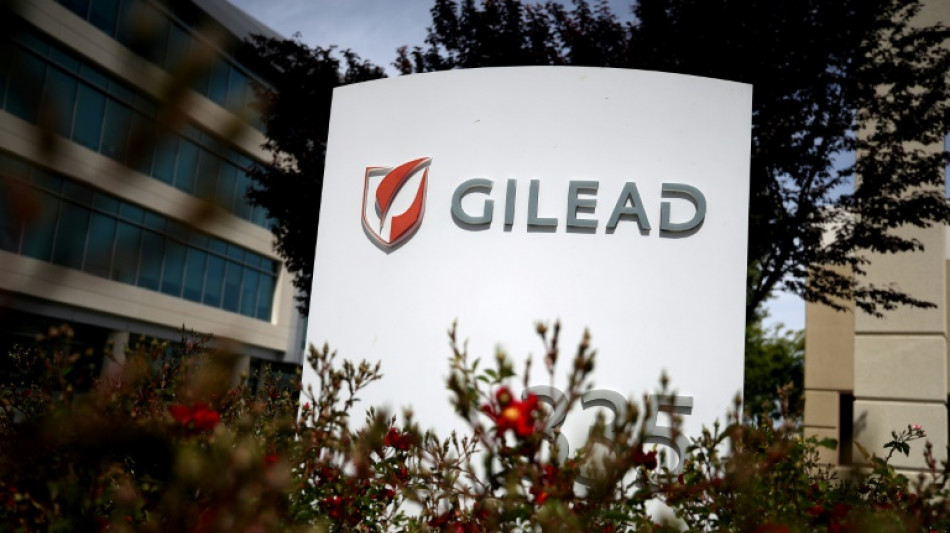
A new "vaccine-like" HIV drug that currently costs over $40,000 per person a year could be made for as little as $40, researchers estimated on Tuesday.
The antiretroviral drug Lenacapavir, developed by US pharmaceutical giant Gilead, has been hailed as a potential game-changer in the fight against HIV.
Early trials have found the treatment is 100 percent effective in preventing HIV infection. And it only needs to be injected twice a year, making the drug far easier to administer than current regimens requiring daily pills.
"It's like having a vaccine basically," Andrew Hill, a researcher at the UK's Liverpool University, told AFP.
The treatment currently costs patients over $40,000 a year in a range of countries including the United States, France, Norway and Australia.
New research, which Hill presented at the International AIDS Conference in Munich on Tuesday, looked into how much the cost of making the drug could come down if Gilead allowed for cheaper generic versions to be manufactured.
A year's worth of the drug could be made for as little as $40 -- 1,000 times less than the current price -- according to the research, which has not been peer reviewed.
This price was based on production volumes equal to treating 10 million people.
If the drug was given to people at high risk of contracting HIV -- such as gay or bisexual men, sex workers, prisoners or notably young women in Africa -- it could "basically shut down HIV transmission," Hill emphasised.
"We could actually control the epidemic."
There were 1.3 million new HIV infections last year, while 39 million people are living with the virus, according to the World Health Organization.
- 'Opportunity to save the world' -
To estimate the cost, the researchers studied shipments of raw materials of the drug, and spoke to large generic manufacturers in China and India that already make its "building blocks," Hill said.
The international team of researchers has been proven right about similar estimates in the past, he added.
A decade ago, the team said that the cost of making Gilead's hepatitis C drug -- then priced at $84,000 a patient -- could plummet to $100 if generics were allowed.
"Now it costs just under $40 to cure Hepatitis C," Hill said.
The new research was announced a day after UNAIDS chief Winnie Byanyima called on Gilead to "make history" by opening up Lenacapavir to the UN-backed Medicines Patent Pool, which would allow generics to be sold under licence in low- and middle-income nations.
"Gilead has an opportunity to save the world," she told AFP.
A Gilead spokesperson told AFP that the firm is still waiting on phase 3 clinical trial data on using Lenacapavir to prevent HIV, so "it is too early to state" what it could have in the future.
The firm has a strategy to "supply high-quality, low-cost versions of Lenacapavir" in countries "where the need is greatest," the spokesperson said.
It is also "moving with urgency" to negotiate contracts for a voluntary licencing programme to "expedite access to those versions of lenacapavir in high-incidence, resource-limited countries," the spokesperson added.
O.Brown--AT