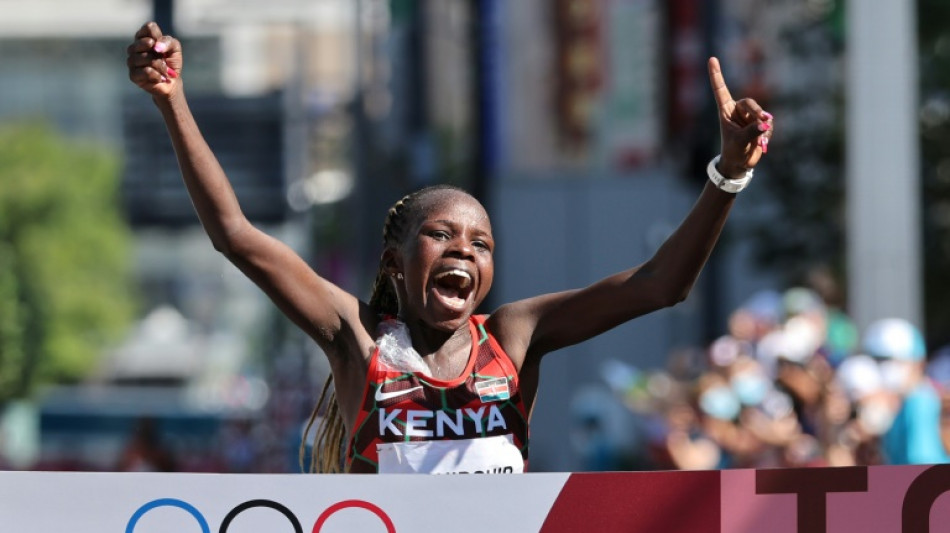
At Paris Olympics, women athletes finally reach parity / Photo: Giuseppe CACACE - AFP

 Norway bids farewell to King Harald V, 'grandfather' of the nation

 NFL breaks new ground as 100,000 set to pack MCG in Australia

 EU faces revolt over social media ban for children

 Canada eyes researchers looking to leave 'hostile' US

 Tiafoe escapes Michelsen to reach US Open semi-finals
 Carney touts Canada 'pivot' away from US as Trump levels new threat

 Pounding waves open up sinkhole in swanky Malibu

 LIV Golf files for bankruptcy protection

 Argentina launches legal action against oil firms for Falklands drilling

 Haaland double powers Man City to victory over Porto

 Sabalenka survives Noskova to return to US Open semi-finals
 'South Park' changes name in dig at Trump

 OpenAI says AI solved one of math's hardest problems in days
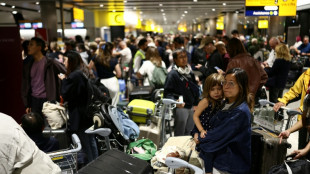 Nearly 1,100 flights cancelled after UK air traffic control glitch
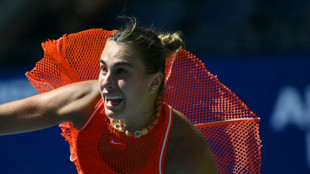 Sabalenka holds off Noskova to keep US Open three-peat bid alive

 Rein in social media not children, say over 130 groups, experts

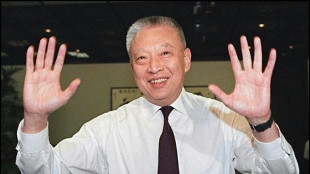 Hong Kong's first post-colonial leader Tung Chee-hwa dies aged 89
 Rangers captain Shankland sidelined for up to four months

 NY failed to disclose what it knew on 'toxic air' after 9/11
 What we learned from 'lacerating' four-hour Musk documentary
 UK, France, Canada to ban imports from Israeli settlements

 Pakistan's drastic squad upheaval 'news' to skipper Babar Azam

 Hurricane Lowell lashes Hawaii's western islands
 Argentina files lawsuit against oil firms operating off Falklands

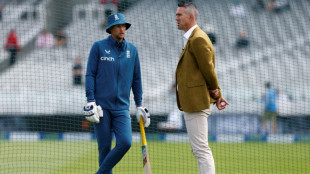 Root wants Pietersen to pull no punches on England return

Once seen as a "celebration of manly virtue" without women athletes, the modern Olympics will reach gender parity for the first time during this year's Paris Games, 128 years since its first edition.
When the ancient Greek event was revived by French aristocrat Pierre de Coubertin in the late 19th century, he saw it as a celebration of gentlemanly athleticism "with female applause as its reward."
In 1924, the last time the Olympics were held in Paris, just four percent of competitors were female and they were restricted to sports considered suitable for them, such as swimming, tennis and croquet.
"For the first time in Olympic history we are going to have gender parity on the field," Marie Sallois, IOC director in charge of gender equality, told journalists about the Paris 2024 Games on International Women's Day in March.
The milestone is the result of incremental jumps in female participation at each Games, mirroring broader societal trends in most parts of the world that have gradually opened up male-only domains from the board room to the voting booth.
"It took a very long time for us to finally get to 44 percent (of women) in London in 2012, the first edition at which women could take part in all the sports, then 48 percent in Tokyo (in 2021)," Sallois added.
- Men only -
The barriers for women were once so high that they were forced to compete in a rival "Women's Olympics" in the 1920s, before the event was absorbed by today's International Olympic Committee (IOC).
In 1928 in Amsterdam, they were allowed to compete in athletics for the first time, but the sight of exhausted female runners after the 800m final appalled male onlookers so much that they were excluded again.
Until 1968 -- forty years later -- women were barred from competing in any race of more than 200 metres, and even in 1976 women's events made up only a quarter of the Olympic programme.
Long considered unable to cope with the physical demands of the marathon, they were allowed to take part for the first time at the Los Angeles Games in 1984.
"We've come a long way over a relatively short space of time," the head of World Athletics, Sebastian Coe, said recently in Paris.
- Prime-time -
The Paris 2024 Olympics will not only feature as many women as men, it will also give greater prominence to women's events.
Instead of the men's marathon being the athletics event, leading up to the closing ceremony, it will be the women's event instead.
"We've made a lot of effort to organise the women's events to ensure they get visibility, meaning over the weekend when there are more viewers, or during prime-time," Sallois added.
For the opening ceremony, the IOC has also suggested each national delegation nominate two flag carriers, a man and a woman.
Sallois conceded elite sport still had lots of work to do to achieve genuine gender parity.
Among coaching staff at the last Olympics in Tokyo, just 13 percent of coaches were women.
Sports administration remains overwhelmingly male, including in national Olympic delegations and in the federations that run sports.
The IOC has never had a female leader and its membership -- made up of 106 delegates who vote on key decisions -- remains 59 percent male.
But the organisation has ensured gender parity on its internal commissions and the number of women members has increased significantly in recent years.
"The IOC needs to be a role model and set an example," Sallois added.
T.Wright--AT