-
 France and two-goal Mbappe roar into World Cup as Messi prepares
-
Trump ballroom cost soars to $600 mn, half from taxpayers: report

-
 Swamp Thing: Algae mess with Trump's pool project
-
Haaland double powers Norway to World Cup win over Iraq

-
 Sean Penn to direct film on January 6 Capitol assault: US media
-
Mbappe has World Cup history in sights after breaking France scoring record
-
 Deschamps hails 'extraordinary' Mbappe as France win on World Cup bow
-
New Asian pop and folk categories announced by music's Grammy Awards

-
 Europe eyes major treble at US Open as Scheffler seeks Slam
-
Ghana's Partey loses bid to enter Canada for World Cup

-
 Spanish actor Javier Bardem leaves his mark on Hollywood Boulevard
-
Teenager Bouaddi gives Morocco reason to dream at World Cup
-
 France and two-goal Mbappe roar into World Cup
-
Mbappe double fires France to opening win over Senegal

-
 After three sessions, SpaceX already among world's most valuable companies
-
Koepka ready for US Open after left hand nerve injury

-
 Not even a career Slam will satisfy No.1 Scheffler's goals
-
Russian warship fires 'warning shots' at UK yacht in Channel

-
 Iran and US to embark on two months of peace talks Friday
-
Surging SpaceX overtakes Amazon to become 5th biggest company
-
 Canada government sued over climate inaction
-
Lyles sets world's best time over 150 metres at Ostrava

-
 Elijah Just: 'skinny kid' lights up World Cup, makes New Zealand history
-
'Mom, play with Venus': Serena says daughter inspired Wimbledon return

-
 USADA rips WADA over plan for test changes at big events
-
Spain must put Cape Verde World Cup 'grief' behind them, says Merino

-
 Serena Williams defeated in Berlin ahead of Wimbledon return
-
O'Brien and Moore complete full house of Royal Ascot Group One races

-
 BMW downgrades 2026 targets on Mideast war, China woes
-
Tortorella won't return as Vegas coach after NHL Final run

-
 Moutet's foul-mouthed interview turns air blue at Queen's
-
Swiss US-Iran deal venue a playground of world leaders, movie stars

-
 McIlroy sees calmer fans and no lost US Open course
-
NBA Bulls confirm Splitter as new coach

-
 German court bans McDonald's from making climate claim
-
Ruben Amorim takes charge of ailing AC Milan

-
 EU admits it can't save discontinued video games
-
Congolese trapped between Ebola and armed violence
-
 G7 finds 'unity' on upping Russia pressure to end Ukraine war
-
'Real deal': Trump gushes about Versailles palace at G7
-
 Campaigners urge G7 chiefs to protect children from AI risks
-
McIlroy says PGA Tour's response to LIV will hurt some events

-
 Brazil can't expect easy win over Haiti, says Douglas Santos
-
Like father, like son: Prince George to attend Eton College

-
 US-Iran deal to be signed in Switzerland on Friday: Bern
-
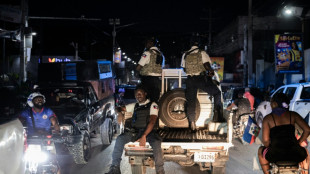
UN chief on visit to gang-plagued Haiti says 'glimmers of hope'
-
 Paris store to part ways with Shein after ownership change
-
Scott to make 100th consecutive major start at US Open

-
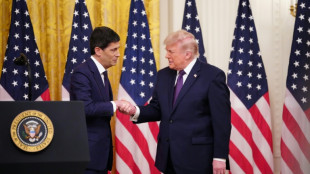 US Federal Reserve kicks off first meeting with Warsh as chair
-
Oil drops below $80 on US-Iran deal
IMF slashes global growth forecasts amid Ukraine war
The "seismic" impact of the war in Ukraine is spreading worldwide, causing the IMF on Tuesday to sharply downgrade its 2022 global growth forecast to 3.6 percent.
That slowdown, 0.8 points lower than its previous estimate released in January, comes amid surging prices, shortages and rising debt levels, the IMF said in its latest World Economic Outlook.
The fallout has been felt most acutely in the poorest nations, threatening to erase recent gains as the world had begun to recover from the Covid-19 pandemic, and the risks and uncertainty remain high, the Washington-based lender warned.
"The economic effects of the war are spreading far and wide -- like seismic waves that emanate from the epicenter of an earthquake," IMF chief economist Pierre-Olivier Gourinchas said in the report.
Russia invaded Ukraine in late February, devastating the country's infrastructure and ability to produce grain and other goods, while stiff sanctions on Moscow sent fuel prices higher.
The conflict also sparked a flood of refugees into neighboring countries.
The crisis will be the focus of global finance officials who gather in Washington this week -- virtually and in person -- for the spring meetings of the International Monetary Fund and World Bank.
The report shows Ukraine suffering a 35 percent collapse of its economy this year, while Russia's GDP will fall 8.5 percent -- more than 11 points below the pre-war expectations.
European nations will see much slower growth as the war drives up fuel and food prices, pushing inflation higher around the world and keeping it high for longer than expected.
The United States and China also will feel the effects of the war and the ongoing impact of the Covid-19 pandemic, with US growth expected to slow to 3.7 percent, and China's to 4.4 percent.
- Surging inflation -
The official cautioned that the overall outlook is highly uncertain, and things could get drastically worse if the war is prolonged and tougher sanctions imposed on Moscow.
"Growth could slow significantly more while inflation could turn out higher than expected if, for instance, sanctions aimed at ending the war extend to an even broader volume of Russian energy and other exports," he said.
Meanwhile, the pandemic is continuing, and lockdowns in China to defeat renewed coronavirus outbreaks are slowing activity, including in manufacturing hubs, which "could cause new bottlenecks in global supply chains."
The latest crisis hit as the global economy "was on a mending path but had not yet fully recovered from the Covid-19 pandemic," Gourinchas said.
That has fueled an acceleration of inflation -- expected to hit 5.7 percent in advanced economies this year and 8.7 percent in developing nations -- which endangers the gains of the past two years.
And inflation will be elevated for "much longer" than previously expected the report said.
The price pressures have prompted central banks in many countries to begin to raise interest rates to tamp down inflation, but that will hurt highly indebted developing nations, the report noted.
Rising prices were a concern even before the conflict and now shortages caused by the war "will greatly amplify those pressures, notably through increases in the price of energy, metals and food," Gourinchas said.
The official dismissed comparisons with the wage-price spiral seen in the 1970s, but "nevertheless, inflation is a serious concern right now in the US and in other countries," he told reporters during a briefing.
And if price pressures continue to mount "that would call for much more forceful action" from central banks.
- Debt distress -
That would hit developing nations that have seen debt loads increase with rising interest rates.
Gourinchas added his voice to the call to help countries restructure their debt by improving the G20 Common Framework adopted last year, which was meant to offer a path to restructure large debt loads.
A key hurdle has been the lack of information on the size of debt owed to China, as well as some other lenders, by private companies as well as governments, and the need for private creditors to participate in the debt relief.
It's in the interest of the borrowing country and the creditors "to have an expeditious process," he told reporters.
"We need a process that works much faster and much better in dealing with situations of insolvencies."
World Bank President David Malpass, who has been outspoken on the issue, has said 60 percent of low-income countries already face debt distress or are at high risk.
G.P.Martin--AT