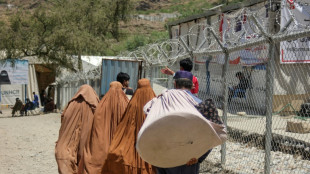
Malnutrition threatens future Afghan generations / Photo: Wakil KOHSAR - AFP

 Asian markets rise as beaten tech stocks enjoy respite from selling

 'Royal wedding': Swift and Kelce kick off star-studded celebrations
 Tajik names for Tajik babies: strict rules leave parents stranded

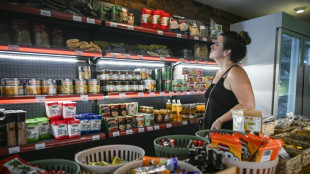 From ketchup to car parts, Cuba gets private sector makeover
 'Not easy, but not impossible': Iraq's film industry sees slow revival

 Farrell flattery primes Ireland for Australia clash

 'I was just missing a goal,' says Spain's Yamal
 'Royal wedding': Epic Swift-Kelce fairytale marriage begins

 France's Barcola expecting physical Paraguay clash at World Cup
 Sciver-Brunt and Knight send England into Women's T20 World Cup final

 Spain power into last 16 at World Cup, Portugal face Croatia

 Emotional Dimitrov enjoys redemptive Wimbledon win over Mensik

 New York ready for epic Swift-Kelce fairytale wedding

 Rubio says USA 'screwed' by World Cup red card

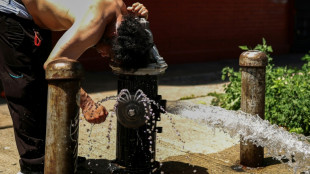 Heat dome roasts eastern US ahead of holiday weekend
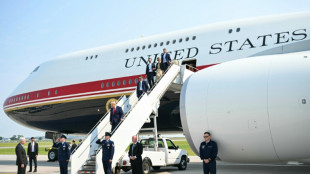
 WHO declares cruise ship hantavirus outbreak over

 Sciver-Brunt and Knight take England to 169-5 in South Africa semi-final
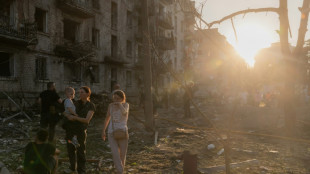
 Trump's massive July 4 firework show raises health alarms
 Pogacar expects Vingegaard Tour de France battle to last 'years'
 New York ready for epic Swift-Kelce love story wedding

 Wildfires rage in southern France, 3,000 people evacuated

 Hamilton gives F1 a piece of his mind over Lego cars

 Hong Kong bookseller once held in China dies in Taiwan

 Venezuelan rescue brings hope to nation in mourning

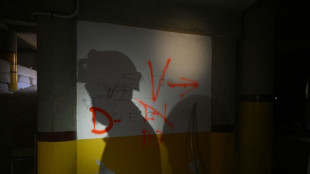 Macabre night in La Guaira, Venezuela's earthquake epicenter

Roya carefully spoon-feeds her daughter fortified milk in a ward for malnourished children, praying the tiny infant will avoid a condition that stalks one in ten young children in Afghanistan after decades of conflict.
The nine-month-old had been hospitalised three times already in remote Badakhshan province because her mother had trouble breastfeeding.
"She has gained a bit of weight, she has a bit of a glow," said 35-year-old Roya, cradling baby Bibi Aseya at the Baharak district hospital.
"She drinks milk as well but she still doesn't smile," she added.
"I would stay awake day and night, now I can sleep."
Poor nutrition is rife in a country plagued by economic, humanitarian and climate crises two and a half years since the Taliban returned to power.
Ten percent of children under five in Afghanistan are malnourished and 45 percent are stunted -- meaning they are small for their age in part due to poor nutrition -- according to the United Nations.
Afghanistan has one of the world's highest rates of stunting in children under five, said Daniel Timme, communications head for the UN children's agency, UNICEF.
"If not detected and treated within the first two years of a child's life the condition (stunting) becomes irreversible and the affected child will never be able to develop mentally and physically to its full potential," he said.
"This is not only tragic for the individual child but must have a severe negative impact on the development of the whole country when more than two out of five children are affected," he told AFP.
- Two patients per bed -
Malnutrition has been exacerbated by the upheaval sparked by the Taliban's sweep to power in 2021.
A plunge in international aid and a drain of medical professionals from the country have weakened an already vulnerable health system, with women and children particularly impacted, NGOs say.
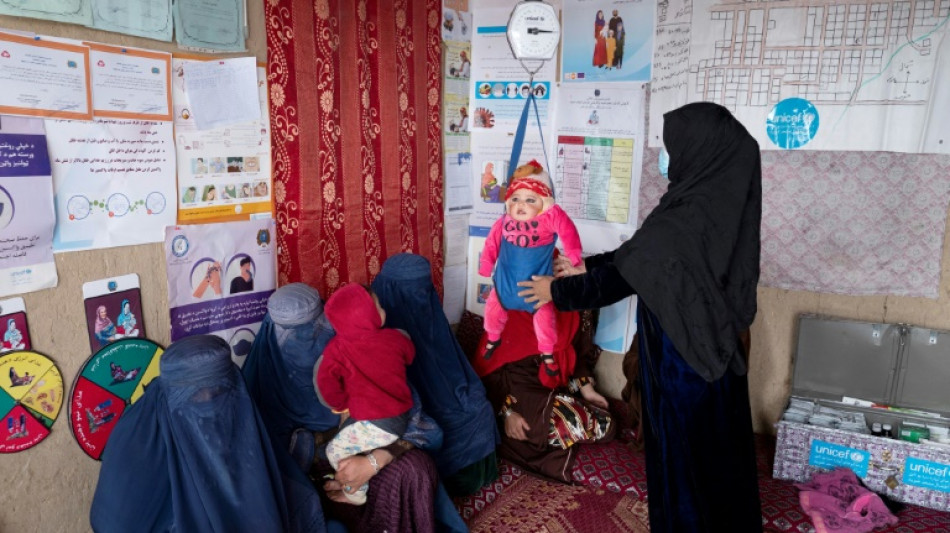
Hasina, 22, and her husband Nureddin are volunteers at one of the hundreds of community-based health posts supported by UNICEF in Badakhshan, a mountainous region that borders Pakistan, Tajikistan and China.
The couple is a first lifeline for the more than 1,000 residents of Gandanchusma village.
A map of the village dominates the mud wall of a room in their home they use as a clinic, plastered with educational posters.
On a February day, women from the village trickled in, many with babies in tow whom Hasina screened for malnutrition.
The babies squirmed in the cold air as their mothers pulled their sleeves off so Hasina could wrap a multi-coloured measuring band around their small arms and lift them into hanging scales.
"We gather women and children and weigh the babies. If they are malnourished, we support them and refer them to the clinic," a 30-minute walk away, Hasina said.
In warmer weather, she added, she sees more cases of malnutrition due to water-borne illnesses.
Baharak hospital nurse Samira said in summer the ward was typically full.
"Sometimes, we even have two patients in one bed," she told AFP, adding that training, including on how to support mothers' breastfeeding, had improved malnutrition rates.
Seventy-nine percent of people in Afghanistan lack sufficient access to clean water, according to the UN development agency.
- Web of challenges -
Aisha, who asked that her real name not be used, had a clean water pump installed at her home in the Badakhshan town of Khairabad through a UNICEF project.
But she said the women around her still lacked access to information.
"The women who had some education could boil water, provide medicine or make homemade medicines, but the women who did not have any education were less capable," she said.
Under Taliban authorities, women have borne the brunt of restrictions the UN has labelled "gender apartheid" that have pushed them from public life.
In a recent report warning of the frailty of the Afghan health sector, Human Rights Watch underscored the outsized impact on women because of restrictions on their movement, education and employment.
Aisha and her peers share information but worry that doing so is not enough to combat the web of challenges -- both social and economic -- that contribute to poor nutrition and stunting.
"At the village level, it is difficult for us because we have many illiterate mothers," said another Khairabad resident, Amina.
"We need more health and community workers to raise awareness among the people, distribute medicines for malnourished children and provide family planning and healthcare advice."
K.Hill--AT