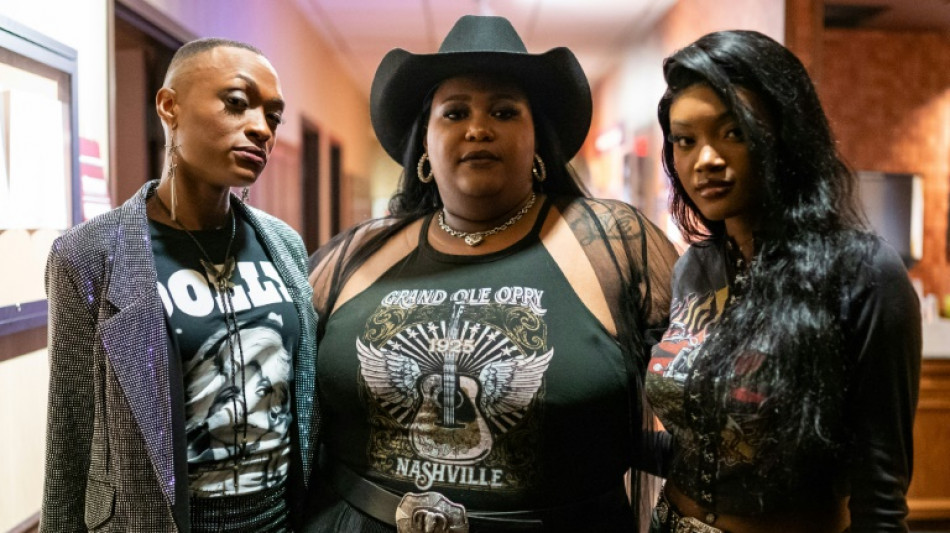
Beyonce album highlights the Black women changing country music / Photo: SETH HERALD - AFP

 Ukraine, Russia vow escalation as strikes on Kyiv kill 27
 Messi meeting the "game of our lives", says Cape Verde coach

 Do not open until 2276: US burying time capsule to mark July 4

 Scaloni warns Argentina that Cape Verde success 'no accident'

 Spain ease past Austria with 3-0 World Cup win

 Endrick says versatility could help Brazil against Norway
 Ghana have 'duty to Africa' to progress at World Cup, says Queiroz
 Former Celtics star Brown in shock over trade to 76ers

 Progress, further delay risk for Boeing Air Force One: report

 US coach Pochettino '200% Argentine' but embraces Americana

 Ukraine, Russia vow escalation after Moscow strikes on Kyiv kill 25
 Prosecutors can review Woods medical records in DUI case: judge

 Japan deploys bear cameras in mountains as attacks surge
 Djokovic has history in his sights at Wimbledon

 Ovechkin returning to Caps for 22nd NHL season

 Faster than Mbappe: Australia flyer Bos races into World Cup conversation

 Trump wants 'senseless killing' in Ukraine to end: US official

 Eala writes history for Philippines in 'electric' Wimbledon atmosphere

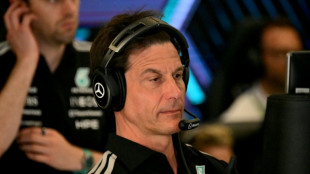 Wolff urges 'perspective' as Russell chases Mercedes' teammate Antonelli

 Superb Swiatek, Zverev cruise into Wimbledon last 32

 Ukraine, Russia vow escalation after Moscow attack kills 21 in Kyiv

 Slowing US job growth poses midterms challenge for Trump
 Klopp poised to replace Nagelsmann as Germany coach: reports

 More than 400 dead in DR Congo's spreading Ebola outbreak

 Hot spell roasts eastern US as holiday weekend approaches

"Twenty-three in Music City / With dreams and high-heeled boots / Singin' for a crowd of blue eyes / Will they want me too?" croons Julie Williams at the Blue Room venue in Nashville.
The 26-year-old, who is biracial, is one of many Black female artists carving out space in country music's capital, where predominantly white, male gatekeepers dictate who makes it -- and who doesn't.
Megastar Beyonce's highly anticipated country album, out Friday, has cast a spotlight on efforts by Black performers -- a vital part of the genre's history -- to create a more inclusive Nashville.
"Who's excited for Beyonce's new country album?" hollered Williams to applause.
"Is this what all the white girls have been feeling this whole time? Like, when they look at just someone who's at the top of their craft and is just killing it and you get to be like, 'Wow, that could be me' -- it's pretty exciting."
Speaking to AFP backstage, Williams called Beyonce's move "a historic moment in bringing Black country to the mainstream."
Williams is among some 200 acts associated with the Black Opry, a three-year-old collective showcasing and amplifying the voices of Black artists working across genres including country, Americana and folk.
"I've always been a huge fan of country music throughout my entire life, and I've always felt isolated in that experience. Especially as a Black, queer woman, you don't see a lot of representation -- not with the artists, the fans, the marketing material," the Black Opry's founder, Holly G, told AFP.
"Once I started Black Opry, I realized we're all there -- we're just not given the same platform and opportunities as some of our white counterparts."
- 'Trying to open the doors' -
The institution's name is a direct reference to the Grand Ole Opry, the nearly century-old country performance space whose complicated history has been shaped by Black performers, but which has also spotlighted figures linked to racist ideologies.
The conversation about the marginalization of Black country artists has gained new traction in the wake of Beyonce's announcement, said Charles Hughes, author of "Country Soul: Making Music and Making Race in the American South."
"When we start to see things shift behind the scenes," he told AFP, "the effect of the Beyonce moment... is going to be felt, hopefully, by these communities and musicians and songwriters and fans and others who have been trying to open the doors."
Country is a quintessentially American style of music with influences from Africa: the banjo notably grew out of instruments brought to the Americas and the Caribbean by enslaved people in the 1600s.
Yet contemporary country has developed an overwhelmingly white, macho, conservative image, with industry leaders proving resistant to change.
In the 1920s, industry professionals developed the terms "hillbilly" and "race" records to define popular music charts. Those labels grew into country and R&B, respectively.
"That initial separation was based only on the color of their skin, and not on the sound of the music," said Holly G.
These divisions have persisted, meaning Black musicians -- especially Black women, as female artists at large have a demonstrably harder time getting airplay on tastemaking country radio -- face significant barriers.
"The song can sound exactly the same as some other people on the radio, and they're like, 'Yours isn't country,'" Prana Supreme, part of the mother-daughter act O.N.E The Duo, told AFP.
"And I'm like, hmm, what's the only difference here?"
- 'Mover of culture' -
Even Beyonce has said she faced industry resistance.
"My hope is that years from now, the mention of an artist's race, as it relates to releasing genres of music, will be irrelevant," Beyonce said recently.
Dubbing her a "mover of culture," Prana Supreme said Beyonce's country moment is important not just for showing that Black artists are integral to country, but also to show Black fans that country is for them too.
"Southern culture is Black culture," she said.
Her mother Tekitha said Beyonce is a necessary "champion," not least to show the industry its blind spot: "You need some force that's going to come in and tell the market, 'Oh, wait a minute, there's money over here that y'all are leaving on the floor.'"
Trea Swindle, a member of country act Chapel Hart, said the group has noticed an attention and streaming boost since Beyonce's announcement, adding: "It's opening up country music as a whole to a completely new demographic."
The members of Chapel Hart grew up in a small southern town, and laugh off anyone who says they "aren't country."
"Honey, go to Poplarville, Mississippi -- no matter if you're Black, white, Asian, Hispanic -- it's Poplarville, and you're going to live that country experience," said Swindle.
"Country is a feeling. Country is a way of life."
Holly G said she'll believe mainstream change is afoot when she sees it.
"Beyonce is one of the most powerful celebrities in the world. And she was able to leverage that in order to see success in this space," she said.
"But I think that's because the industry is intimidated by Beyonce -- not because they're open to supporting Black women."
A.O.Scott--AT