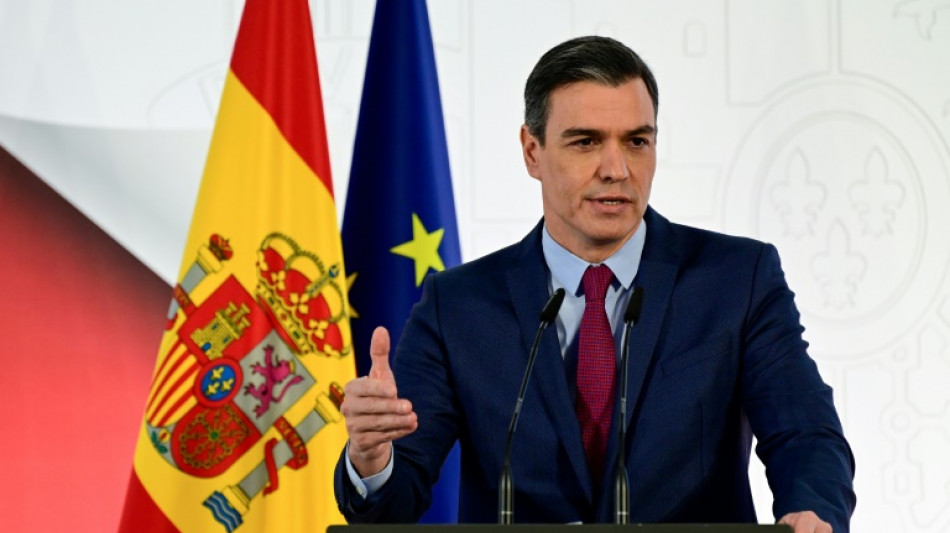
Tension in Spain over use of EU recovery funds

 Man allegedly behind 'targeted' attack on Australian lawmaker appears in court
 Musk backs SpaceX-Tesla merger as rocket firm turns profit
 Zelensky, US hail 'productive' talks to end Trump feud

 'Unbelievable' Foden back in the groove with treble in Man City rout
 Pistons rally to beat Celtics in NBA 2026-27 season opener

 PSG late show downs Barca in Champions League, Liverpool fight back

 Liverpool strike back to beat Villarreal in seven-goal thriller

 Dow boosted as markets rotate from tech shares
 Zelensky hails resumption of US advance warning of strikes on Ukraine
 Carrick says only wins can ease doubts over Man Utd future

 Top NBA Draft pick Dybantsa to miss opener with ankle sprain
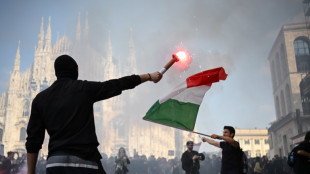
 Italy sends troops, toughens security laws after Milan clashes

 Alberta separatists vow to fight on, risking turmoil for Canada
 Two men re-arrested for suspected spying for Iran in airbase scare: UK police

 Guatemalan man gets 30 years for truck smuggling deaths of 53 migrants
 'Clayface' gets under the skin of the superhero genre
 Zelensky, US envoys hold Oslo talks as Ukraine claims US missile holdup
 All-rounder Minhas stars as Pakistan crush England in tri-series
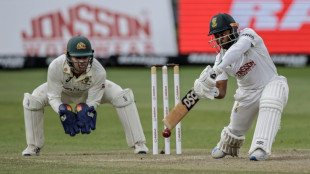 Bavuma hits 179, Rabada strikes as South Africa dominate
 Allrounder Minhas stars as Pakistan crush England in tri-series
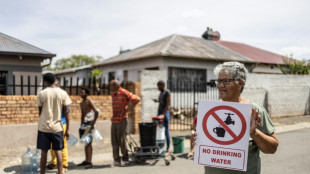
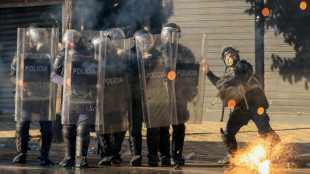 Albania PM blames 'hybrid war' for week of unrest
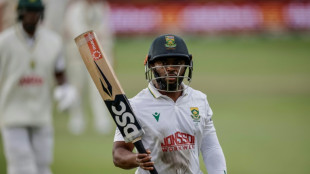 Bavuma hits 179 to lead South African fightback
 Solid GM results overshadowed by latest jump in commodity costs
 Houthi attacks undermine Saudi Arabia's economic ambitions
 French PM vows 'massive' police deployment for new demonstrations
The Spanish government is increasingly under fire over its use of the European Union's massive economic recovery funds, with critics blasting the distribution of aid as too slow and arbitrary.
Spain is due to receive 140 billion euros ($160 billion) from the fund by 2026, half of it in grants, making it the programme's second-biggest beneficiary after Italy.
The landmark 800-billion-euro recovery plan was approved by Brussels in July 2020 to help the bloc rebound from the impact of the Covid-19 pandemic, and make its economy greener and more digitalised.
"We are talking about extraordinary amounts," Socialist Prime Minister Pedro Sanchez said earlier this month, calling the funds "a historic opportunity for Spain".
Spain and Portugal were the first nations to receive money, with Madrid collecting 19 billion euros during the second half of 2021.
The funds are at the heart of the economic and political strategy of Sanchez's government after the economy contracted by a whopping 10.8 percent in 2020 under its watch as the pandemic hit.
The government faces elections by the end of 2023.
But some business leaders and opposition parties have complained about a lack of coordination between the central government and Spain's powerful regions over the deployment of the money.
- 'Lack of leadership' -
Although Spain was the first to receive aid, the money was "not injected" as fast as expected in the "real economy", the CEOE employers' association said in a report in early January.
By the end of the year, only 38 percent of the funds allocated to Spain for 2021 had been used, official figures show.
This is "very far from the targets" that were set and the delay in using the aid will hamper growth, think-tank Funcas has warned.
Aerospace giant Airbus complained of a lag in the allotment of the funds, citing a "lack of coordination and leadership" from the responsible ministries, according to an internal memo published in El Pais newspaper last month.
Critics also say that even when the money is distributed, it is often not well spent, with small amounts spread across many projects.
"The current assignment system for the funds" leads to their "dispersion" and favours "little projects", some of them "a bit odd," said the Exceltur tourism association's vice president, Jose Luis Zoreda.
He cited as an example a golf course in the rainy northern region of Asturias.
To have a "real impact", the funds should focus on "a few large projects" with a strong potential to "transform" the Spanish economy, he added.
- 'Cruising speed' -
The row has in recent days become political, with the right-wing opposition Popular Party (PP) accusing the government of favouring regions and municipalities run by the left.
"Two years ago we proposed setting up an independent agency for managing EU funds" as happened in Greece, Italy and France, PP leader Pablo Casado said.
"But Sanchez preferred to distribute aid arbitrarily," he charged.
Casado and several right-wing regional leaders have threatened to take the government to court over the distribution of the EU money, accusing it of "favouritism".
But Sanchez quickly hit back.
"Let's not turn the European funds into a partisan question... which is what the opposition wants," Sanchez said Monday during a news conference with visiting German Chancellor Olaf Scholz.
Economy Minister Nadia Calvino, who served as director general in charge of the EU budget from 2014 to 2018, dismissed the PP's criticisms as "not relevant".
The deployment of European funds will achieve its "cruising speed" in 2022, she added.
Th.Gonzalez--AT