Nigeria targets cryptocurrency in bid to end naira freefall / Photo: JUSTIN SULLIVAN - GETTY IMAGES NORTH AMERICA/AFP/File

 'I grabbed my child': Kyiv residents face devastation of biggest Russian barrage of war

 Former top jockey Dettori breaks ribs in car crash

 Rees-Zammit returns to wing as Wales face Fiji
 Renovations on historic Paris Opera house extended by three years

 Thailand denies viral claim Macron knelt before king

 Spain, Portugal eye World Cup last 16

 Russian strikes kill 17 in biggest ever attack on Kyiv, mayor says

 Uruguay veteran Cavani quits Boca Juniors

 West Ham's Fernandes joins Spurs

 Bones of contention: More research needed on 'd'Artagnan corpse'

 Coffee with a view: tourists flock to Starbucks overlooking North Korea

 German coalition agrees on reform package in key breakthrough

 France recall record try scorer Penaud for All Blacks Test

 Seoul's Kospi tanks as Asia tech firms suffer another blow

 'Outstanding' Love to start at fly-half for All Blacks against France

 Campbell back from four years in Wallabies wilderness to face Ireland

 Migrants pick up pieces back home after fleeing South Africa

 Farrell names Leinster-heavy Ireland side to face Wallabies

 Fearing Russian strike, Kyiv's Holodomor museum evacuates exhibits

 Germany's energy-hungry small firms struggle with green shift

 Pochettino says Balogun foul 'never' a red card as suspension looms

 Campbell back after four years in Wallabies team to face Ireland

 Kane saves England as USA, Belgium reach last 16

 Budding chefs cook up new career at China's BBQ academy

 One stitch at a time: Artist's mission to recreate the Bayeux Tapestry

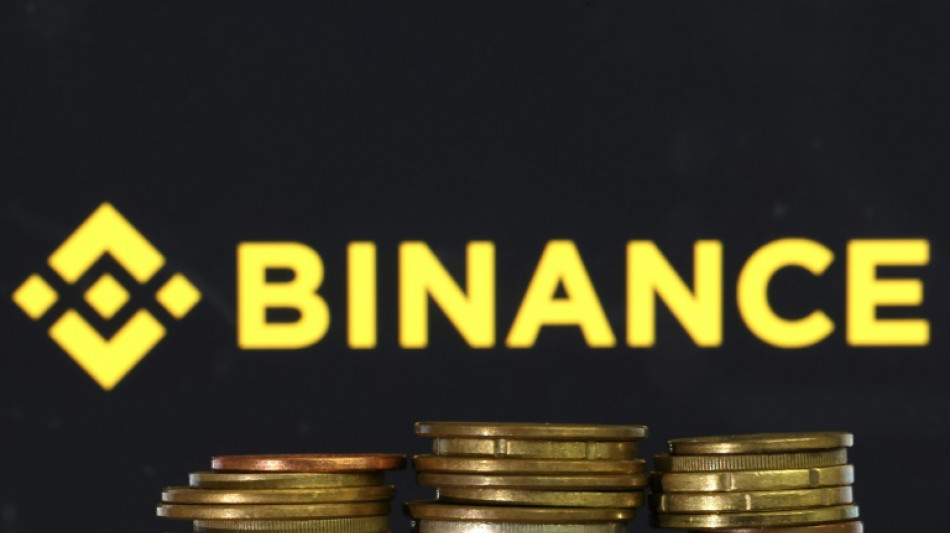
The world’s biggest cryptocurrency exchange Binance is halting operations in Nigeria's naira currency as the government puts cryptobusinesses under increasing scrutiny.
The decision came after authorities in Africa’s biggest economy imposed restrictions on cryptocurrency exchanges as part of attempts to halt the sliding value of the local currency.
Nigeria’s central bank governor, Olayemi Cardoso, said at the end of last month that cryptocurrency exchanges were conduits for money laundering.
He singled out Binance as the biggest culprit.
"Certain practices go on that indicate illicit flows going through a number of these entities," Cardoso said.
"In the case of Binance, in the last one year alone, $26 billion has passed through Binance Nigeria from sources and users who we cannot adequately identify."
Changpeng Zhao, who was head of Binance, has pleaded guilty to violating anti-money laundering laws in the United States.
With the naira weakening almost daily, crypto exchanges have been seen as one way Nigerians can protect their money against the currency's plummet.
Since the government floated the naira in May, the currency has fallen from around 410 to the dollar to around 1,600 naira to the greenback on the official exchange.
In late February, a dollar was exchanged for as much as 1,900 naira on the black market.
Officials have accused crypto exchanges of distorting foreign exchange rates, contributing to the naira's weakening.
Binance did not immediately respond to AFP’s request for comment on the allegations.
But in an email sent to its Nigerian users, the crypto giant said it was shutting down all its naira-based services on March 8.
"This affects NGN services only, you can continue to make use of services and products for other available cryptocurrencies," the crypto giant said in the email seen by AFP, referring to the naira trading symbol NGN.
Local media reported that two officials of the company who flew into Nigeria to negotiate with the government were detained and their passports seized.
Nigerian officials have not confirmed those arrests, but lawmakers are also considering issuing arrest warrants for the company’s top executives for “ignoring invitations”.
Those detentions are "likely to negatively affect the country's reputation," said Seyi Awojulugbe, a senior analyst at Lagos-based risk consultancy firm SBM Intelligence.
Binance has denied any wrongdoing in a statement posted on its website last month.
- 'Economic sabotage' -
Bayo Onanuga, a media adviser to the Nigerian president, insists Binance was sabotaging the country's economy by influencing exchange rates.
"That is why the government moved against Binance," Onanuga told a local broadcaster in February.
"Some people sit down using the cyberspace to dictate even our exchange rate, hijacking the role of the CBN (Central Bank of Nigeria)."
Onanuga did not respond to AFP’s request for comments.
In the run-up to the general election in February 2023, President Bola Tinubu promised a regulatory environment to encourage healthy adoption of digital assets, including cryptocurrency.
At the time, a Central Bank of Nigeria order prohibiting banks from enabling crypto transactions was in place.
The bank had ordered the closure of all accounts linked to cryptocurrency exchanges in 2021.
It feared anonymity around cryptocurrencies could enable money laundering, terrorism financing and that the high volatility could wipe out investments.
Despite the prohibition, Nigerians’ appetite for cryptocurrency grew with many adopting peer-to-peer transactions, which allow people to trade digital assets among themselves.
Nigeria rose from 11th position in 2022 to second place a year later on a global crypto adoption index, according to Chainalysis, a global cryptocurrency analysis firm.
The CBN reversed its decision months after Tinubu was sworn in as president.
But a more intense crackdown on crypto exchanges began weeks after the ban was lifted.
Experts said a more balanced regulatory approach was needed.
"The high adoption of cryptocurrency in Nigeria underscores the need for clear regulatory reforms that strike a balance between safeguarding the interests of all stakeholders, maintaining financial stability, and promoting innovation,” Arushi Goel, the head of policy, Middle East and Africa at Chainalysis, told AFP.
Despite projecting a modest 3.2 percent GDP growth for the economy in 2024, the International Monetary Fund warned that a weakened naira, inflation, and policy tightening will provide headwinds for Nigeria’s economy.
Experts said the current crypto crackdown will add to the pressure the economy already faces and will force millions of people who use peer-to-peer mechanisms to trade digital assets.
“The clampdown will only starve Nigeria of more foreign FX and further plunge the Naira into loss," said Ray Youssef, the CEO of NoOnes, a peer-to-peer cryptocurrency marketplace.
O.Ortiz--AT