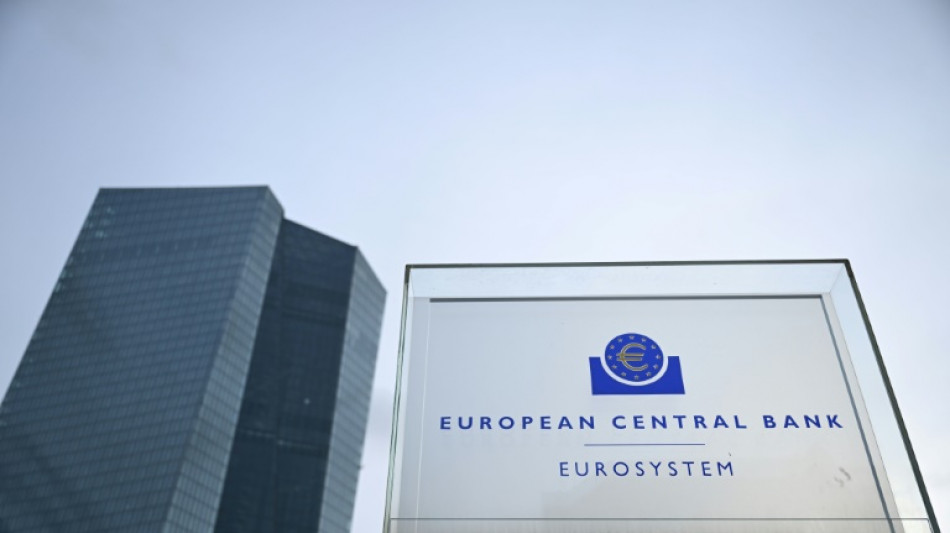
ECB freezes rates, saying not yet confident on inflation progress / Photo: Kirill KUDRYAVTSEV - AFP

 Trump Signals Willingness to Work With Democrats After Midterm Defeat

 Qatar media bodies discuss support for humanitarian initiatives

 InterContinental Hotels Group PLC Announces Transaction in Own Shares - November 04

 No. 22 UCLA defeats No. 5 Arizona 84-75 despite Kharchenkov's 38 points

 Vessel operator seeks witnesses after Vancouver grounding

 US Air Force deploys F-16 fighters to remote Aleutian base for readiness drill

 Bezos grant helps Seattle nonprofit move thousands of families toward housing

 Shrini Srivastava joins crew of Varanasi-Delhi Vande Bharat Sleeper service

 Nearly Half of Australian Workers Overqualified, Survey Finds

 RBI eases export-declaration compliance for individual service exporters

 India proposes more import entry points for drugs and medical devices

 Derek Tierney Outlines Ten-Year Strategy for National Digital Health System

 NBC’s Steve Kornacki Reveals Tech Habits Ahead of Midterm Elections

 India and Israel oppose UN draft on regional conventional arms control

 BLS Polymers shares open 65.3% above IPO price

 Capital-markets shares rally as Motilal Oswal and Angel One lead gains

 Latino Voters Defy ICE Fears, Turn Out in Record Numbers for Midterms

 ITC shares rise as analysts anticipate gradual cigarette-business recovery

 Reliance rally puts historical one-year return pattern in focus

 Kuwait edges Oman 1-0 in veterans Gulf Cup in Doha

 Saudi Aramco quarterly profit climbs 34.6% amid elevated oil prices
The European Central Bank froze interest rates again Thursday, holding off from starting to cut as president Christine Lagarde said officials were not yet "sufficiently confident" on progress towards the bank's inflation goal.
The Frankfurt-based institution's governing council held the benchmark deposit rate steady at a record four percent for a fourth straight meeting, as widely expected.
"We are making good progress towards our inflation target... but we are not sufficiently confident," Lagarde told a press conference after the central bank announced its monetary policy decision.
She said "more evidence" was needed that inflation was heading towards the bank's two-percent target, but added that "we will know a lot more in June". Many analysts expect the ECB to begin cutting rates that month.
Policymakers embarked on a historic rate hiking cycle after the costs of everyday goods surged following Russia's invasion of Ukraine and amid pandemic-related supply chain woes.
Inflation, which peaked at over 10 percent in late 2022, has been steadily easing, hitting 2.6 percent in February, heading towards the ECB's target.
At the same time the outlook is bleak, with the eurozone narrowly dodging a technical recession in the second half of 2023, weighed down by a poor performance in its biggest economy, Germany.
On Thursday, the central bank released updated forecasts, with inflation expected to fall faster than previously thought and returning to two percent in 2025. It also predicted the 20-nation eurozone's economy would turn in weaker growth this year than previously thought.
While slowing inflation and a worsening economy should bolster arguments for cutting borrowing costs soon, the ECB remains worried about completing the "last mile" to reach its target, prompting it to keep rates at the same level they have been since October.
Announcing its latest decision, the bank repeated language seen in recent statements that the "key ECB interest rates are at levels that, maintained for a sufficiently long duration, will make a substantial contribution to" reaching the inflation goal.
- Wage worries -
Worries about inflation have shifted in recent months from energy costs, which surged after Russia invaded Ukraine in 2022, to inflation in the services sector and wage growth.
Lagarde noted that "domestic price pressures remain high, in part owing to strong growth in wages," while other measures of inflation were declining.
Heightened geopolitical tensions in the Middle East have also added to worries that inflation could rebound.
Yemeni rebel attacks on Red Sea shipping have prompted shipping companies to avoid the vital trade route, while a spillover of the Israel-Hamas war could impact oil prices.
Robert Leonhardt, from DZ Bank, said Thursday's meeting showed that "the ECB will remain in wait-and-see mode for a few more months and will wait for further data, such as wage developments.
"The first interest rate cut is therefore not expected before June. Until then, however, the pressure on the ECB will continue to increase due to the weak economy."
ING economist Carsten Brzeski said that rate cuts will only be on the agenda at the ECB's June meeting.
"This is when enough data points will be available, either confirming that the inflation beast has really been tamed or pointing to renewed upward pressure on prices."
The US Federal Reserve, which holds its next rate-setting meeting on March 19-20, is also struggling with when to begin cutting rates, as a series of strong economic readings dim the prospects of early reductions.
Speculation had risen at the end of last year that the ECB could start cutting rates as soon as March, as inflation started dropping heavily.
But these expectations evaporated as price rises proved stubborn, with underlying inflation -- stripping out volatile energy and food costs -- in particular not coming down as fast as hoped.
While observers are now betting on a first cut in June, they expect the process to move slowly.
E.Rodriguez--AT