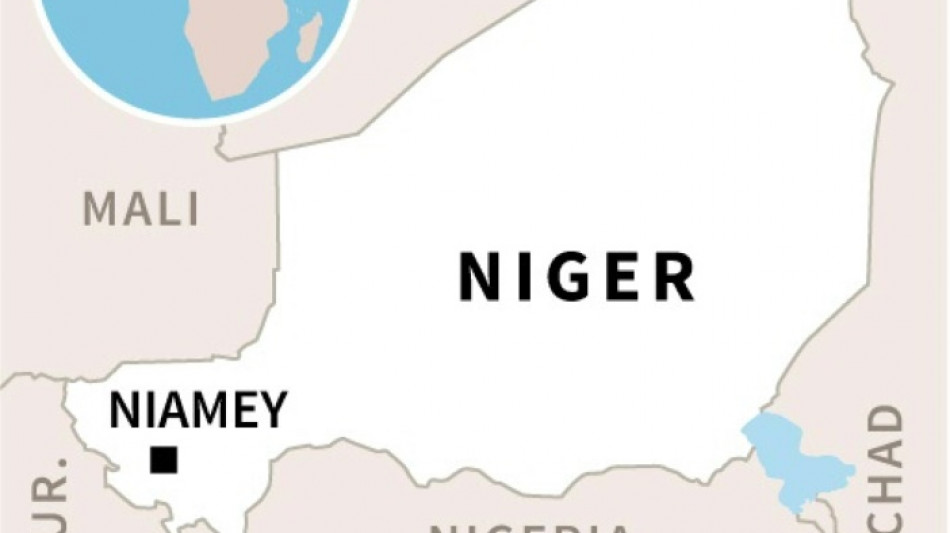
Niger isolated and suspicious despite end of sanctions / Photo: Valentin RAKOVSKY - AFP

 'I grabbed my child': Kyiv residents face devastation of biggest Russian barrage of war
 Former top jockey Dettori breaks ribs in car crash

 Rees-Zammit returns to wing as Wales face Fiji
 Renovations on historic Paris Opera house extended by three years
 Thailand denies viral claim Macron knelt before king

 Spain, Portugal eye World Cup last 16
 Russian strikes kill 17 in biggest ever attack on Kyiv, mayor says
 Uruguay veteran Cavani quits Boca Juniors
 West Ham's Fernandes joins Spurs
 Bones of contention: More research needed on 'd'Artagnan corpse'
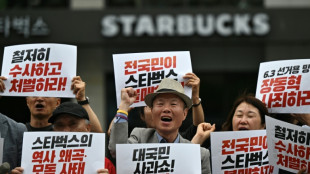
 Coffee with a view: tourists flock to Starbucks overlooking North Korea

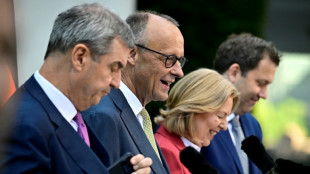 German coalition agrees on reform package in key breakthrough
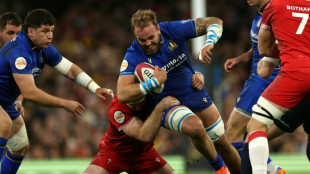
 France recall record try scorer Penaud for All Blacks Test
 Seoul's Kospi tanks as Asia tech firms suffer another blow

 'Outstanding' Love to start at fly-half for All Blacks against France
 Campbell back from four years in Wallabies wilderness to face Ireland
 Migrants pick up pieces back home after fleeing South Africa
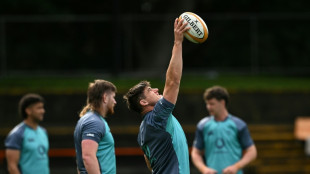 Farrell names Leinster-heavy Ireland side to face Wallabies
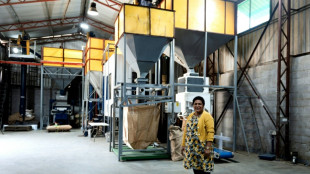
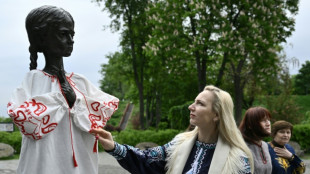 Fearing Russian strike, Kyiv's Holodomor museum evacuates exhibits
 Germany's energy-hungry small firms struggle with green shift

 Pochettino says Balogun foul 'never' a red card as suspension looms
 Campbell back after four years in Wallabies team to face Ireland
 Kane saves England as USA, Belgium reach last 16
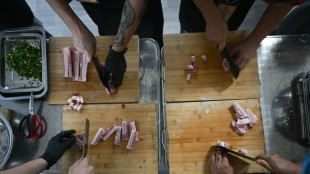 Budding chefs cook up new career at China's BBQ academy

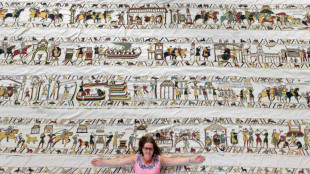 One stitch at a time: Artist's mission to recreate the Bayeux Tapestry

It's been two weeks since the lifting of tough sanctions on military-ruled Niger, but the pace of economic recovery is slow and the generals have shown no inclination to re-open the border with Benin and seek a diplomatic settlement with neighbouring nations.
Barricades initially put up in anticipation of an armed intervention by regional bloc ECOWAS still block the road linking Niger to Benin.
The political and economic standoff between Niamey and ECOWAS, which is demanding the release of deposed President Mohamed Bazoum and a return to constitutional order, has remained since the July coup that overthrew him.
The Economic Community of West African States (ECOWAS) announced late February it was lifting the most damaging sanctions, including a no-fly zone, border closures and asset freezes.
Niamey's traders say they are starting to see an improvement in electricity supply after a period of disrupted transport and shortages of power, food and medicine.
"Customers are coming in droves to get their hair done," said Mohamed, smiling outside his barber shop in the Dan Zama neighbourhood.
- Economic fallout -
Niger's main power supplier, Nigeria, cut off power at the time of the coup, causing blackouts that hit the economy.
"These months of electricity shortages have bankrupted us," said Ayouba Ali, a frozen chicken seller who has already placed new orders to get his business back on track.
The Nigerien Electricity Society "Nigelec" has been reconnected to the 820 kilometre high-voltage line between Niger and Nigeria since March, a source close to the Society told AFP.
"We have not had a power cut since last Friday," soft-drinks factory worker Saley Moussa said.
"Our factory is running at full capacity as we try to make up for the production losses caused by more than six months of disruption."
The West African Economic and Monetary Union (WAEMU) has also lifted sanctions, which included freezing Niger's assets and suspending financial transactions.
Customers had been forced to queue for hours outside the main banks to withdraw limited amounts of money.
"Banking transactions with foreign banks are now possible," a Niamey bank manger told AFP, although the payment of some civil servants' salaries was still behind schedule.
- "Non-event" -
Benin and Nigeria have reopened their borders, but Niger's remains closed.
The lifting of sanctions was intended to signal a willingness to renew dialogue with military regimes among ECOWAS members and came after Mali, Niger and Burkina Faso announced their intention to leave the bloc in late January.
After announcing the end of sanctions on February 24, Nigerian President Bola Tinubu urged the three countries to reconsider their withdrawal and to stop treating the organisation as an enemy.
His calls went unanswered. "I do not want to comment on a decision taken by an organisation of which Mali is not a member," said Mali's Foreign Minister Abdoulaye Diop.
The ECOWAS announcement was a "non-event", according to Niamey, which still considers military intervention by neighbouring countries as a possibility, a government source said.
Economic pragmatism, however, suggests that borders should soon be opened.
Before the July coup, the Benin corridor handled 80 percent of Niger's freight through the port of Cotonou, some 1,000 kilometres (600 miles) from Niamey.
The port is also the terminal for a giant oil pipeline inaugurated in November, which should enable Niger to export 90,000 barrels of crude a day.
On Tuesday, a Niger delegation visited customs facilities on both sides of the border with Benin.
While airspace remains closed to flights to and from Nigeria, the pan-African airline Asky, based in Togo, and Air Cote d'Ivoire announced on March 2 that they were resuming flights to Niamey.
G.P.Martin--AT