Hard to enforce: Chile's law against abuse-fueled suicides / Photo: GUILLERMO SALGADO - AFP

 'I grabbed my child': Kyiv residents face devastation of biggest Russian barrage of war

 Former top jockey Dettori breaks ribs in car crash
 Rees-Zammit returns to wing as Wales face Fiji

 Renovations on historic Paris Opera house extended by three years

 Thailand denies viral claim Macron knelt before king

 Spain, Portugal eye World Cup last 16

 Russian strikes kill 17 in biggest ever attack on Kyiv, mayor says
 Uruguay veteran Cavani quits Boca Juniors
 West Ham's Fernandes joins Spurs

 Bones of contention: More research needed on 'd'Artagnan corpse'
 Coffee with a view: tourists flock to Starbucks overlooking North Korea

 German coalition agrees on reform package in key breakthrough

 France recall record try scorer Penaud for All Blacks Test

 Seoul's Kospi tanks as Asia tech firms suffer another blow

 'Outstanding' Love to start at fly-half for All Blacks against France
 Campbell back from four years in Wallabies wilderness to face Ireland

 Migrants pick up pieces back home after fleeing South Africa

 Farrell names Leinster-heavy Ireland side to face Wallabies

 Fearing Russian strike, Kyiv's Holodomor museum evacuates exhibits
 Germany's energy-hungry small firms struggle with green shift

 Pochettino says Balogun foul 'never' a red card as suspension looms

 Campbell back after four years in Wallabies team to face Ireland

 Kane saves England as USA, Belgium reach last 16

 Budding chefs cook up new career at China's BBQ academy
 One stitch at a time: Artist's mission to recreate the Bayeux Tapestry

Chilean Antonia Garros, a gastronomy student, was just 23 when she jumped from a 13th-floor balcony in 2017 after her boyfriend assaulted her yet again.
"Jump, crazy bitch!" he prompted her in the presence of two police officers who had arrived at the apartment to investigate complaints of a domestic dispute.
In 2019, 21-year-old Antonia Barra hanged herself after being raped on a night out with her student friends by a man who then proceeded to threaten her to remain quiet.
The deaths of the two women were triggers for a law passed in 2022 that created the crime of "femicidal suicide" -- when a woman takes her life as a result of being the victim of gender-based violence, or is incited to kill herself.
Dubbed the "Antonia law", it imposed penalties of up to 10 years in prison for perpetrators.
Chile is one of few countries with a specific law against the crime of "femicidal suicide."
And while women's rights groups have welcomed the law's deterrent intent, they say it has actually proven difficult to enforce.
In the first year after it came into effect, not a single case was investigated.
"This law is difficult to implement," said Priscila Gonzalez of the Chilean Network Against Violence Against Women.
Sometimes it is hard to prove past abuse, or the psychological damage suffered as a result, she said.
There are also not enough dedicated experts to assist victims, and often "the officials who participate in these investigations do not understand" the new law, said Gonzalez.
"There's something beyond the law, which has to do with the culture entrenched within the investigating agencies," she added.
Last year, the Network recorded two cases of femicidal suicide in the country, and 48 of femicide, which is when a woman is killed for being a woman.
To date, 26 children have received grants after their mothers died after being victims of violence.
- 'Another kind of push' -
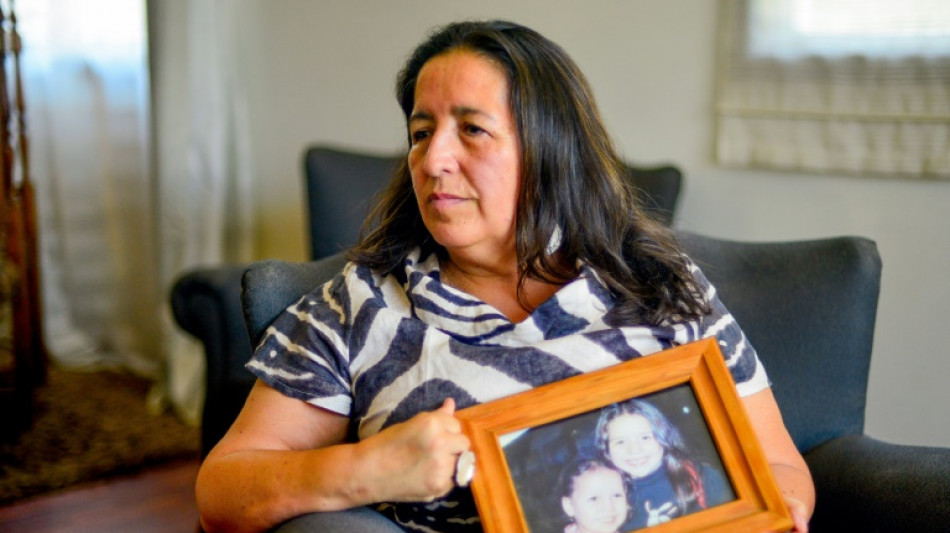
Garros's mother Consuelo Hermosilla, 57, knows all about the difficulties facing abused women who seek help.
She told AFP her daughter had filed a complaint against her abuser two months before she jumped. After that, she received one counseling session. She had been waiting for another to be scheduled.
"She was ill," said Hermosilla of the abuse her daughter had suffered at her boyfriends' hands.
"He didn’t push her physically; it was another kind of push," the grieving mother said. "Antonia must have felt so desperate after the blows she received."
Her attacker never went to jail. As they did not live together, the law did not recognize the crime of domestic violence.
This is something the new law does not address -- and which Hermosilla and other activists are fighting to get changed.
In the case of Barra's death, her rapist was sentenced to 17 years in prison in a trial whose ins and outs were followed live on social media more than a million people.
However, he was not found guilty of causing Barra's death, with no law at the time against "femicidal suicide."
Her father, Alejandro Barra's fight for justice contributed to the Antonia law in a country where there has been a growing clamor for better protection and greater equality for women.
Only in 2017, the year of Garros's suicide, did the country lift a blanket ban on abortion to allow terminations in the event of rape, or if the life of the mother or baby is at risk.
In 2002, the right to elective abortion was included in a draft for a progressive new constitution that was subsequently shot down in a referendum.
With the Antonia law, "the country has moved towards comprehensive legislation to address and punish violence against women, including by recognizing the serious consequences this type of violence has on the lives of victims and the link between mental health and gender violence," Gender Equality Minister Antonia Orellana told AFP.
It also increased the statute of limitations for survivors of sexual violence from five to 10 years, protects victims' private data and prohibits humiliating victim questioning.
In April last year, Chile also approved a law providing for the children of femicide or femicidal suicide victims to receive state grants.
Twenty-six grants have been awarded thus far.
O.Gutierrez--AT