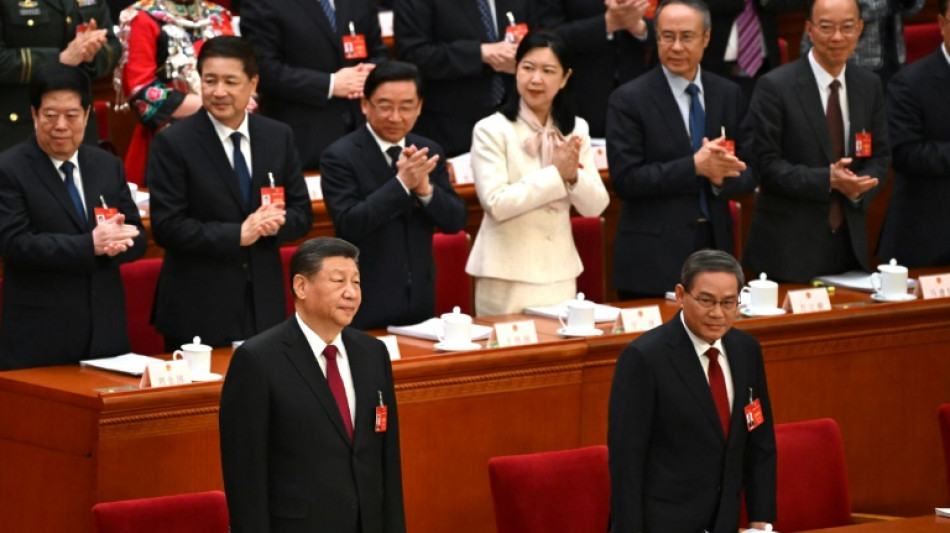
China sets ambitious 5 percent growth target for 2024 / Photo: GREG BAKER - AFP

 Former Arsenal, Spain midfielder Cazorla retires
 German drone maker raises $1.2 bn as investors pile into defence

 French scramble to find air conditioners before next heatwave

 Japan deploys bear cameras in moutains as attacks surge

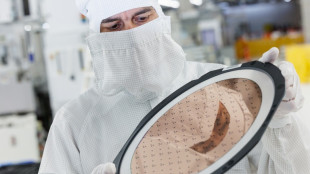 Germany's Infineon opens major chip plant as EU seeks tech autonomy

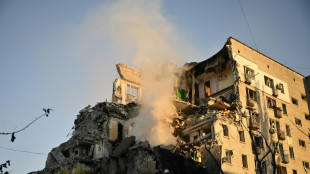 Biggest ever Russian barrage on Kyiv kills at least 13

 EU top court upholds record 4.1 bn euro Google fine
 Italy name two debutants to face Japan in Nations Championship opener

 Wallabies' Schmidt rules out another coaching job
 India asks Meta to hold WhatsApp username rollout over fraud fears

 Deadly Russian barrage on Kyiv kills at least 13

 Next indirect US-Iran talks after Khamenei funeral: mediators
 Reviving Montenegro's 'ancient' olive tree

 Resource rich PNG leaving its Pacific people behind: World Bank

 Papal envoy presides over first Vietnam beatification rite
 LeBron James praises Balogun after 'Silencer' celebration

 Farrell names Leinster-heavy side to face Wallabies

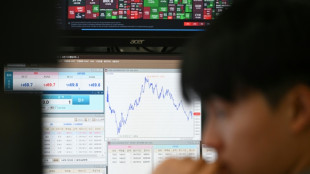 Most Asia markets down as tech firms take fresh blow

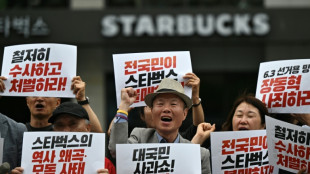 South Korean school baseball team suspended over 'Tank Day' chants

 Ceuzany, Cape Verde's golden voice with volcanic emotion

 Balogun scores and sees red as US beat Bosnia 2-0
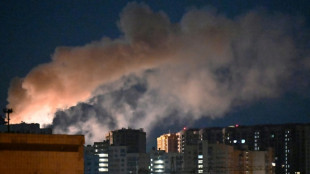
 EU top court to rule on record 4.1 bn euro Google fine

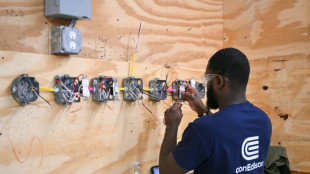 'Job forever': trade schools are all the rage in the AI era

 Celtics reportedly trading Brown to Sixers in NBA blockbuster
 IRS Form 2290 Filing Window Now Open for 2026-27 Tax Period; Stay HVUT Compliant with EZ2290

China set on Tuesday a growth target of around five percent for 2024, an ambitious objective analysts said would be a challenge to meet given the severe headwinds battering the world's second-largest economy.
The growth objective, alongside the overall budget and key government policies for 2024, was announced at China's annual National People's Congress (NPC), which kicked off Tuesday morning.
Last year's NPC saw President Xi Jinping anointed for a historic third term, cementing his rule as the most powerful Chinese leader since Mao Zedong.
This year's gathering will focus on a litany of economic and security challenges, including a protracted property sector crisis, soaring youth unemployment, and a global slowdown that has hammered demand for Chinese goods.
On Tuesday Chinese leaders set a GDP growth goal of "around five percent" -- in line with last year but a far cry from the double-digit expansion that for years drove the world's second-largest economy.
The annual political conclave opened with a rendition of China's national anthem, with the country's top leadership and thousands of delegates from around the country in attendance.
"We do not consider the five percent growth target to be conservative, we actually think it is ambitious," Wang Tao, Chief China Economist at UBS, told AFP.
"The property market has continued to fall and not yet reached the bottom, which exerts downward pressure on the economy," she added, saying that would have a "negative impact on local government finance and spending, and household wealth and consumer spending".
- Economic woes abound -
Beijing has for years been reluctant to confront the pressures on its economy head-on with a major bailout, fearful of putting too much strain on fragile state coffers.
Analysts don't see any reason to think that will change soon.
"The key is to stabilise the property sector, with the government to step in as the buyer/lender of the resort," Larry Hu, Chief China Economist at the Macquarie Group said.
"Fiscal policy has to turn more expansionary than last year," he added.
Armed police and security personnel are ubiquitous on Beijing's streets this week as thousands of delegates descend on the capital for the "Two Sessions" -- a carefully choreographed week-long gathering of the NPC and Chinese People's Political Consultative Conference (CPPCC).
Many of its major decisions will have been made weeks before, in closed-door meetings of the Communist Party, far from the international media's cameras.
Nevertheless, the topics that are up for discussion and the tone of the speeches allow for key insights into what's keeping China's rulers up at night.
"The NPC is not obsolete or irrelevant," analyst Nis Grunberg told AFP.
"It is an important platform for the leadership to communicate its key priorities."
- Security first -
The first of the "Two Sessions" began on Monday afternoon, and the almost 3,000-member NPC will hold daily sessions until next Monday.
Analysts agree that stuck between deep reforms to restart economic growth and efforts to strengthen the state's power, China's policymakers have little room for manoeuvre.
Beijing revised a law dramatically expanding its definition of espionage last year and conducted raids on a string of big-name consulting, research and due diligence firms.
"The government may well double down on the current direction of elevating national security measures on all fronts," Ho-fung Hung, a professor of political economy at Johns Hopkins University, told AFP.
"It will not help the economy, but could help the party-state weather the storm of economic crisis."
A.Ruiz--AT