Putin warns EU nations need ruble accounts to get gas

 Rain halts India push after Dinusha century lifts Sri Lanka
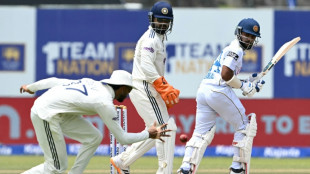 Dinusha hits century as Sri Lanka post 284 in first India Test
 Stocks steady as investors weigh US rate path
 Taiwan's leader says government to propose record defence spending for 2027
 Cambridge head slams 'feeding frenzy' over dead academic

 Ebola outbreak now DR Congo's deadliest ever
 Germany's coalition split over putting climate in constitution

 Ukraine badminton star: 'How can you feel normal when bombs are falling?'
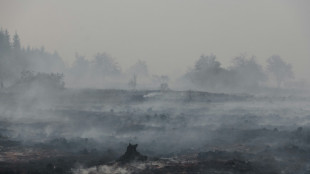 Rain brings respite as Belgium wrestles massive wildfire
 Most stocks rise as US data ease rate fears but fuel economic worries
 India take control of Galle Test as Sri Lanka slump to 99-5
 Australia's mushroom murderer appeals conviction
 The Nigerian fishing community being eaten up by the Atlantic
 Kushner to meet Netanyahu after talks with Hamas on Gaza plan
 Photos, memories all that remain for Colombia's bereaved after quake
 Sabalenka squeezes out win on sixth match point in Cincinnati

 Trump says US scaling back military drills with South Korea hours before start

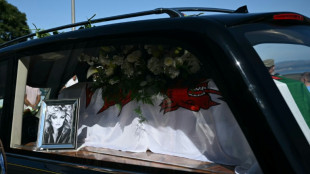
 Jason Arday: UK academic who died amid plagiarism storm
 Sabbath cafe clash lays bare Israel faultlines
 NatureCell to Open the Era of "Medicine for Humanity (蒼生醫學)" with the World's First Commercialization of Amniotic Stem Cell Conditioned Medium
 FaZe Esports, a GameSquare Company, Wins Rainbow Six Championship at 2026 Esports World Cup
 Onemeta OTCQB (ONEI): August 17th 2026; Reports Over 500% Increase in Verbum Call Consumption amid new client intake, including Fortune 500 Companies, Producing $2.4M Positive Cash Flow During H1 2026
 Emerging Growth Research Releases Flash Report on First Phosphate; Reiterates Buy Rating and C$4.94 Price Target Following Nasdaq Uplisting
 Council for Innovation Promotion Names Coke Morgan Stewart President and CEO
 HM Exploration Commences Borehole & Surface EM Surveys at Lewis Pilley's
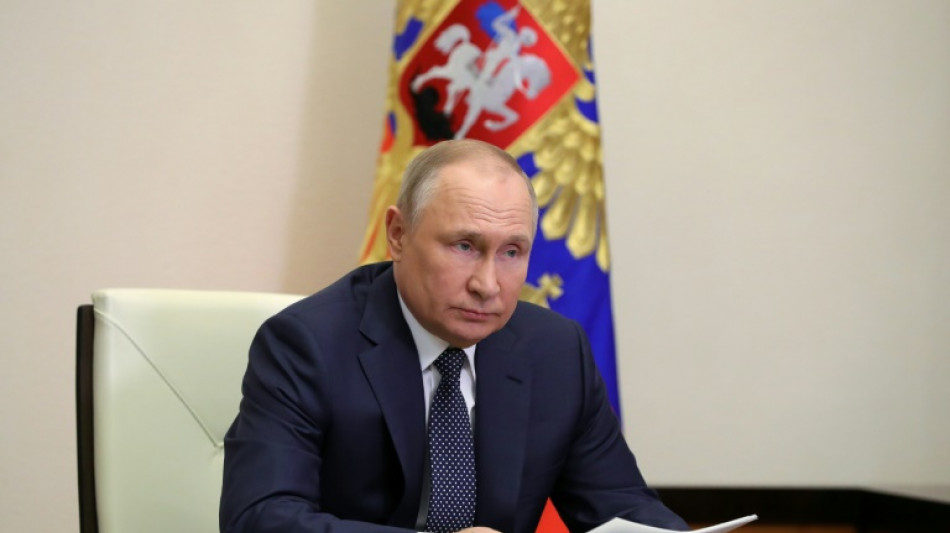
President Vladimir Putin on Thursday warned "unfriendly" countries, including all EU members, that they would be cut off from Russian gas unless they opened an account in rubles to pay for deliveries.
Western countries have piled crippling sanctions on Moscow since it moved troops into Ukraine, including the freezing of its $300 billion of foreign currency reserves.
While the United States banned the import of Russian oil and gas, the European Union -- which received around 40 percent of its gas supplies from Russia in 2021 -- has retained deliveries from Moscow.
"They must open ruble accounts in Russian banks. It is from these accounts that payments will be made for gas delivered starting tomorrow, April 1," Putin said during a televised government meeting.
He announced that he signed a decree that outlines the "clear and transparent" process.
"If such payments are not made, we will consider this a breach of obligations on the part of our buyers with all the ensuing consequences," Putin said.
"Nobody sells us anything for free and we are not going to do charity work. That means existing contracts being stopped" if payments are not made, he added.
According to the decree, all payments will be handled by Russia's Gazprombank, a subsidiary of state energy giant Gazprom.
Buyers will transfer payments into a Gazprombank account in foreign currency, which the bank will then convert into rubles and transfer into the buyer's ruble account.
- No change to contracts -
Earlier, Putin's spokesman Dmitry Peskov said that the new payment method would not affect the price of deliveries stipulated in the contracts.
"Those who receive Russian gas... they just acquire rubles for the amount in currency which is stipulated in the gas contract," Peskov told reporters.
German Chancellor Olaf Scholz said on Thursday Western countries would continue paying for Russian gas in euros or dollars.
"We looked at the contracts for the gas deliveries," Scholz told reporters in Berlin.
"They say that payments are made in euros, sometimes in dollars... and I made clear in my conversation with the Russian president that that will remain the case," referring to a telephone call with Putin on Wednesday.
On a visit to Berlin, French Economy Minister Bruno Le Maire said Paris and Berlin were "preparing" for the possibility "there is no longer any Russian gas".
Western capital imposed harsh economic sanctions since the start of Moscow's military operation in Ukraine on February 24, accelerating already high inflation and hitting the ruble.
The EU refrained from an energy embargo against Russia. However, the bloc has announced it plans to slash imports of Russian gas by two thirds this year.
While payments for gas in rubles will allow Russia to support its national currency, it will also deprive Moscow of a source of foreign currency.
The Kremlin has also hinted that it may be seeking payments in rubles for other exports too.
Russia has already obliged its exporters, including Gazprom, to convert 80 percent of their revenue into rubles.
After the introduction of sanctions, Russia expanded the list of what it calls "unfriendly" countries that now includes the United States, Australia, Canada, Britain, New Zealand, Japan, South Korea, all EU member states and several others.
E.Rodriguez--AT