Polish businesses face labour shortage after Ukraine war

 'Nowhere to run': Indonesian quake survivors plead for help
 Belgium fire makes 'limited' spread overnight, more help on way

 Vingegaard brings curtain down on season
 Dickwella, Dinusha hit fifties as Sri Lanka fight back
 Bangladesh Test cricket reboot delivers in style with historic win

 Virgin moves closer to launching Eurostar rival in 2030
 Indian marble waste dump becomes unlikely tourist attraction

 Coach says Australia 'let standards slip' in shock Bangladesh loss

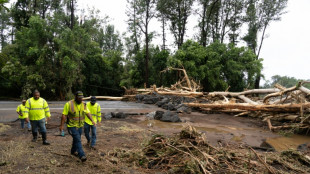 Hawaii recovery efforts begin as Lala downgraded, moves west

 Food safety crackdown snares Mumbai's famed restaurants
 Trump says US scaling back military drills with Seoul hours before start
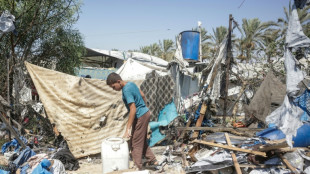
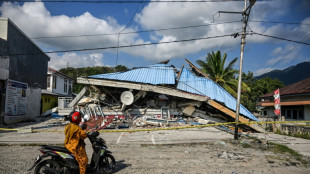 Nearly 13,000 displaced after deadly Indonesian quake
 Axe hangs over Australian batters after Darwin 'disaster'

 Is this cave in Turkey where Homer wrote 'The Odyssey'?

 Winning back walls from gangs, artists fill El Salvador's towns with color

 Opening arguments expected in Tupac murder trial

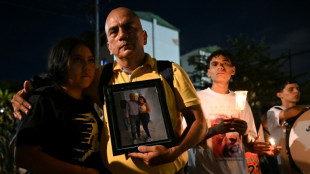 As machinery removes rubble, hopes for survivors from Colombian quake dwindle

 InterContinental Hotels Group PLC Announces Transaction in Own Shares - August 17

 HM Exploration Commences Borehole & Surface EM Surveys at Lewis Pilley's
 SEG Announces 2026 Interim Results

 Banyan Gold Intersects 13.03 g/t Au Over 14.2m at Powerline North, AurMac, Yukon, Canada

 Emerging Growth Research Releases Flash Report on First Phosphate; Reiterates Buy Rating and C$4.94 Price Target Following Nasdaq Uplisting

 Guardian Metal Resources PLC Announces Warrant Exercise

 Top-ranked Scheffler powers to PGA St. Jude Championship victory

 Jacquet scores on Liverpool debut in friendly win over Como

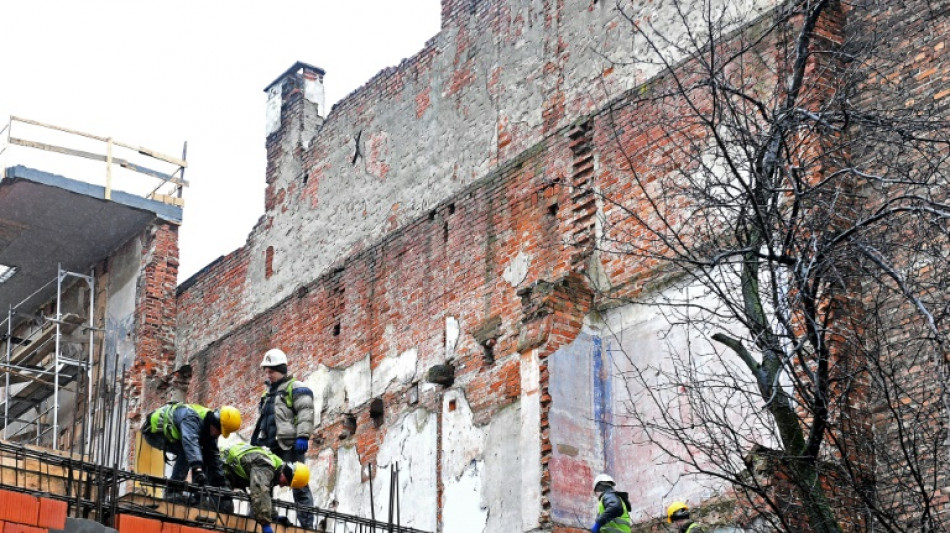
Szymon Janiewski employed 10 Ukrainians at his small construction company in Poland until war broke out in their homeland.
"I no longer have any Ukrainian employee," the 40-year-old says. "They were my company's backbone."
The workers had gone to Ukraine in January to see their families. A month later, Russia invaded their country and they never returned.
Janiewski is far from being the only Polish entrepreneur to lose Ukrainian employees to the conflict.
More than 300,000 Ukrainians had a residence permit in Poland before the war, according to official figures, though the real number is believed to be around 1.5 million.
"Ukrainian citizens, men, have left their workplace in Poland and gone to defend their motherland," Polish Family and Social Policy Minister Marlena Malag told Radio Jedynka.
"Employers report that some sectors risk losing manpower," she added.
Poland's construction sector is the most affected: It employed 480,000 foreigners before the war, and four in five were from Ukraine, according to Jan Stylinski, head of the Polish Association of Construction Industry Employers (PZPB).
But a quarter of the Ukrainians in Poland have left the country since the war started on February 24, according to the PZPB.
"Everyone has the same labour problem in the sector: Ukrainian workers," Janiewski says.
- Labour shortage -
The phenomenon has added to a chronic shortage of labour in the sector.
In 2019, there was already a need for 150,000 workers, "today that's increased to around 250,000," Stylinski says.
He adds that the problem primarily affects small and medium businesses in eastern Poland, which borders Ukraine.
For a month, Janiewski has had to call in subcontractors.
Janiewski stays in contact with his employees in Ukraine, who went in January to see their family, and offers support in this time of distress.
They are now unable to leave because Ukrainian men aged 18 to 60 are eligible for military call-up.
"It was a team I'd worked with for four years, I trained them to my standards, and we got on very well," Janiewski says.
He currently hosts 10 members of his employees' families including some of their wives and children who are now refugees in Poland.
"The children are already enrolled in school," says the business owner, who like thousands of Poles, charities and local authorities have rushed to help refugees without waiting for the government to act.
Poland has welcomed more than 2.2 million Ukrainians fleeing Russia's bombardment, but the refugees are mainly women, children and the elderly.
- 'Hard to predict' -
The labour shortage is not the only adverse effect of the invasion for the construction sector.
"Added to this are other serious problems caused by the war: the dramatic increase in the price of asphalt, fuel, cement, a shortage in other essential products because of broken supply chains or sanctions," says Barbara Dzieciuchowicz, head of the National Chamber of Road Construction.
"We no longer have anything coming from Belarus or Russia," she says.
The West has unleashed sweeping sanctions against Russian banks, businesses and individuals. Belarus has faced similar punitive measures for allowing Russia to use its territory to launch the assault on Ukraine.
Although road construction is not at risk, "the situation is extreme, very dynamic and we should not expect it to regain its balance quickly," Dzieciuchowicz says.
In late February, the price of construction materials rose by 27 percent on average compared with the same period in 2021 while insulation costs increased by 72 percent year-on-year.
The price rises come as inflation in Poland is already at 8.5 percent and labour costs are rising amid general fears the situation will deteriorate.
Janiewski prefers not to look ahead too much.
"It's totally hard to predict," he says. "I am focusing on the present, on right now."
E.Rodriguez--AT