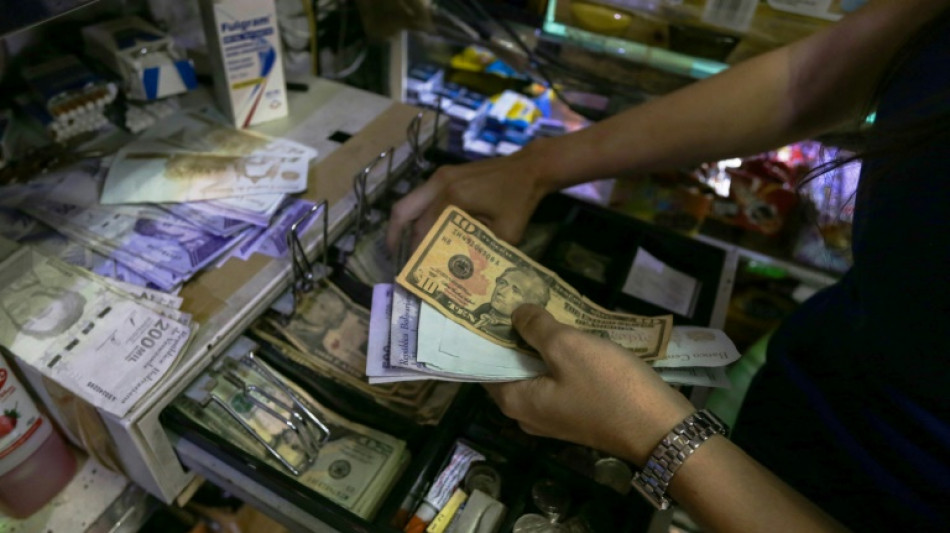
Venezuela's risky currency stabilization to tackle inflation

 'Nowhere to run': Indonesian quake survivors plead for help
 Belgium fire makes 'limited' spread overnight, more help on way

 Vingegaard brings curtain down on season
 Dickwella, Dinusha hit fifties as Sri Lanka fight back

 Bangladesh Test cricket reboot delivers in style with historic win

 Virgin moves closer to launching Eurostar rival in 2030
 Indian marble waste dump becomes unlikely tourist attraction
 Coach says Australia 'let standards slip' in shock Bangladesh loss

 Hawaii recovery efforts begin as Lala downgraded, moves west

 Food safety crackdown snares Mumbai's famed restaurants
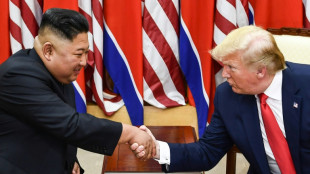
 Trump says US scaling back military drills with Seoul hours before start
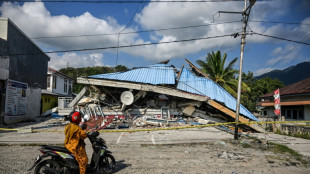 Nearly 13,000 displaced after deadly Indonesian quake

 Axe hangs over Australian batters after Darwin 'disaster'

 Is this cave in Turkey where Homer wrote 'The Odyssey'?
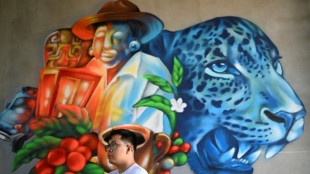 Winning back walls from gangs, artists fill El Salvador's towns with color

 Opening arguments expected in Tupac murder trial

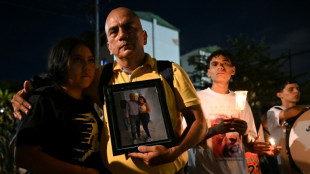 As machinery removes rubble, hopes for survivors from Colombian quake dwindle

 InterContinental Hotels Group PLC Announces Transaction in Own Shares - August 17

 HM Exploration Commences Borehole & Surface EM Surveys at Lewis Pilley's
 SEG Announces 2026 Interim Results

 Banyan Gold Intersects 13.03 g/t Au Over 14.2m at Powerline North, AurMac, Yukon, Canada

 Emerging Growth Research Releases Flash Report on First Phosphate; Reiterates Buy Rating and C$4.94 Price Target Following Nasdaq Uplisting
 Guardian Metal Resources PLC Announces Warrant Exercise

 Top-ranked Scheffler powers to PGA St. Jude Championship victory
 Jacquet scores on Liverpool debut in friendly win over Como
Venezuela has been in recession for eight years, suffered four years of hyperinflation and endured a currency in free fall.
But the beleaguered bolivar has, against all odds, managed to stabilize since October.
It is thanks to a $2.2 billion investment by the state in a bid to slow down inflation in the South American nation.
Last year ended with inflation at 686 percent -- the highest in the world.
But that was a significant improvement on the 130,000 percent in 2018, 9,585 percent in 2019 and 3,000 percent in 2020.
According to consultancy Aristimuno Herrera & Associates, Venezuela's central bank has injected $2.2 billion into the internal market over the last five months.
Banned for 15 years by the government, the US dollar was once scarce and highly prized, exchanging hands on the black market for signficantly more than the official exchange rate.
Suffering a cashflow crisis, the government was forced to lift the ban in 2019.
- 'Can it be sustained?' -
"Offering more dollars than there is demand generates stability in the exchange rate," Cesar Aristimuno, director at Aristimuno Herrera & Associates, told AFP.
The bank has acknowledged 29 "interventions" since October 2021, although without giving details of the amounts.
Last October, the bank slashed six zeros off the bolivar -- making one new bolivar worth a million old ones -- with the government saying this would improve faith in the local currency.
At the same time, authorities imposed a three percent tax on foreign currency transactions and cryptocurrencies.
"The legal tender is and will continue to be the bolivar," Vice President Delcy Rodriguez, who is also the economy and finance minister, told parliament.
Since October, the exchange rate against the dollar has moved from 4.18 to 4.32 bolivars, a depreciation of just 3.24 percent.
That compares favorably to the depreciation of 76 percent in 2021 and more than 95 percent in each of the previous three years.
After shrinking by more than 80 percent during eight years of recession, Venezuelan GDP grew by four percent in 2021, the government claims.
"Our economy is so small that such a policy can be applied. The issue is how long will they sustain it," said Henkel Garcia, director at Econometrica.
Some experts fear that the government is "burning" international reserves but Aristimuno and Garcia both say the dollars have come from an increase in revenues from Venezuelan oil due to rising crude prices and a limited increase in production.
State oil company PDVSA produced more than three million barrels a day in 2014 but that fell to 400,000 six years later.
It has now risen to 680,000 according to OPEC, the Organization of the Petroleum Exporting Countries.
The central bank says it has $10.8 billion in reserves, half the amount of 2014 and a third of the 2007 figure.
However, the bank is including $5 billion provided by the International Monetary Fund to help mitigate effects of the coronavirus pandemic, but which has been withheld due to questions over the 2018 re-election of President Nicolas Maduro in a poll widely dismissed as a fraud.
- 'Collateral damage' -
While the injection of dollars has beneficial effects, there is "collateral damage," said Aristimuno.
Since inflation is high and the exchange rate is stable, the dollar's buying power is falling.
Likewise, "exports are losing their attractiveness" compared to imports.
Carlos Fernandez Gallardo, president of the FEDECAMARAS employers federation, said he is worried.
"There is an increase in dollar costs for producers, with a pernicious effect on the consumer," he told AFP.
"What will happen if these dollars disappear?"
In 2018, the government attempted to tackle inflation by obliging banks to keep 85 percent of their reserves in the central bank in an attempt to limit the printing of money.
That served to reduce credit, which was already in free fall with the depreciating bolivar.
Venezuela is a credit minnow with less than $140 million in 2021, compared to $14 billion in neighboring Colombia.
Aware that credit, investments and growth are intimately related, Caracas partially changed tack in February, allowing loans indexed against the dollar under certain conditions and reducing the obligatory reserves to 73 percent.
But the challenge remains, how to promote growth while keeping inflation under control.
M.White--AT