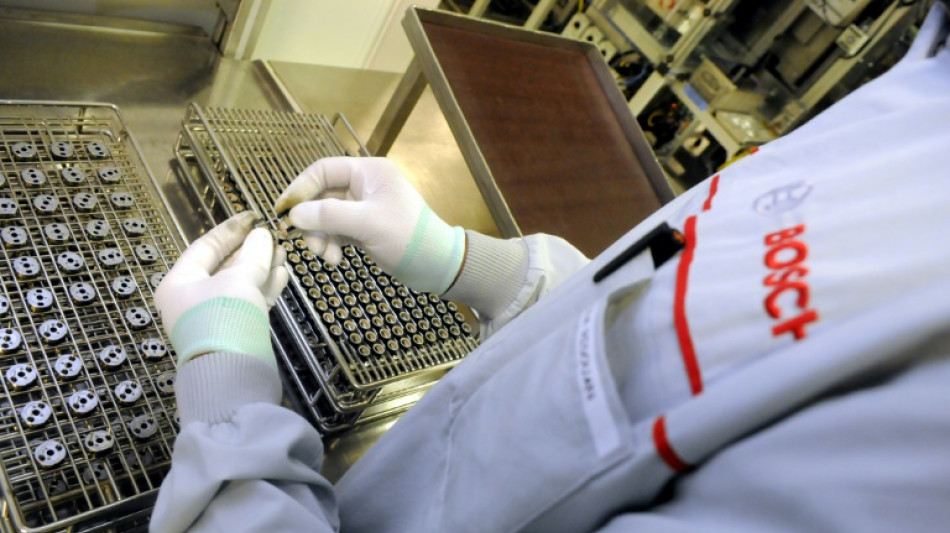
War in Ukraine rattles auto parts industry

 'Nowhere to run': Indonesian quake survivors plead for help
 Belgium fire makes 'limited' spread overnight, more help on way

 Vingegaard brings curtain down on season
 Dickwella, Dinusha hit fifties as Sri Lanka fight back

 Bangladesh Test cricket reboot delivers in style with historic win

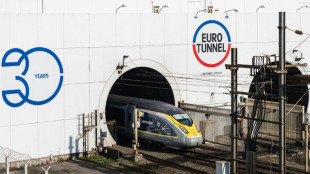 Virgin moves closer to launching Eurostar rival in 2030

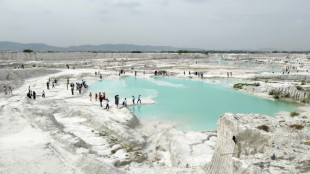 Indian marble waste dump becomes unlikely tourist attraction

 Coach says Australia 'let standards slip' in shock Bangladesh loss

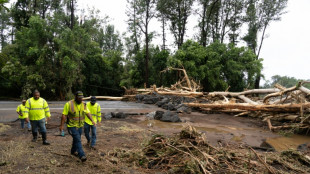 Hawaii recovery efforts begin as Lala downgraded, moves west

 Food safety crackdown snares Mumbai's famed restaurants
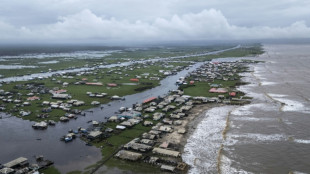
 Trump says US scaling back military drills with Seoul hours before start
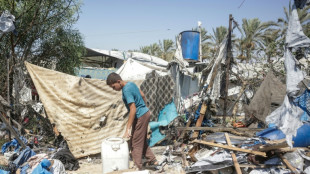
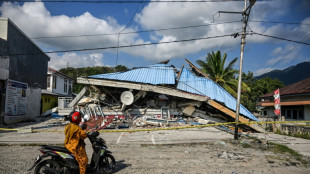 Nearly 13,000 displaced after deadly Indonesian quake

 Axe hangs over Australian batters after Darwin 'disaster'

 Is this cave in Turkey where Homer wrote 'The Odyssey'?

 Winning back walls from gangs, artists fill El Salvador's towns with color

 Opening arguments expected in Tupac murder trial

 As machinery removes rubble, hopes for survivors from Colombian quake dwindle

 InterContinental Hotels Group PLC Announces Transaction in Own Shares - August 17

 HM Exploration Commences Borehole & Surface EM Surveys at Lewis Pilley's
 SEG Announces 2026 Interim Results

 Banyan Gold Intersects 13.03 g/t Au Over 14.2m at Powerline North, AurMac, Yukon, Canada

 Emerging Growth Research Releases Flash Report on First Phosphate; Reiterates Buy Rating and C$4.94 Price Target Following Nasdaq Uplisting
 Guardian Metal Resources PLC Announces Warrant Exercise

 Top-ranked Scheffler powers to PGA St. Jude Championship victory
 Jacquet scores on Liverpool debut in friendly win over Como
Ukraine's car parts industry, which supplies many vehicle manufacturers in western European, has taken a battering since the Russian invasion one month ago.
Factories are at a standstill, cable production has slumped and there are concerns about neon supplies.
Ukraine saw its domestic car production industry nosedive when the Soviet Union collapsed but successfully reinvented itself in the early 2000s as a major producer of automotive parts.
The country's proximity to the European Union, its skilled workers and low labour costs have attracted a string of Western manufacturers, particularly from German groups like Bosch, Kostal and Prettl.
By 2021, they were employing 60,000 workers in 38 Ukrainian plants, according to government figures.
The factories produce electronic components, car seats and, crucially, electric cables.
A maze of cables known as a wire harness runs through every vehicle and constitutes its central nervous system. A large SUV like the Porsche Panamera contains several kilometres (miles) of these cables.
Before the Russian invasion on February 24, Ukraine was one of Europe's biggest manufacturers of electric cable.
Last year it supplied 760 million euros ($835 million) worth of cables to the EU's automotive and aeronautics industries, according to the European Association of Automotive Suppliers (CLEPA).
Some 45 percent of Ukrainian harnesses go to Germany and Poland.
Every vehicle has a "specific wire harness", which requires 10 to 15 hours of manual labour and is produced on a just-in-time basis, two to three days after order, Volkswagen boss Herbert Diess explained in early March.
Most of the parts factories are located in western Ukraine, which has been somewhat spared the worst of the war, and employ mostly women.
The plants are seem to be working to "a certain extent" but shipping parts out to Western Europe is "equally challenging", according to CLEPA secretary-general Sigrid de Vries.
- Domino effect -
At the Polish border, the Bosch factory in Krakovets has slowly resumed production of starter motor parts "at the request of 180 employees who want to get back to work", the world leader in car parts told AFP.
"We continue to apply the strictest security measures for workers on site," Bosch continued, adding that it had paid workers "several months of wages in advance".
Several Western manufacturers have taken the radical option of creating duplicates of entire factories in countries neighbouring Ukraine.
A few days before the war started, Ireland's Aptiv moved cable production to mirror sites in Poland, Romania and Serbia.
"(Cable production) isn't that complicated to relocate. They're relatively straightforward pieces of equipment," explained Alexandre Marian of consulting firm AlixPartners.
But de Vries cautioned that "it's easier said than done" as the auto parts industry is labour intensive.
"It's very specific to a certain model. It needs time and careful reflexion on what to do," she said.
Car plants in eastern Europe employ many Ukrainians and a number have gone back home to fight, as have Ukrainian lorry drivers, who make up a significant proportion of the transport workers shipping parts to western Europe.
As a result, Volkswagen, BMW and Renault have all had to suspend production at certain factories.
Ukraine, a major steel producer, is also the world's top exporter of neon, which is essential for manufacturing semiconductors.
While the manufacturing process has adapted since Moscow annexed Crimea in 2014 and there are adequate stocks of neon, "there could be a problem in the medium term", AlixPartners' Marian said.
However, any Ukrainian shortage would be less consequential than the scarcity of Russian raw materials, he added.
- 'Weak link' -
More widely, it is the rocketing prices of energy -- gas, oil, and electricity -- that worry the sector the most.
The war has worsened the prospects of a vehicle market already struggling from the impact of the Covid-19 pandemic, the semiconductor shortage, logistical costs and the rise in the price of raw materials.
Global sales are expected to fall a further two percent in 2022, particularly in Europe. Standard & Poor's (S&P) had hitherto forecast a rise of four to six percent.
And although carmakers have succeeded in putting up prices and protecting their margins, parts manufacturers have to find "a delicate balance" between rising supply costs and cautious clients, S&P's Vittoria Ferraris pointed out.
"Some automakers and parts manufacturers are going to find themselves in trouble," Marian predicted. "There has to be a weak link in the (production) chain somewhere."
A.Ruiz--AT