Stay or go? Dilemma facing last of the Afghan Sikhs

 Hurricane Isaias makes landfall in Florida
 Brazil prosecutors sue Shell for $108 mn over deadly 2024 floods
 Major earthquake destroys buildings, roads in Panama
 Anthropic AI model sent fake murder tip to Philadelphia police
 7.7-magnitude quake rocks Panama, triggers tsunami warning

 Prince Harry booed at English rugby match

 Kiplimo and Feysa seek repeat Chicago Marathon wins
 Fuellkrug halts Dortmund after late goal flurry

 Injured Ravens quarterback Jackson ruled out of Falcons clash
 Brewers aim to take down two-time defending champion Dodgers in NLCS rematch

 Tsunami alert after major earthquake rocks Panama

 Outer bands of Hurricane Isaias lash US Gulf Coast
 Hope, Rutherford fire West Indies to record T20 chase of 250

 Farhan leads Pakistan to T20 win over Sri Lanka
 Turkey sack coach Montella after Nations League woe
 US announces sanctions on ICC, hours after Nobel award to former judge

 Montenegro expels popular Russian war blogger wanted by US
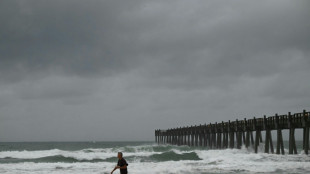
 Rubio calls on all Venezuela opposition figures to join talks with govt

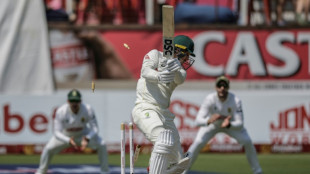 Australia struggle against South Africa quicks in first Test
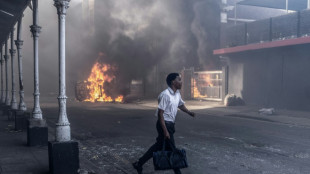
 Stocks advance as Trump rules out pre-vote Iran attack
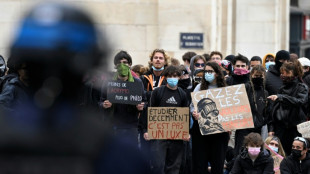
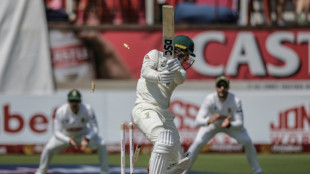 Australia struggle against South Africa's fast bowlers

 Massive debt puts France in a bind as investor doubts deepen
 Arteta urges 'respect' for process after Man City financial verdict
 'Human-authored' book labels gain ground amid AI scandals

 Man City whistleblower Pinto to stay under police protection

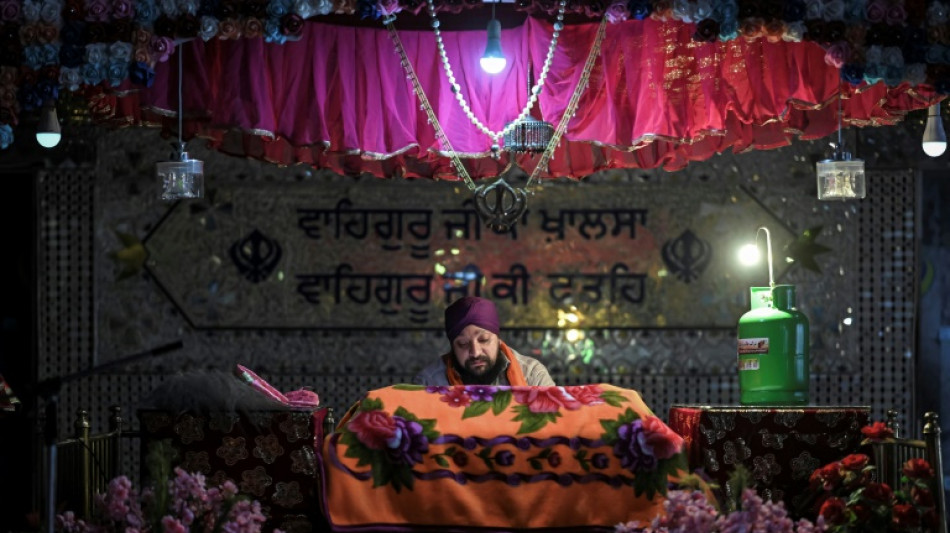
The caretaker of the last Sikh temple in Kabul to regularly host open prayer surveysthe cavernous hall where throngs once gathered in worship.
Only a handful are left now.
"Afghanistan is our country, our homeland," said Gurnam Singh. "But we are leaving out of sheer hopelessness."
In the 1970s, Afghanistan's Sikh population numbered 100,000, but decades of conflict, poverty and intolerance have driven almost all of them into exile.
The Soviet occupation, subsequent Taliban regime and bloody US-led military intervention winnowed their numbers to just 240 last year, according to figures kept by the community.
After the Taliban returned to power in August, opening the newest chapter in Afghanistan's dark history, a fresh wave of Sikhs fled the country.
Today, Gurnam Singh estimates just 140 remain, mostly in the eastern city of Jalalabad and in Kabul.
- Spiritual home -
These remaining devotees trickle into the Karte Parwan Gurdwara temple for a recent prayer session on a wintry Monday.
Men stand to one side, women the other -- about 15 in total.
Sitting barefoot on a floor covered with thick red rugs, they warm themselves around stoves and listen to a recitation from the Guru Granth Sahib, the Sikh holy book.
In November, the temple had three copies, but two have since been sent to New Delhi for "safekeeping".
Sikhs have long faced discrimination in Muslim-majority Afghanistan. Poverty is rife and attacks from the Islamic State-Khorasan, the jihadist group's Afghan chapter, are a real threat.
The overwhelming majority of Sikhs fleeing Afghanistan have landed in India, where 90 percent of the religion's 25 million global adherents live, mainly in the northwest region of Punjab.
Since the Taliban takeover, India has offered exiled Sikhs priority visas and the opportunity to apply for long-term residency. There is no sign yet that citizenship is on the table.
Pharmacist Manjit Singh, 40, is among those who turned down the offer, despite his daughter having emigrated there with her new husband last year.
"What would I do in India?" he asked. "There is no job or house there."
Among the remaining holdouts, the prospect of leaving is particularly wrenching: it would mean abandoning their spiritual home.
"When this gurdwara was built 60 years ago, the whole area was full of Sikhs," said 60-year-old community elder Manmohan Singh.
"Whatever joy or sorrow we felt, we shared it here."
- Leaving home -
From the outside, the temple is largely indistinguishable from other buildings on the street.
But security here is markedly high, with body searches, ID checks and two fortified doors.
In early October, unidentified gunmen forced their way inside and vandalised the sacred space.
The incident had ugly echoes of the most scarring attack on the Afghan Sikh community.
In March 2020, members of IS-K assaulted the Gurdwara Har Rai Sahib in Shor Bazar, a former enclave of Kabul's Sikh community, killing 25.
Since the attack, that temple -- and the nearby DharamshalaGurdwara, the capital's oldest Sikh house of worship at an estimated 500 years -- have been abandoned.
Paramjeet Kaur was struck by shrapnel in her left eye during the IS-K attack, and her sister was among those killed.
In the weeks that followed, Kaur packed her bags and headed for Delhi, but "we had no work and it was expensive, so we came back", she said.
That was in July, a few weeks before the Taliban returned to power.
Now Kaur, her husband and three children are fed and housed by Karte Parwan Gurdwara.
Her children do not go to school, and Kaur never ventures beyond the walls of the temple, the only place where she feels safe.
She thinks about leaving again, this time for Canada or the United States.
"My son and daughters are still small," she said. "If we leave, we can make something of our lives."
P.Hernandez--AT