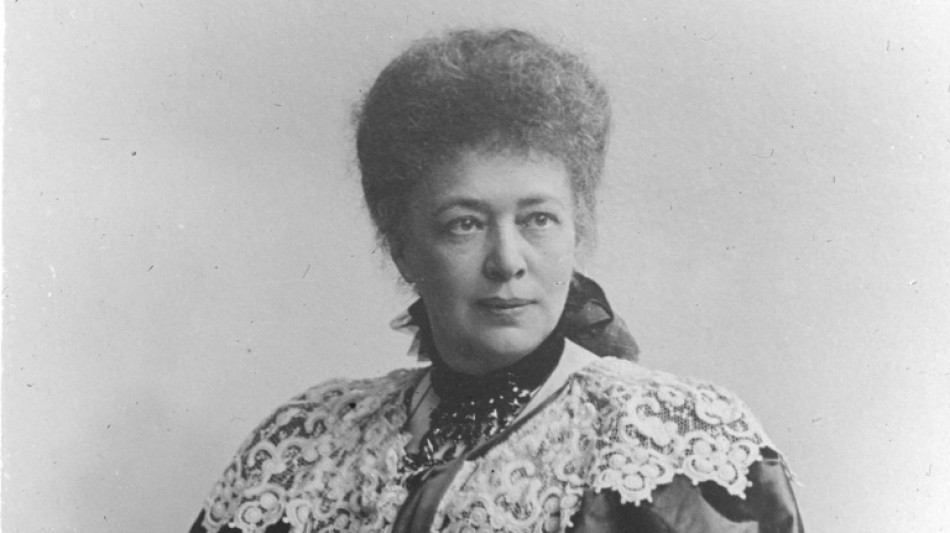
Peace pioneer Bertha von Suttner's message still resonates / Photo: Carl Pietzner - APA/AFP/File

 Iran's economic ties to Dubai hard to break despite war

 iPhone 18預購後出現可疑扣款 四間銀行調查未授權交易

 《浪花男女》辦特別謝票場 馮志強談票房與導演客串拍攝

 Former captain De Villiers hails 'fantastic' Springboks

 Galaxy Tab S12系列效果圖曝光 Ultra擬配雙鏡頭及瀏海螢幕

 اليورو يستقر في البنوك المصرية وأعلى سعر للبيع 59.85 جنيه

 حمزة قورقماز يناقش العلاقة بين وضوح المبادئ واحترام الاختلاف

 Altman tells Fortune OpenAI will not go public in 2026
 China, Russia, India seek economic cooperation at BRICS

 الأرصاد السعودية تتوقع سيولاً وأمطاراً رعدية في خمس مناطق

 دول عربية ومنظمات تدين استهداف خط أنابيب في السعودية

 One dead, 102 rescued from stricken ferry off Indonesia's Java

 Garcia keeps WBC welterweight title by stopping Benn
 Lights out in Laos as electricity exports surge

 'This is the test': All eyes on US Fed to tackle high inflation

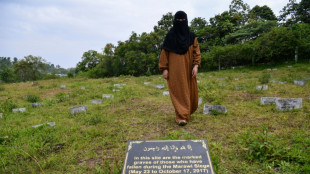 Scars of Marawi siege linger as Philippines poll nears

 Trump turns to golf, family business on Irish visit's second day

 Best Online Gold Dealers in USA 2026 Rankings Released By Experts
 South Africa defeat New Zealand 43-28 to complete 3-1 series victory

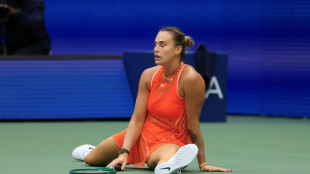
 Rybakina triumphs in US Open, denies Sabalenka three-peat

 Mini 1998 GT pairs 161-hp engine with John Cooper Works chassis hardware

 Anthropic details Claude misuse as US targets major illicit online marketplace

 Fifth Circuit upholds dismissal of Jackson residents' constitutional water claims

 Winston County trash-debt prosecutions face challenge from civil-rights lawyers

 Akron fan's honorary play-calling stint ends with opening-drive fumble

The first woman to be awarded the Nobel Peace Prize in 1905, Austrian pacifist Bertha von Suttner's reflections are still cited by peace advocates as the war in Ukraine grinds on.
Von Suttner was looking for a "better ideal", according to French journalist Antoine Jacob, whose new biography "Bertha la Paix" ("Bertha of Peace") will be published next week.
More than a century later, her 1906 Nobel Peace Prize recipient speech -- in which she said happiness is developed in times of peace -- has lost nothing of its acuity.
"Fortresses are being erected, submarines built, whole areas mined, airships tested for use in war; and all this with such zeal –- as if to attack one's neighbour were the most inevitable and important function of a state," von Suttner told her mostly male listeners.
- Provocative work -
She was born into an aristocratic family in the Austrian Empire in 1843.
Burdened by her mother's gambling debts, she became a governess and music teacher in the von Suttner household and married the family's son Arthur, who like her refused to conform to norms.
As journalist and novel writer, the polyglot published 60 short stories, a few essays and 19 novels, including the influential and provocative anti-war novel "Lay Down Your Arms" in 1889.
Thanks to her aristocratic origins, her energy and determination, and her talent for mobilising goodwill, von Suttner became one of the leaders of the international peace movement.
"Daughter of a general, she was raised in an environment where falling at the front with God's approval was an honour," her biographer Jacob told AFP.
"We have to realise how far she came."
With Russia's invasion of Ukraine, von Suttner's reflections on respect for international law, disarmament and multilateralism are "more relevant than ever", said Norwegian Nobel historian Asle Sveen.
"The international order advocated by Suttner and the peace movement is once again disintegrating," Sveen said.
"Her admonishing message 'Lay Down Your Arms' is more relevant than ever in the face of nuclear threat gestures," Austrian Foreign Minister Alexander Schallenberg told AFP.
Her cosmopolitan, liberal and anti-clerical worldview, however, earned her fierce enmity in nationalist circles, where she became derided as "Bertha of the Jews".
She died in June 1914 at the age of 71, just before World War I broke out.
- 'Decisive role' -
Von Suttner also played "a decisive role" in convincing her friend and patron, Swedish inventor Alfred Nobel, to award a prize for peace, according to Jacob.
But since the prestigious prize was first awarded in 1901, only 18 women have obtained the distinction, compared to 92 men.
The second woman to win it was American Jane Addams, 26 years after von Suttner.
Despite her prominence, which included being given a private audience by then US president Theodore Roosevelt, von Suttner did not have the right to vote -- and had to be accompanied by her husband when she travelled.
"Among all these men, she tried to play a role completely contrary to the dominant way of thinking and without anyone pushing her," Jacob told AFP.
Her legacy in Austria also had its ups and downs.
The Nazi regime, which annexed Austria in 1938, burned her books, and a Vienna square inaugurated in her honour was renamed in 1957 after poet Rainer Maria Rilke.
But in 1966 her image was printed on the 1,000-schilling banknote.
In 1986, a small Vienna street was named after her.
And today she appears on the two-euro coin of Austria, a neutral country which is host to several UN bodies.
G.P.Martin--AT