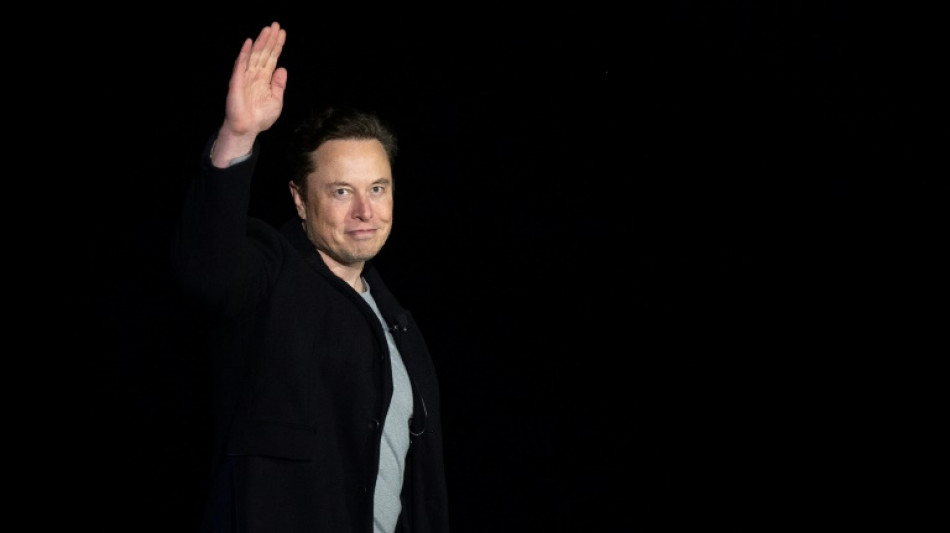
Key dates of Twitter rollercoaster ride under Musk / Photo: JIM WATSON - AFP/File

 French court to hear Depardieu's appeal against rape trial order: sources
 The German state premier hoping to halt far-right surge
 Lebanon wants Israel security deal as prelude to peace: president to AFP
 England's Brook keen to learn from 'hero' Pietersen after stunning ton
 Saudi says Houthis target Mecca, warns of 'red line'
 Phillippines ex-leader Duterte makes first appearance at ICC
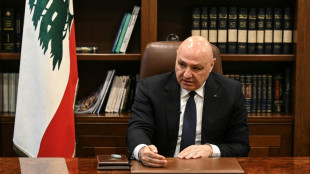 Lebanon wants Israel security deal, Hezbollah disarmament without confrontation: president to AFP
 BASIS.pro Expands On-Chain Infrastructure with XDC Network Partnership and Zypher DAO as Auto Earn Goes Live
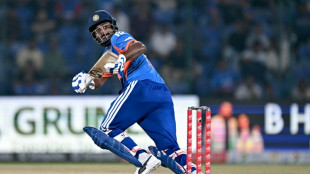 Samson relishing battle with teen star Sooryavanshi for India spot
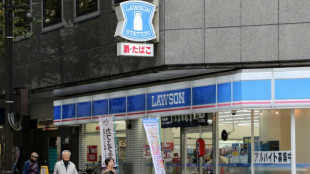 Pickle-flavoured tart? AI inspires Japan's convenience stores
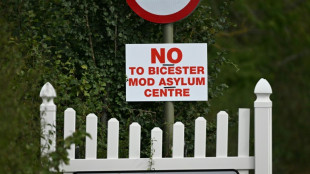
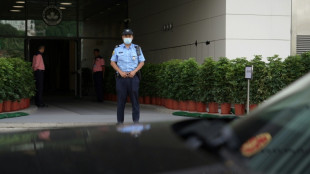 Macau holds first closed-door national security trial
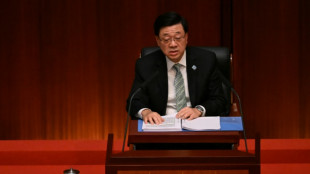
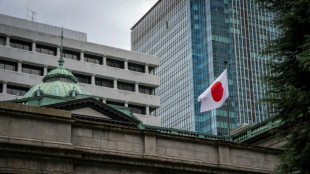 Bank of Japan set to raise rates under pressure from inflation, US
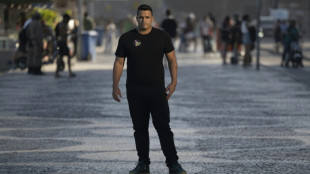
 Zverev, Shelton back on court for Davis Cup qualifiers
 Peace is a 'dangerous' word in Russian city heading to polls
 Meta chief pushes back on AI slowdown calls

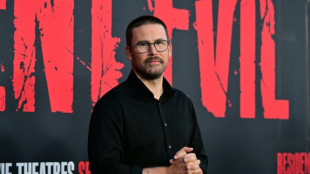 'Resident Evil' film brings video game's ethos to the big screen
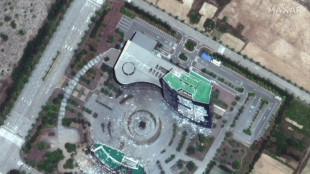 Court orders N. Korea pay Seoul $32.5 mn for blowing up office
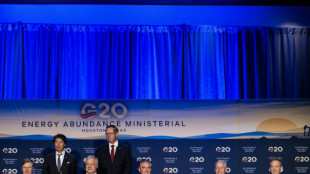
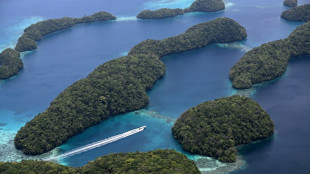 US military buildup in Palau stirs war fears
 US Fed to deliver rate decision with markets betting on hike
 Saudi, Egypt demand open Red Sea as Riyadh vows response to Houthi attacks
 Physical Gold IRA Investing Guide Released by Experts (2026 Update)

 Tocvan Expands Near-Surface Gold at El Mezquite: 47.7 m of 0.8 g/t Au Including 2.8 m of 8.4 g/t Au and 54 g/t Ag

 FireFox Gold Announces Discovery of the Lammas Zone, Intersecting 21.0m at 4.13 g/t Gold More Than 650m From Previous Drilling at the Mustajärvi Project in Lapland, Finland

 Smith & Nephew Plc Announces Result of Cash Tender Offer for 2030 Bonds
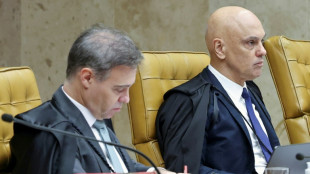 Brazil's Supreme Court clashes over handling of probe involving judge
There has rarely been a moment of calm since Elon Musk bought Twitter last year, quickly fired thousands of workers and restored ex-president Donald Trump's account.
This week, Musk swept away the old systems that had publicly verified and labelled accounts as he seeks a path to profit for the ailing social media platform.
Here are the key moments of his chaotic tenure:
- Enter Elon -
Musk, already the CEO of Tesla and SpaceX, buys Twitter in late October last year for $44 billion after months of on-off negotiations.
"Let the good times roll," he tweets after the deal is sealed on October 28. He becomes the sole director of the company after dissolving its corporate board.
- Monthly charge -
On November 1, Musk announces the site will start charging $8 per month for "Twitter Blue", which will give paid-for accounts the same blue checkmarks that were previously awarded free of charge to "notable" accounts.
But chaos ensues. Spammers and impersonators rush to buy the blue ticks, experts warn of a flood of disinformation and Twitter quickly rows back the launch.
- Advertiser exodus -
Dozens of companies, including Coca-Cola and Volkswagen, suspend their advertising on Twitter in November as they monitor the new direction the company will take.
By some estimates, the site loses half of its top 100 advertisers, though ads remain its main source of revenue.
- Massive layoffs -
On November 4, Musk fires half of Twitter's 7,500 staff, sending shockwaves through Silicon Valley.
He tweets that "unfortunately there is no choice when the company is losing over $4M/day".
- Regulator 'concern'-
The chaos draws a rare warning on November 10 from the Federal Trade Commission (FTC), the US authority that oversees consumer safety.
"We are tracking recent developments at Twitter with deep concern," says an FTC spokesperson.
- Trump return -
Musk, a self-pronounced free speech absolutist, reinstates the account of former president Donald Trump after a poll of users votes narrowly in favour. A few days later he announces an "amnesty" for all banned Twitter accounts.
However, rapper Kanye West's account is suspended for incitement to violence after he tweets a picture that appears to show a swastika interlaced with a Star of David.
- Twitter Blue, take two -
In mid-December Musk relaunches Twitter Blue. This time, Twitter promises to review accounts before giving them a blue tick.
At this stage, the previously verified accounts keep their blue ticks, meaning there are two types of accounts emblazoned with the badge of approval.
- Musk to step down -
On December 19, Twitter users vote by 57.5 percent to oust Musk as CEO in a poll he organises and promises to honour.
A day later he says he will resign "as soon as I find someone foolish enough to take the job".
- Media revolt -
In early April, Twitter labels National Public Radio (NPR) in the US "state-affiliated media", a tag usually reserved for Russian and Chinese propaganda outlets.
Twitter later changes it to "government-funded" instead and expands its use, prompting outlets including NPR and Canada's CBC to announce they will no longer use the platform.
This week, AFP analysis of major media accounts shows Twitter appears to have halted the use of both labels.
- Buyer's remorse -
At the end of March, Musk tells staff in an internal message that the platform is worth less than half of what he paid for it.
A few weeks later he tells the BBC his ownership has been "quite a rollercoaster" and that he only bought the company because he believed the courts would force him to.
- Blue ticks check out -
This week, the accounts that had been verified pre-Musk finally lose their blue ticks en masse.
Critics express dismay that official accounts providing warnings on everything from health emergencies to natural disasters are no longer clearly marked.
D.Lopez--AT