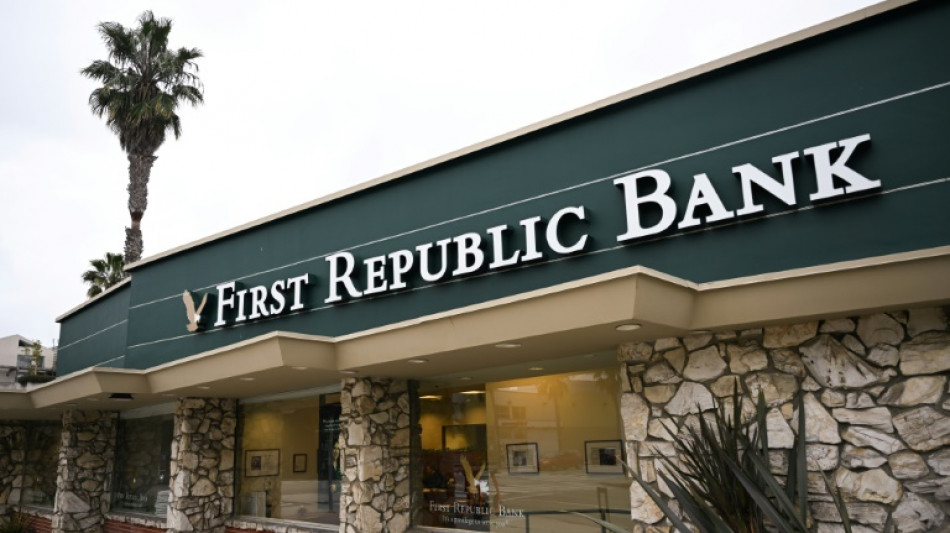
US banks face increased scrutiny of Q1 results after SVB collapse / Photo: Patrick T. Fallon - AFP

 Toogood Gold's Table Mountain Sits in the Shadow of a Nevada Gold Rush

 MEXC July–August Security Report: 38.66M USDT in Risk Funds Intercepted, Futures Insurance Fund Hits 792M USDT

 'Breathing toxin every day': Indonesians choked by haze feel helpless
 Stocks edge higher ahead of US Fed rate call

 Philippines ex-leader Duterte makes first in-person ICC appearance

 2027 Formula One calendar includes Monaco sprint race

 Palestinians are the real victims, Thunberg tells Ed Sheeran

 Hashim Thaci: From 'George Washington of Kosovo' to Hague convict

 Amnesty says Iran committed 'crimes against humanity' in crackdown on 2022 protests

 EU to ban social media for under 13s, curb access until 15

 Philippines ex-leader Duterte makes first appearance at ICC

 EU chief pitches 'associate member' status for Canada

 English village votes to 'secede' from UK over asylum centre plan

 Wildfires push endangered Sumatran elephants to brink: Indonesian NGO

 Stocks head higher as traders prepare for Fed decision

 English village votes to 'secede' from UK over asylum centre

 Hong Kong unveils plan to align economy with China's goals
 Brazilian voters the latest to eye Bukele security model with envy

 EU chief hosts Canada's Carney in push to 'deepen' alliance

 EU chief to unveil social media, gaming curbs for under-15s
 Saudi says Houthis target Mecca, warn of 'red line'

 Asian stocks stutter as traders prepare for Fed decision

 US touts its power, avoids Iran war at G20 Energy meeting

 Dead animals, barren fields, and hunger - El Nino chokes Central America
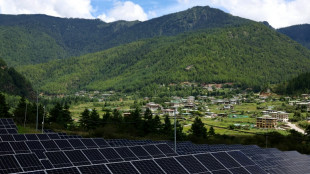 In hydropowered Bhutan, solar starts to rise

Roughly a month after Silicon Valley Bank's collapse sparked fears of contagion, quarterly earnings reported this week are expected to focus on bank liquidity and the industry's preparation in case of recession.
Nerves have calmed somewhat compared with a few weeks ago, when US banking regulators unveiled emergency measures to fortify the industry after a run of depositors felled SVB and two other mid-sized banks failed.
While investors view the sector as having stabilized, industry watchers are expecting a muted or downcast tone as banks -- whose well-being is considered critical for the economy as a whole -- begin releasing their quarterly updates.
"They're going to be setting expectations that their earnings are going to soften," said Clifford Rossi, a former risk management executive at Citigroup and a professor at the University of Maryland.
Heightened regulatory scrutiny in the wake of the problems is expected to lead to tightened lending standards, one of several factors crimping profitability.
Earnings season kicks off Friday, with reports from giants JPMorgan Chase, Citigroup, Wells Fargo and the midsized lender PNC.
The releases from other lenders, including those in the embattled group of regional firms such as First Republic Bank, will come later in the month and could focus more directly on their liquidity positions.
Banks are also being pressured to boost the interest rates they pay to shore up their depositors. And recession worries are likely to compel banks to set aside more reserves in case of defaults.
The changes in the industry environment are "probably going to dampen the profitability prospects, the question is to what extent?" said Stuart Plesser, a senior director at Standard & Poor's.
- Stress 'has subsided' -
SVB's demise led to an unfriendly spotlight on other midsized US banks like First Republic, which suffered dramatic stock price falls amid fears of a domino effect.
Federal regulators seized control of SVB on March 10 after its disclosure of trading losses days earlier sparked a run of depositors.
The collapse came two days after Silvergate Bank announced it was winding down and was followed by troubles at Signature Bank.
On Sunday, March 12, US federal authorities stepped in to protect all depositors at SVB and Signature, and the Federal Reserve announced an emergency program to provide additional liquidity to banks with similar asset profiles to SVB.
Since then, the only significant banking casualty was Credit Suisse, which was sold to Swiss rival UBS in a quick $3.25 billion takeover engineered by the government.
"Near-term stress on the banking system has subsided," said an April 7 report by Goldman Sachs, which observed that "the public's focus on withdrawing deposits from small and midsize banks has faded."
But "regional bank equity prices remain depressed, pointing to ongoing concerns that past deposit losses, higher deposit betas, a higher cost of capital, the possibility of tighter regulation ahead, and an inverted yield curve will prove challenging," the report added.
- Deposit flow -
Given that the SVB meltdown occurred late in the quarter, analysts say there may be limited impacts on the financials reported by other banks.
The largest banks like Bank of America and Wells Fargo could see a boost in deposits transferred from smaller banks. But this effect could be countered by other withdrawals earlier in the quarter, analysts say.
These banks will still offer updates on credit quality, which has held up despite months of worry about the hit from inflation on consumers.
Analysts do not anticipate a sudden uptick in delinquencies over mortgages and car loans, but expect banks to set aside more reserves in case of a recession.
"Most banks are going to take a pretty conservative approach as it relates to their outlooks," said Briefing.com analyst Patrick O'Hare.
While the biggest banks are expected to be largely unscathed following SVB, there are more questions about regional lenders.
A key area to watch is deposit outflows, said Plesser.
"If the banks experience much more significant outflows than expected, the concern will be about the bank's ability to fund themselves," he said. "You need banks to be able to give out loans, and deposits to do that."
Ch.Campbell--AT