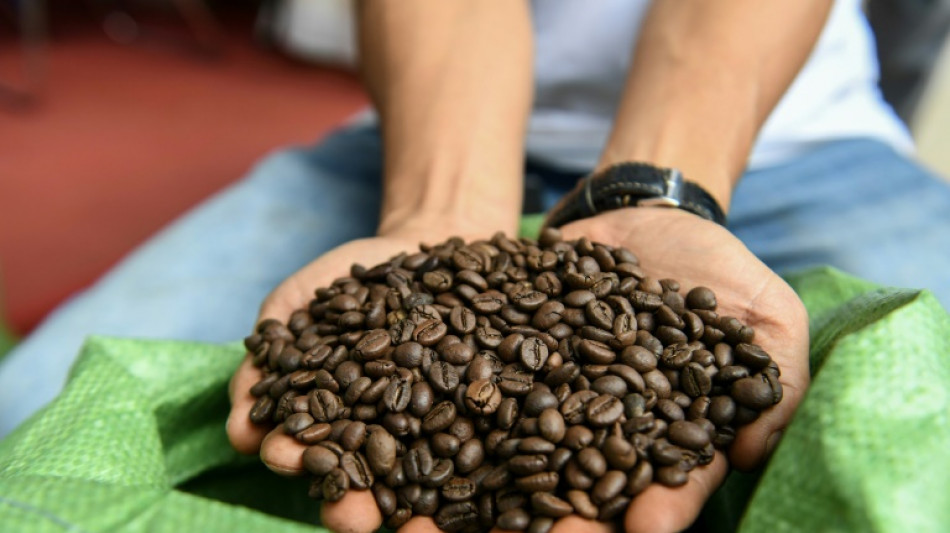
Vietnam's robusta: the go-to coffee bean in a warmer world? / Photo: Nhac NGUYEN - AFP

 US House targets data centers as midterm backlash grows

 French ex-minister Dati goes on trial in Renault-Nissan corruption case

 'Being Heumann' captures joy in fight for disability rights

 Retired great Nadal to play in exhibition matches

 IR-MED and Dice Technologies Announce collaboration to Evaluate and Advance Pressure-Injury Prevention Platform in Japan
 Watts, Pitt, Cruz to light up Spain's top film festival
 Sweden expels Iran embassy employee over anti-Jewish threats
 Toogood Gold's Table Mountain Sits in the Shadow of a Nevada Gold Rush

 MEXC July–August Security Report: 38.66M USDT in Risk Funds Intercepted, Futures Insurance Fund Hits 792M USDT

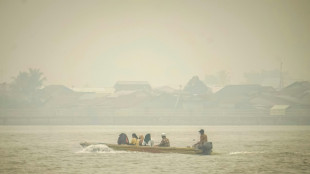 'Breathing toxin every day': Indonesians choked by haze feel helpless
 Stocks edge higher ahead of US Fed rate call

 Philippines ex-leader Duterte makes first in-person ICC appearance

 2027 Formula One calendar includes Monaco sprint race

 Palestinians are the real victims, Thunberg tells Ed Sheeran

 Hashim Thaci: From 'George Washington of Kosovo' to Hague convict

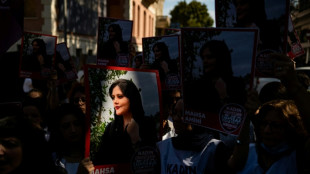 Amnesty says Iran committed 'crimes against humanity' in crackdown on 2022 protests

 EU to ban social media for under 13s, curb access until 15

 Philippines ex-leader Duterte makes first appearance at ICC

 EU chief pitches 'associate member' status for Canada

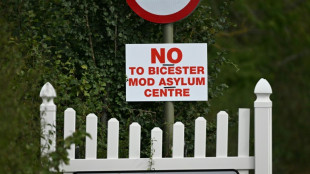 English village votes to 'secede' from UK over asylum centre plan

 Wildfires push endangered Sumatran elephants to brink: Indonesian NGO

 Stocks head higher as traders prepare for Fed decision
 English village votes to 'secede' from UK over asylum centre
 Hong Kong unveils plan to align economy with China's goals
 Brazilian voters the latest to eye Bukele security model with envy

Bitter and earthy. Fit for instant brews only. Robusta coffee has a dire reputation, but a small group of farmers in Vietnam is trying to turn the bean's fortunes around as a warming world threatens the industry.
As an interior designer in trendy Ho Chi Minh City, Tran Thi Bich Ngoc, 42, largely stayed clear of Vietnamese coffee, puzzling over why it didn't taste as good as cups from abroad.
Now, nearly a decade later, she runs her own coffee farm -- "Mori" -- in the remote Central Highlands, cultivating robusta she believes can match the world's favourite bean, arabica, in quality and flavour.
"My beans have a fruity, flowery smell, and they taste strong -- but in a gentle way," Ngoc told AFP at her farm close to the city of Pleiku, in the heart of the Vietnamese robusta region.
"Vietnamese farmers need to know it is possible to make these beans taste good."
- 'Vicious circle of bad quality' -
Long scorned by giants such as Starbucks, robusta -- which has almost double the caffeine content of arabica -- is found in most instant coffees, as well as some espresso blends.
Most experts agree that the bean has potential, but is stuck in a "vicious circle of bad quality", said Mario Fernandez of the Specialty Coffee Association.
"We get bad quality from robusta, therefore it gets a bad reputation, therefore no one wants to pay a premium for it, therefore there's no motivation to improve the quality," he said.
But robusta has advantages over its competitor: the yields are greater, and it can better cope with higher temperatures.
Climate change presents a serious concern for the multi-billion-dollar coffee industry, with scientists predicting lower yields and fewer areas suitable for growing.
Arabica, which makes up around 60 percent of the world's coffee production, originates in the highlands of Ethiopia and South Sudan, and prefers average annual temperatures of around 19 degrees Celsius (66 degrees Fahrenheit).
Robusta, although by no means immune to a warming world, may be able to endure up to around 23C.
Should global production of arabica start to fall short, "people will have to find an alternative supply", said Pham Thi Diep Giang, deputy director general of Trung Nguyen, one of Vietnam's top coffee brands.
A tumble in arabica supply caused by extreme weather in Brazil already helped Vietnam earn $4 billion in 2022, a 32 percent rise from a year earlier, the government said in a recent report.
At a coffee fair in Buon Ma Thuot city, farmer Hoang Manh Hung tries his best to convince visitors to take sips of his "fruity and elegant" robusta.
"I really wish more people would love robusta, as it's truly a 'wow' drink," Hung told AFP.
The 53-year-old transformed a farm that had produced low-quality coffee cherries for decades, first under the French and then his parents.
"We can now produce robusta with a completely different taste, and a scent that anyone would love," Hung said.
Key to the change, Hung said, is that the cherries are now hand-picked, and only when they're fully ripe.
"And they're fully organic," he added.
- Gaining recognition -
Robusta was first brought to Vietnam by the French in the late 19th century, and in 1991 the country exported its first beans -- 104,000 tonnes.
By 2022, that figure had climbed to 1.8 million tonnes -- almost all of it as raw material for instant coffee and other blends -- making it the world's largest robusta producer and the second-largest coffee producer overall, after Brazil.
Still, outside the country, "Vietnam is regarded as the lowest-quality coffee there is", Fernandez of the Specialty Coffee Association said.
Producers aiming for high quality will have "a harder time because of this perception", he added.
But there are some positive signs. The trend forecasting company WGSN says a change in attitudes toward robusta has already begun.
And Nguyen Coffee Supply -- which says it is the first specialty Vietnamese coffee company in the United States -- is now being sold by the high-end supermarket chain Whole Foods.
Meanwhile, at their hilly farms in Vietnam's Central Highlands, Hung and Ngoc are beginning to see their hard work pay off.
Their produce is gaining recognition domestically and is also being sold by online roasteries in Germany, the United States and elsewhere in Asia.
"It's the perfect time for Vietnamese fine beans to find their place in the world," Ngoc said.
O.Brown--AT