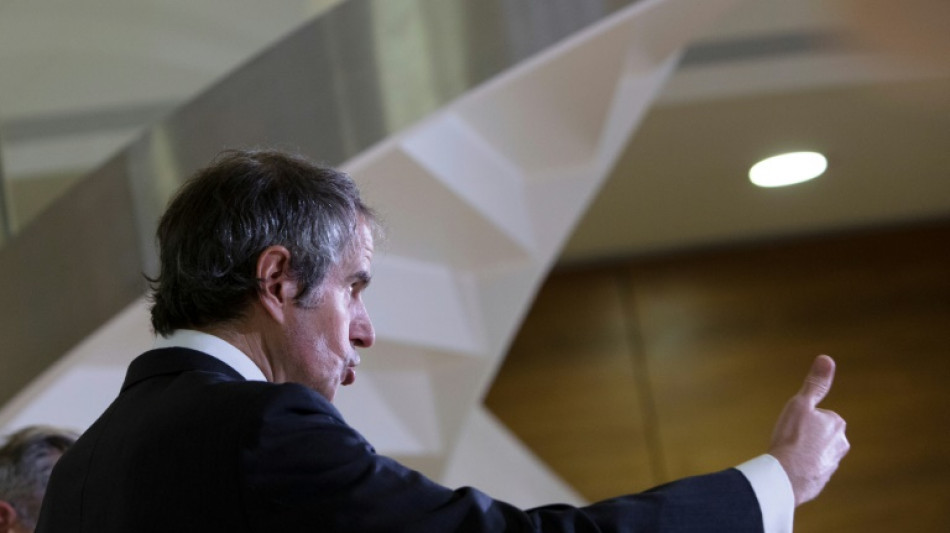
Iran to reconnect nuclear cameras, ramp up inspections: IAEA / Photo: Alex HALADA - AFP

 AI looms large ahead of Xi, Trump summit
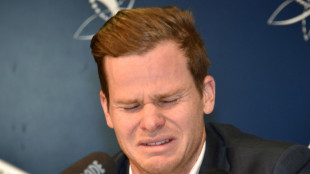 Smith still haunted by 'Sandpapergate' as he prepares for South Africa Tests
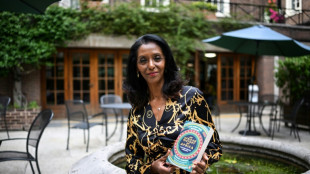 UK-Sudanese author pens book to give children 'African history of Africa'
 Boehly and Walter sell Chelsea stake to Clearlake Capital
 US House backs data center power cost bill amid midterm backlash
 US Congress passes sweeping Russia sanctions bill
 Barca hit Racing for seven as Atletico crush Osasuna

 US Fed raises rates to tackle 'too high' inflation, irking Trump
 Man Utd misery mounts after League Cup collapse against Brighton
 Turkey releases 106 protesters, jails more LGBTQ activists
 US Fed raises rates to tackle 'too high' inflation in move sure to rile Trump
 England were 'waiting for death' in World Cup semi-final defeat: Tuchel

 NFL star fined for displaying name of slain Palestinian girl
 Witsel retires from internationals after 18-year Belgium career
 US Fed raises rates to battle inflation in move likely to rile Trump
 Fitzpatrick 'not comfortable' over Dubai golf finale
 Gaza apartment block collapse kills 21, including 12 children
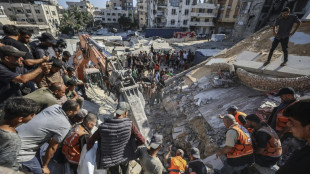 Gaza apartment block collapse leaves 21 dead
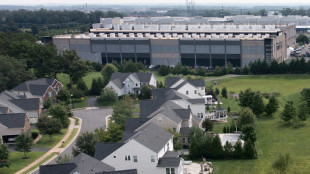 US House targets data centers as midterm backlash grows
 French ex-minister Dati goes on trial in Renault-Nissan corruption case
 'Being Heumann' captures joy in fight for disability rights
 Retired great Nadal to play in exhibition matches
 IR-MED and Dice Technologies Announce collaboration to Evaluate and Advance Pressure-Injury Prevention Platform in Japan
 Watts, Pitt, Cruz to light up Spain's top film festival
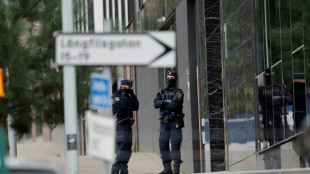 Sweden expels Iran embassy employee over anti-Jewish threats
Iran has agreed to reconnect surveillance cameras at several nuclear sites and increase the pace of inspections, the head of the International Atomic Energy Agency said on Saturday.
UN nuclear watchdog chief Rafael Grossi hailed "a marked improvement" in his discussions with the Iranian government.
Grossi has been in Tehran for talks with Iranian officials following the discovery of uranium particles enriched to near weapons-grade level.
On his return to Vienna, Grossi recalled there had been "a reduction in monitoring activities related to cameras and monitoring systems" and said "we have agreed that those will be operating again".
"This is very, very important" in terms of continuity of knowledge, "in particular in the context of the possibility of the revival of JCPOA", he said.
Grossi arrived in Iran on Friday with talks deadlocked on reviving the landmark 2015 accord on Iran's nuclear activity, known formally as the Joint Comprehensive Plan of Action, or JCPOA.
On Saturday evening, he told reporters: "We have put a tourniquet on the bleeding of information and lack of continuity of knowledge we had -- so now we can start working again, reconstructing these baselines of information."
He said the measures should be in place "very soon" following a technical meeting, but no precise timings were outlined in a joint statement with the Atomic Energy Organisation of Iran (AEOI).
- Inspections -
Grossi's two-day visit came as the Vienna-based IAEA seeks greater cooperation with Iran over its nuclear activities.
In his series of meetings with Iranian officials, Grossi met President Ebrahim Raisi.
Raisi acknowledged that "cooperation is a two-way street... (and) can continue based on maintaining the agency's independence and the rights of the Iranian nation," the political deputy of Iran's presidency, Mohammad Jamshidi tweeted.
A diplomatic source earlier told AFP the meeting with Raisi was designed to "relaunch the dialogue" on Iran's atomic work and to "reset the relationship at the highest level".
Uranium particles enriched up to 83.7 percent -- just under the 90 percent needed to produce an atomic bomb -- had been detected at Iran's underground Fordo plant about 100 kilometres (60 miles) south of Tehran, according to a confidential IAEA report seen by AFP this week.
Grossi said the IAEA needed to further inspect the facility and that Iran had agreed to "50 percent more inspections" there.
Iran denies wanting to acquire atomic weapons, and says it had made no attempt to enrich uranium beyond 60-percent purity.
Iran's government has said, however, that "unintended fluctuations... may have occurred" during the enrichment process.
The discovery came after Iran had substantially modified an interconnection between two centrifuge clusters enriching uranium, without declaring it to the IAEA.
- 'Obligations' -
On Saturday, Iran's top nuclear official Mohammad Eslami called on all parties to the 2015 deal to fulfil their "obligations".
"Three European and some other countries are just focusing on Iran's JCPOA obligations," he told journalists. "They too have obligations that they need to adhere to."
"We came to an arrangement (with Grossi) to define our cooperation within the framework of the safeguards" on nuclear activity, he added.
"The relevant authorities will make a decision" if a resolution is reached, and Iran's atomic agency will adhere to that decision, he said.
"Iran never sacrifices its national interests for anything else," Eslami said.
Depending on the outcome of Grossi's trip, the US as well as Britain, France and Germany will decide whether to submit a draft resolution censuring Iran to the IAEA board of governors, which convenes next week in Vienna.
Grossi also met on Saturday with Iranian Foreign Minister Hossein Amir-Abdollahian, the official news agency IRNA reported.
During his visit he had aimed to secure "more access to the (Fordo) site, more inspections," the diplomatic source said.
- 'Greater cooperation' -
The 2015 deal between Iran and world powers promised Tehran relief from biting economic sanctions in exchange for curbs on its nuclear activities.
The restrictions set out in the deal, including the 3.67-percent enrichment threshold, were intended to prevent Iran from developing a nuclear weapon.
The United States unilaterally withdrew from the pact in 2018 under then-president Donald Trump and reimposed sanctions, prompting Iran to suspend the implementation of its own commitments.
Negotiations aimed at reviving the deal started in 2021 but have been stalled since last year.
Grossi's visit has been seen in Iran as another indication that a dialogue-based approach to resolving the nuclear standoff is possible.
In November 2022, Western nations criticised Iran for its lack of cooperation after traces of enriched uranium were found at three undeclared sites.
Kelsey Davenport, an expert at the Arms Control Association think-tank, said: "Iran's willingness to increase monitoring is a positive and necessary step to de-escalate tensions and reduce the risk of miscalculation."
She said the United States and European countries should "look to capitalize on this momentum with a diplomatic push to reengage Iran in negotiations."
F.Wilson--AT