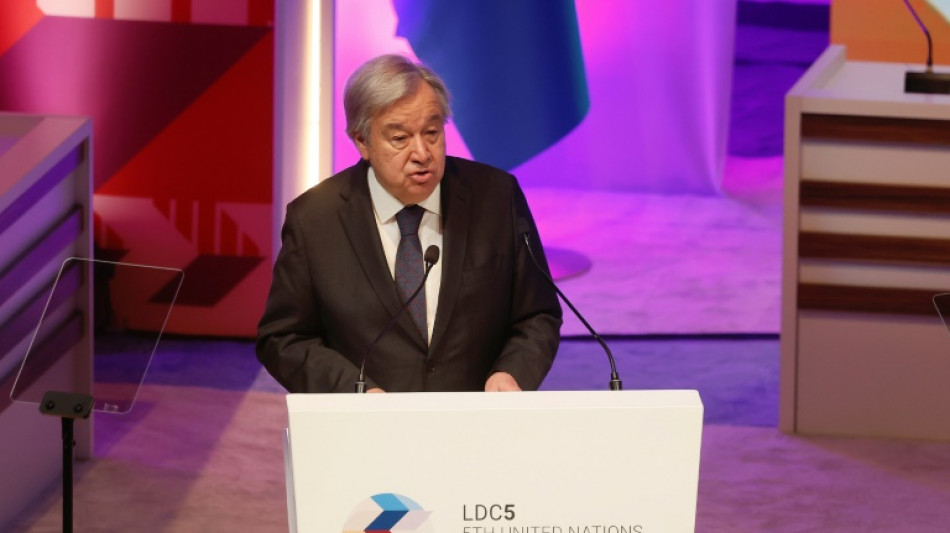
UN chief slams rich countries' treatment of poor states / Photo: KARIM JAAFAR - AFP

 AI looms large ahead of Xi, Trump summit

 Smith still haunted by 'Sandpapergate' as he prepares for South Africa Tests

 UK-Sudanese author pens book to give children 'African history of Africa'

 Boehly and Walter sell Chelsea stake to Clearlake Capital

 US House backs data center power cost bill amid midterm backlash
 US Congress passes sweeping Russia sanctions bill

 Barca hit Racing for seven as Atletico crush Osasuna

 US Fed raises rates to tackle 'too high' inflation, irking Trump

 Man Utd misery mounts after League Cup collapse against Brighton
 Turkey releases 106 protesters, jails more LGBTQ activists

 US Fed raises rates to tackle 'too high' inflation in move sure to rile Trump

 England were 'waiting for death' in World Cup semi-final defeat: Tuchel

 NFL star fined for displaying name of slain Palestinian girl
 Witsel retires from internationals after 18-year Belgium career

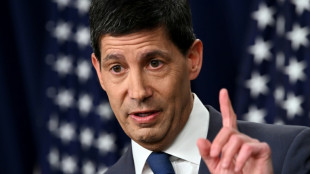 US Fed raises rates to battle inflation in move likely to rile Trump

 Fitzpatrick 'not comfortable' over Dubai golf finale
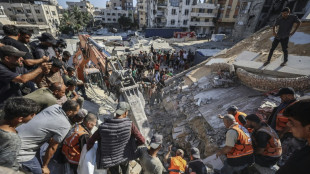 Gaza apartment block collapse kills 21, including 12 children
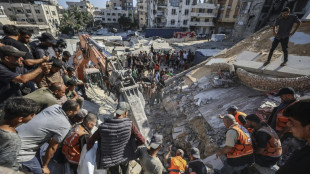 Gaza apartment block collapse leaves 21 dead

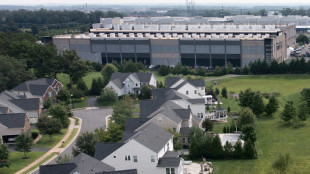 US House targets data centers as midterm backlash grows

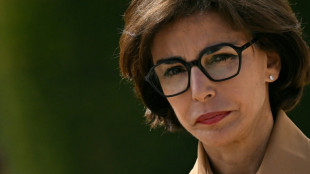 French ex-minister Dati goes on trial in Renault-Nissan corruption case

 'Being Heumann' captures joy in fight for disability rights

 Retired great Nadal to play in exhibition matches
 IR-MED and Dice Technologies Announce collaboration to Evaluate and Advance Pressure-Injury Prevention Platform in Japan

 Watts, Pitt, Cruz to light up Spain's top film festival
 Sweden expels Iran embassy employee over anti-Jewish threats
UN Secretary-General Antonio Guterres on Saturday slammed the world's rich countries and energy giants for throttling poor nations with "predatory" interest rates and crippling fuel prices.
Speaking in the Qatari capital, Doha, Guterres told leaders of more than 40 of the most deprived states that wealthy nations should provide $500 billion a year to help others "trapped in vicious cycles" that block efforts to boost economies and vital services.
The summit of Least Developed Countries (LDC) is normally held every 10 years but has twice been delayed since 2021 because of the coronavirus pandemic.
Afghanistan and Myanmar, two of the poorest countries, are not present at the Doha meeting of 46 LDC states because their governments are not recognised by UN members.
No leader from any of the world's major economies attended.
At a leaders' summit ahead of the start of the general LDC conference on Sunday, Guterres hit out straight away at the way poor nations are treated by the more powerful.
"Economic development is challenging when countries are starved for resources, drowning in debt, and still struggling with the historic injustice of an unequal COVID-19 response," he said.
The LDCs have complained that they did not get a fair share of the Covid vaccines that went mainly to Europe and North America.
"Combatting climate catastrophe that you did nothing to cause is challenging when the cost of capital is sky-high" and the financial help received "is a drop in the bucket", said Guterres.
"Fossil fuel giants are raking in huge profits, while millions in your countries cannot put food on the table."
Guterres said the poorest nations were being left behind in the "digital revolution" and the Ukraine war had fuelled their food and fuel prices.
- Broken promises -
"Our global financial system was designed by wealthy countries, largely to their benefit," he said.
"Deprived of liquidity, many of you are locked out of capital markets by predatory interest rates," the UN leader said.
A host of presidents and ministers hit out at financing conditions for LDCs, whose debt has more than quadrupled in a decade to an estimated $50 billion in 2021.
East Timor's President Jose Ramos-Horta called interest rates "rapacious" and "insensitive".
Malawi's President Lazarus Chakwera, the summit chairman, highlighted "broken promises" and said that aid was not "an act of charity" but a "moral responsibility".
Wealthy nations had failed to keep a promise to give 0.15-0.20 percent of their Gross National Income to LDCs, the UN chief said.
With poorer states trapped in a "perfect storm for perpetuating poverty and injustice", Guterres said LDCs required a "minimum" $500 billion a year to overcome their problems, build up job creating industries and repay debts.
He added that the United Nations would also "keep pushing" richer countries to hand over hundreds of billions of dollars promised separately to help poorer states battle climate change.
Under proposals a so-called Doha Programme of Action, a food stockholding system, will be set up to help countries facing hunger crises through drought and high prices.
It also calls for new efforts to help LDCs attract foreign funding and lower interest rates to ease the impact of their debts.
Bhutan will this year become one of seven countries -- along with Bangladesh, Laos, Nepal, Angola, Sao Tome and Principe and the Solomon Islands to "graduate" out of LDC status by 2026.
But they will gradually lose trade and aid privileges. Guterres said they risk becoming "victims of the cruelest sleight-of-hand trick -- support systems vanishing before their eyes" and would need help after they move up the wealth scale.
K.Hill--AT