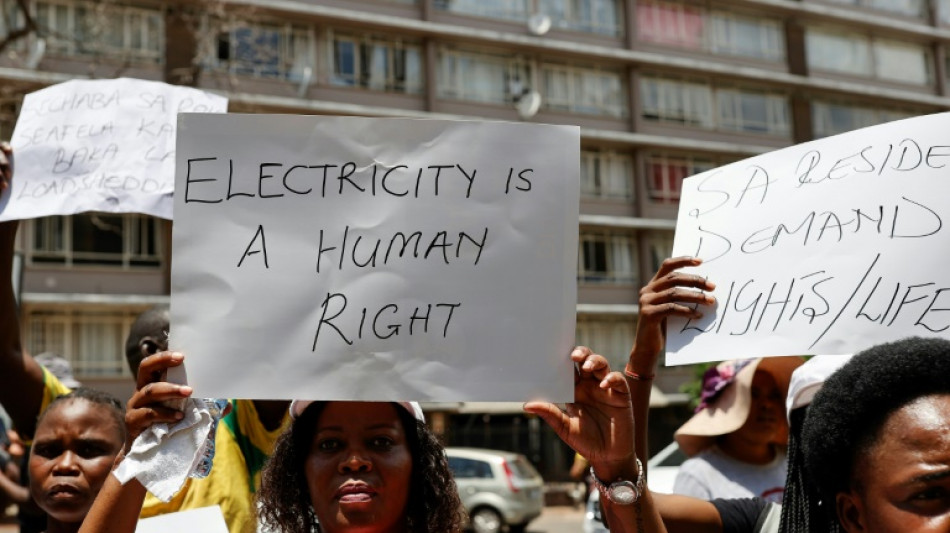
Eskom: South Africa's fallen energy giant / Photo: Phill Magakoe - AFP

 AI looms large ahead of Xi, Trump summit

 Smith still haunted by 'Sandpapergate' as he prepares for South Africa Tests
 UK-Sudanese author pens book to give children 'African history of Africa'

 Boehly and Walter sell Chelsea stake to Clearlake Capital
 US House backs data center power cost bill amid midterm backlash
 US Congress passes sweeping Russia sanctions bill
 Barca hit Racing for seven as Atletico crush Osasuna

 US Fed raises rates to tackle 'too high' inflation, irking Trump
 Man Utd misery mounts after League Cup collapse against Brighton
 Turkey releases 106 protesters, jails more LGBTQ activists

 US Fed raises rates to tackle 'too high' inflation in move sure to rile Trump
 England were 'waiting for death' in World Cup semi-final defeat: Tuchel

 NFL star fined for displaying name of slain Palestinian girl
 Witsel retires from internationals after 18-year Belgium career
 US Fed raises rates to battle inflation in move likely to rile Trump
 Fitzpatrick 'not comfortable' over Dubai golf finale
 Gaza apartment block collapse kills 21, including 12 children
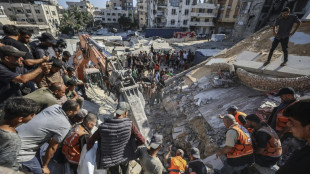 Gaza apartment block collapse leaves 21 dead
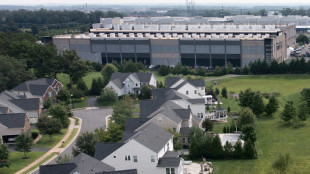 US House targets data centers as midterm backlash grows

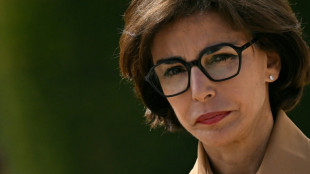 French ex-minister Dati goes on trial in Renault-Nissan corruption case
 'Being Heumann' captures joy in fight for disability rights
 Retired great Nadal to play in exhibition matches
 IR-MED and Dice Technologies Announce collaboration to Evaluate and Advance Pressure-Injury Prevention Platform in Japan
 Watts, Pitt, Cruz to light up Spain's top film festival
 Sweden expels Iran embassy employee over anti-Jewish threats
It was once a source of national pride -- an award-winning firm that powered South Africa's mining boom and later brought electricity to black communities left behind by apartheid.
Today, a hundred years after its birth, Eskom has experienced a spectacular fall from grace.
South Africa's energy giant is crippled by debt, beset by corruption scandals and unable to keep the lights on.
Families and businesses are exasperated by the record power cuts imposed by the utility, which provides about 90 percent of the country's electricity.
"To South Africans today, (Eskom) represents a source of enormous frustration and ridicule," said Kyle Cowan, author of "Sabotage," a book detailing Eskom's troubles.
A tweet Wednesday to mark the corporation's centenary summed up the bitter mood.
"We hope you enjoy the cake we made for you," it said, accompanied by a picture of a bowl of raw cake batter -- uncooked because of the blackouts.
Eskom prides itself on its long history, which is closely intertwined with that of modern South Africa.
Its website reminds readers how "the good townspeople of Kimberley," a diamond mining hotspot, were in 1882 among the first in the world to get electric street lights -- even managing "to beat London to it".
Eskom was set up on March 1 1923 as the Electricity Supply Commission (ESCOM), tasked with boosting industry and mining activities.
Gold had been found where Johannesburg would sprung up, and mines required a lot of power to run.
- Coal rush -
Coal-fired stations started popping up across the country and grew bigger and more plentiful through the decades.
Yet there was a catch.
All this largely benefited white people, with black South Africans segregated and disregarded by the apartheid government.
In 1987 only 40 percent of the population had access to electricity.
The first democratic elections in 1994 were followed by a push to electrify millions of homes, and keep electricity prices low.
The mammoth effort even won Eskom an award in 2001.
But it was not backed by additional capacity, something that laid the foundations for today's troubles, Cowan said.
Most of the power stations are older than 45 years, and break down frequently leaving South Africans without lights for up to 12 hours each day.
"Eskom has basically been mismanaged into the ground," said Cowan.
Finance Minister Enoch Godongwana admitted Eskom's woes, highlighting to AFP "the debt situation, which is making it difficult to move with speed, in particular upgrading their plants."
In 1998, a government paper warned the country risked running out of electricity within a decade unless new plants were built.
But the advice was left unheeded until the last minute, something ex-president Thabo Mbeki would later apologise for.
- 'Cyanide' -
Eskom began building two new coal-powered stations only in 2007, the year power cuts were first imposed.
But the new plants suffered from commissioning delays, design and construction problems, massive cost overruns and allegations of graft.
Under Jacob Zuma's presidency, Eskom found itself at the centre of a massive corruption scandal.
Millions of dollars were allegedly syphoned off through fraudulent contracts in return for bribes.
Last year, an ex-CEO was arrested for money laundering and fraud.
In February, the firm's outgoing chief Andre de Ruyter compared corruption at Eskom to a cancer that had "metastasised" and "grown throughout the entire body of the organisation."
In one egregious case, the company had been paying 80,000-rand ($4,300) a piece for knee guards sold in retail stores at $16, he said.
Attempts to clean up the firm faced fierce internal resistance, he told local broadcaster eNCA, adding he suffered a poisoning attempt in December, drinking coffee laced with cyanide.
Hours after the interview, in which he accused the ruling ANC party of being involved in the wrongdoing, he was asked to leave his post prematurely.
Eskom has had more than a dozen CEOs in the past 15 years.
"Corruption is not the reason why the energy crisis started, but it's a big reason why it is still not solved," said Roula Inglesi-Lotz, a University of Pretoria economics professor.
Meanwhile government policies aimed at protecting the country's coal industry, which employs almost 100,000 people, stymied the roll out of renewables.
A licensing threshold for private power generation projects was removed only last year.
Trade unions have pushed back against plans to boost private investment in green energy and break up the monopoly into separate divisions for generation, transmission and distribution.
Eskom employs over 30,000 workers.
President Cyril Ramaphosa recently announced a national state of disaster in a bid to tackle the energy crisis.
Many South Africans who hope this could help bring some relief, might be in for a disappointment.
"There are no quick fixes," said Inglesi-Lotz.
P.A.Mendoza--AT