Despair and distrust: Andean communities 'forgotten' by Lima / Photo: Cris BOURONCLE - AFP

 Kids and social media: what would change under new EU law
 Modi pitches India as global chipmaking hub
 Ukraine plans record defence spending in 2027
 Klopp calls up 44 players in huge first Germany squad

 STARPRIME Responds to Diverging Gold Market Demand with AM/PM Fixing and XAU24/7

 Ukrainian fashion designer debuts art between air raids
 Gambian businesses struggle under prolonged blackouts
 Fiji declares national HIV crisis
 Australia to cut migration to fix housing crisis: minister

 NASA scan discovers new, 'once in a century' Moon crater
 Most stocks rise as Fed hikes and indicates drive to curb inflation
 US again denies Palestinian leader Abbas visa to attend UN assembly
 Lula says he will go to UN to tell Trump to 'stay out' of Brazil's elections
 Messi heads Inter Miami to Campeones Cup triumph
 AI looms large ahead of Xi, Trump summit

 Smith still haunted by 'Sandpapergate' as he prepares for South Africa Tests

 UK-Sudanese author pens book to give children 'African history of Africa'

 Boehly and Walter sell Chelsea stake to Clearlake Capital

 Guardian Metal Resources PLC Announces Audited Financial Results for the Year Ended 30 June 2026
 Trybe Spirits Announces Sponsorship of The San Diego Spirits Festival
 Trump threatens EU over 'hostile' Canada association plan
 Argentine judge orders suspension of Falklands oil project
 Carrick takes the blame as troubled Man Utd suffer League Cup misery

 Barcelona hit seven in Racing Santander rout
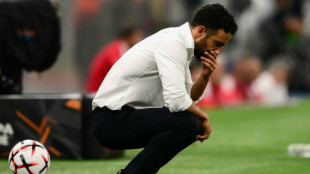 Amorim's Milan beaten by Benfica, Sunderland make dream European return

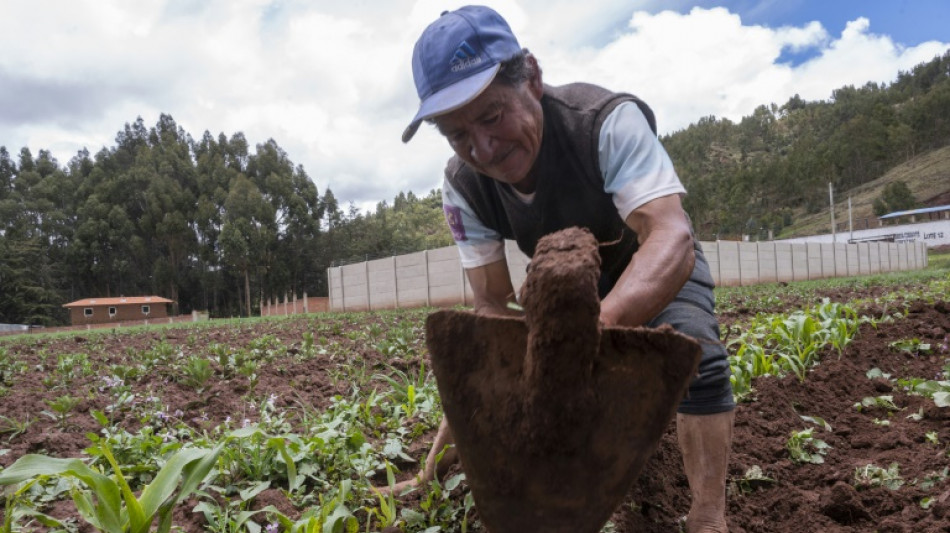
With a bent back and bare feet in the black soil, Ruben Gutierrez Escobar, 63, uses a hoe to plow his fields in Bella Vista, a hamlet near Cusco in southern Peru at an altitude of 3,500 meters.
He has no tractor, no fertilizers, only "sweat, work and sacrifice."
"Lima has completely forgotten about us," the subsistence farmer told AFP -- a common complaint of rural Peruvians who have taken to the streets en masse since early December.
The protests have pitched the people of the Peruvian Andes against the elites in the capital.
Forty-eight people have died in clashes between protesters and security forces, and burning roadblocks have caused untold damage to the economy.
The uprising was sparked by the arrest and ouster of then-president Pedro Castillo, a man of humble Indigenous and rural Andean origins the protesters believe represents their fight against racism and poverty.
Castillo was expelled after trying to dissolve Congress to rule by decree and replaced by his deputy Dina Boluarte, whose resignation the protesters now demand.
They also want the dissolution of parliament and fresh elections in a climate of searing mistrust of the political class.
Escobar says he is among those "forgotten" by Lima.
He gets up at 3.00 am every day to tend to his five cows and seven sheep, then works in the field until sunset, growing potatoes, beans and corn for his household.
He goes to bed at about 10.00 pm, and earns the equivalent of about $6 a day selling milk.
"We have nothing, no support," said Escobar.
- Mines but no money -
Mines of gold, copper, silver and zinc. Tourists coming from far and wide to visit the Inca wonders at sites such as Machu Picchu near Cusco. The bulk of Peru's wealth is found in Andean areas.
Yet Escobar and others claim they never see any of the profits or royalties.
"All the money goes to Lima and in Lima, it gets lost. Here, we don't get a penny," he said.
Escobar said he stopped using fertilizers, which are not subsidized, since the price increased sixfold due to the war in Ukraine.
He complains about a lack of basic infrastructure, health services and education.
"The hospital is said to be free. That is not true. A 100 percent lie. You have to pay."
And Escobar especially regrets not having enough money to pay for at least one of his three sons to get an education.
Analysts say the distance between Lima and the rural regions has been growing larger.
"People ask themselves: 'Why is it that we are extracting gas (near Cusco) and yet we have no gas? How come we have all the mines and we don’t have good schools and hospitals?,'" Peruvian anthropologist and consultant Julio Edmundo Oliveira told AFP.
Lima, he added, "has never invested in the Andes while the Andes sustain the capital."
For Oliveira it is part of a structural problem of an ever-increasing centralization of power in Lima ever since independence from Spain in 1821.
"It’s not something that happened today. It is not the fault of Pedro Castillo or Dina Boluarte."
Perhaps no better example exists of exploitation and abandonment of an Andean region than Cerro de Pasco, a complex of mines at the end of their life some 250 kilometers (155 miles) northeast of Lima.
"People there have lead in their lungs but there are no hospitals, high schools or good universities. They (mining companies) took all the ore and left a hole," said Oliveira.
- Lima one country, Peru another -
In the Angostura neighborhood of Cusco, 53-year-old taxi driver Ruben Mina queues in vain for a cannister of household gas, one of the many basic commodities that have become hard to come by due to the never-ending roadblocks.
Yet he remains firmly on the side of the demonstrators.
"Boluarte thinks that the majority of people are stupid. Especially those of the mountains. Enough with the inequalities, this abusive centralism!" he told AFP.
"There is one country called Lima and another country called Peru. Corruption has been allowed to become institutionalized."
At the Tupac Amaru square in Cusco, at the foot of an imposing statue of the Inca leader who fought against Spanish colonizers, demonstrators wave Peruvian flags, but also Andean banners.
The authorities in Lima have blamed the protest violence on "terrorists" with regular allusions to the Shining Path and Tupac Amaru groups that claim Indigenous roots and are labeled "terrorist" groups by Lima.
"Of course there is contempt from Lima," said Cusco demonstrator Javier Cusimayta Osca, a teacher.
"They want us to believe that Lima is Peru. But it is a part of Peru in the same way as Cusco, Madre Dios (south-east) or any other region", he said before adding in Quechua: "Hoq Saqmalla! Hoq Kallpalla! Hoq Sonqolla!": "A fist! A force! A heart!"
M.Robinson--AT