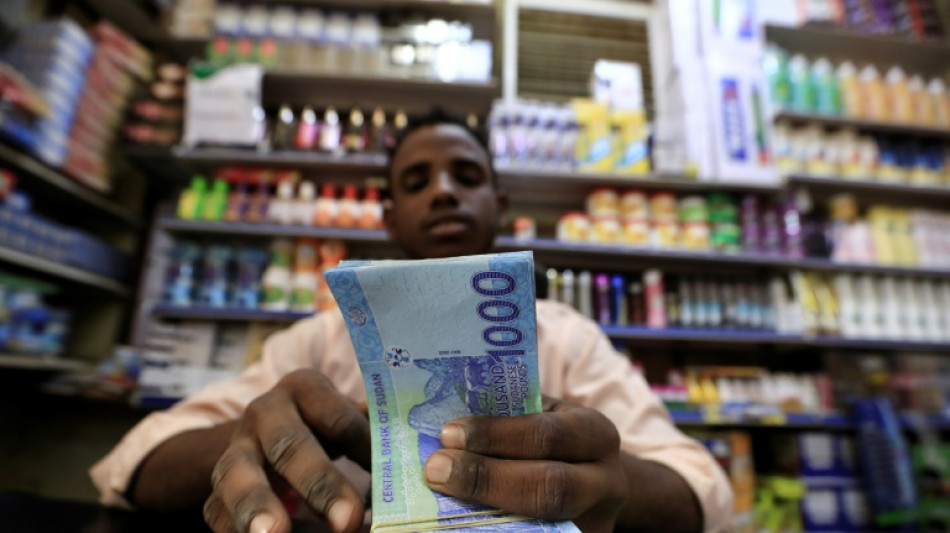
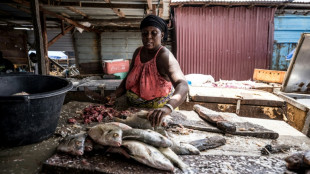
Sudanese tighten belts as economic crisis grinds on / Photo: ASHRAF SHAZLY - AFP

 AFP photo shows Trump examining image of Kennedy Center apparent demolition

 Andersson vows to take Sweden in 'new direction' after election win
 Turkey's Erdogan to run again in early 2028 vote, top adviser says

 Sweden's Andersson: a trusted, no-nonsense political operator

 Canada's Carney pushes 'new alliance' with EU despite Trump threats
 Ireland to boycott Eurovision 2027 over Gaza

 India's Tata Sons reappoints N. Chandrasekaran as chairman

 Sweden's left-wing wins election thriller

 Germany urges EU action against China to defend carmakers
 Stocks mostly rise after US Fed rate hike, oil eases
 Palestinians turn rugged caves into homes after Israeli demolitions

 Two unseen Monet paintings to be sold in Paris: auction house

 Klopp wants German team to help reclaim national pride from far-right

 Ninth woman found dead in South Africa killing spree

 Smog scuppers Japan force helping fight Indonesia wildfires
 King Charles to call on tech giants for 'reassurances' over AI

 Lebanon security talks in Paris focus on replacing UN mission

 Most stocks rise as Fed hikes and oil prices drop

 'Vande Mataram': Why is India's freedom song in spotlight?

 Counterculture pop artist Peter Max dies at 88: US media
 Asian Games chief defends 'functional' rooms after backlash

 Leader's sister says only 'idiots' think N. Korea to give up nukes
 World's water cycle becoming more unpredictable, UN warns

 Where the US-China tariff row stands ahead of White House summit

 Croc-habitat gets green light for 2032 Olympic rowing

As Sudan's economic crisis drags on, grocer Hassan Omar keeps busy cleaning packaged food items that have been gathering dust for months as his dwindling customer base make fewer purchases.
"People can no longer afford to buy all their needs," Omar, 43, told AFP at his grocery store in the capital Khartoum.
"Purchasing power has significantly declined over the past six months," he said, noting that his sales had plummeted from 500,000 Sudanese pounds ($877) to 200,000 pounds ($350) per day over that period.
His plight reflects Sudan's spiralling economic crisis which has forced many households to tighten their belts as nearly one third of the 45 million population face acute hunger.
Some 65 percent of the population live below the poverty line, according to a 2020 report by the United Nations.
The country's economic troubles stem from decades of government mismanagement, armed conflict and international sanctions against the government of president Omar al-Bashir, who was ousted in April 2019 following mass protests against his rule triggered by biting hardship.
The crisis further deepened following a 2021 military coup led by army chief Abdel Fattah al-Burhan, which upended a transition to civilian rule and triggered cuts to crucial international aid.
"We are trying to find cheaper alternatives to the food we normally consume," said Soaad Bashir, a government employee and mother of four.
"My income is very low and expenses are too high," said the 43-year-old who makes less than 200,000 Sudanese pounds per month.
- 'Complete recession' -
North Khartoum vegetable seller Al-Nour Adam says he has suffered heavy losses over the past nine months.
"Much of the produce spoilt because no one was buying it," said Adam, who now offers a smaller range of vegetables in an attempt to cut his losses.
"It can't go on like this or I will have to find another job."
Inflation in Sudan has eased over the past year, falling to 87 percent in December from 318 percent in the same month of 2021 but analysts say that is not a sign of the economy improving.
"Inflation has simply declined because market activity has for months been at a standstill," said Abdalla al-Ramady, economics professor at Al-Nilin University.
"There is no demand, so prices of commodities are not going up. It's a complete recession."
Grocer Omar confirmed he had not raised his prices in months.
The economic crisis has hit wide sections of Sudanese society not just the poor.
In recent weeks, hundreds of students staged protests over increases to university fees.
"I was asked to pay 550,000 pounds ($964) and my family cannot afford to pay," said Mohamed Hussein, a first-year engineering student, noting that fees had last year stood at around 50,000 pounds ($87).
Meanwhile, hundreds of Sudanese professors have been on an open-ended strike since January 10 to protest low salaries.
- Hopes for stability -
Fees for other government services from issuing passports to road tolls have also gone up.
"Road toll fees increased by five times at least compared to last year," said freight haulier Tigani Omar.
"It will increase the cost of transport and will eventually reflect on all products."
Despite scepticism about the prospects for a political breakthrough, some still hope that a deal between Sudan's military rulers and civilian leaders could turn the economy around.
In December, the two sides signed a preliminary deal aimed at restoring the transition to civilian rule interrupted by Burhan's coup. Critics have said the accord is "vague" and "opaque".
But Abdelhalim Hafez, a private sector employee and breadwinner for his family of six, hopes the deal could see the resumption of a family support programme which was suspended after the coup.
"I lost the little help that programme provided me,” said Hafez who was haggling with a fruit vendor in Khartoum.
"It may all improve if this deal manages to bring political stability.”
Bashir agrees but does not expect it to happen soon.
"It will take years for the situation to improve," she said.
F.Wilson--AT