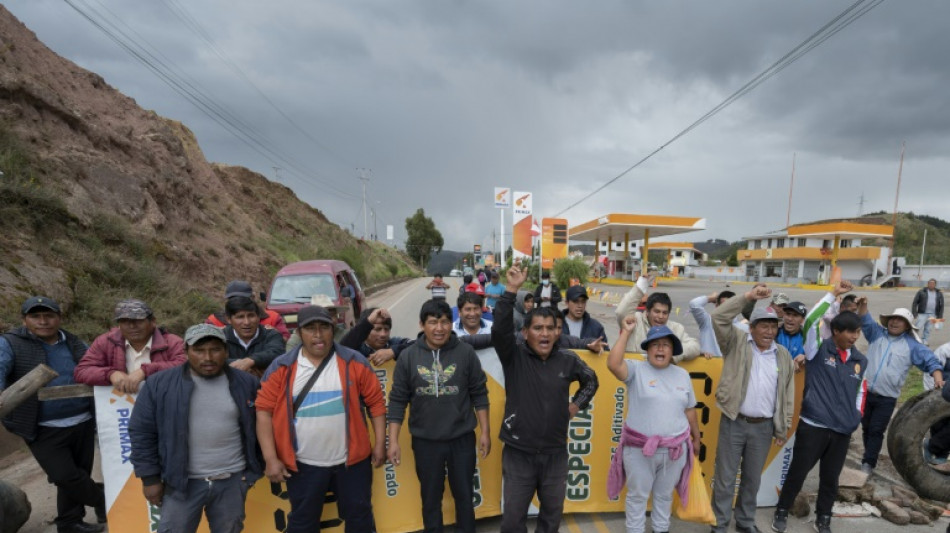
Peru says army, police to clear protester roadblocks / Photo: Cris BOURONCLE - AFP

 AFP photo shows Trump examining image of Kennedy Center apparent demolition

 Andersson vows to take Sweden in 'new direction' after election win
 Turkey's Erdogan to run again in early 2028 vote, top adviser says
 Sweden's Andersson: a trusted, no-nonsense political operator
 Canada's Carney pushes 'new alliance' with EU despite Trump threats
 Ireland to boycott Eurovision 2027 over Gaza
 India's Tata Sons reappoints N. Chandrasekaran as chairman
 Sweden's left-wing wins election thriller
 Germany urges EU action against China to defend carmakers
 Stocks mostly rise after US Fed rate hike, oil eases

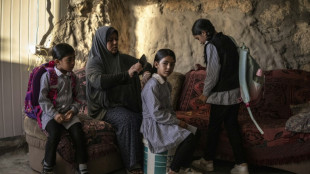 Palestinians turn rugged caves into homes after Israeli demolitions
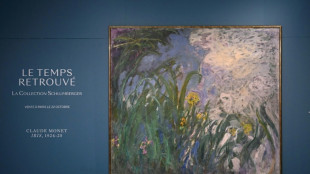 Two unseen Monet paintings to be sold in Paris: auction house
 Klopp wants German team to help reclaim national pride from far-right
 Ninth woman found dead in South Africa killing spree

 Smog scuppers Japan force helping fight Indonesia wildfires
 King Charles to call on tech giants for 'reassurances' over AI
 Lebanon security talks in Paris focus on replacing UN mission
 Most stocks rise as Fed hikes and oil prices drop

 'Vande Mataram': Why is India's freedom song in spotlight?

 Counterculture pop artist Peter Max dies at 88: US media

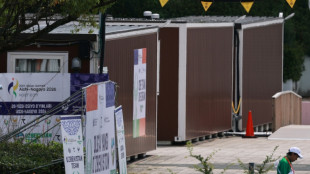 Asian Games chief defends 'functional' rooms after backlash
 Leader's sister says only 'idiots' think N. Korea to give up nukes
 World's water cycle becoming more unpredictable, UN warns
 Where the US-China tariff row stands ahead of White House summit
 Croc-habitat gets green light for 2032 Olympic rowing
The Peruvian government said Thursday that police and soldiers would soon move to dismantle roadblocks on the nation's highways erected by protesters who have demanded for weeks the resignation of President Dina Boluarte.
The move announced by the defense and interior ministries comes as shortages of basic goods including food and fuel have escalated in the South American country, with freight deliveries to the south compromised.
"The Peruvian national police, with the support of the armed forces, will unblock the national network of highways that have been the subject of a state of emergency," the ministries said in a joint statement.
Authorities said that traffic was blocked in eight of Peru's 25 regions on Thursday, which has also complicated medical treatment in some areas, with doctors unable to access needed medicines.
Protests, which broke out after the ouster and arrest in early December of former president Pedro Castillo, have repeatedly turned violent, with 46 people dying in clashes between security forces and protesters.
The government ministries said the right to protest "does not justify the obstruction of roadways" or trump the rights of people who need chemotherapy or deliveries of oxygen canisters.
It blamed the roadblocks for 10 deaths, including those of several children who did not receive medical care in time.
Protests have been fueled by anger in poor rural regions in the south where inhabitants -- mainly Indigenous -- felt that Castillo, who has Indigenous roots himself, represented their interests rather than those of the Lima elite.
Castillo's ouster followed an attempt by him to dissolve congress and rule by decree, in what appeared to be a bid to avoid an impeachment vote and stave off corruption investigations.
On Thursday, protesters tossed stones and security forces responded with tear gas and rubber bullets in central Lima after hundreds had staged a march against Boluarte, who had been Castillo's vice president.
- 'Unprecedented' repression -
Earlier in the day in the mining town of Juliaca, relatives of those killed in the weeks of protests demanded justice.
Rights organizations have accused the government of repressing protesters and the disproportionate use of force.
"All I ask for please is justice. I am asking them for help because no one is going to bring back my brother," said a tearful Maria Samillan.
Her 31-year-old brother Marco Antonio Samillan, a doctor, was killed during protests earlier this month in the southern Andean town.
On January 9, 18 people were killed after protesters tried to storm the airport. One of the dead was a police officer burnt alive in his vehicle. Marco Antonio was shot dead while trying to save injured protesters.
"Every day I feel that I also died. I cannot live any more," said Samillan, talking via video from Juliaca at a press conference by a national rights group.
Lawyer Mar Perez accused authorities of extrajudicial killings and claimed security forces used machine guns.
"We are seeing levels of repression that are unprecedented in Peruvian democracy," Perez told AFP.
F.Ramirez--AT