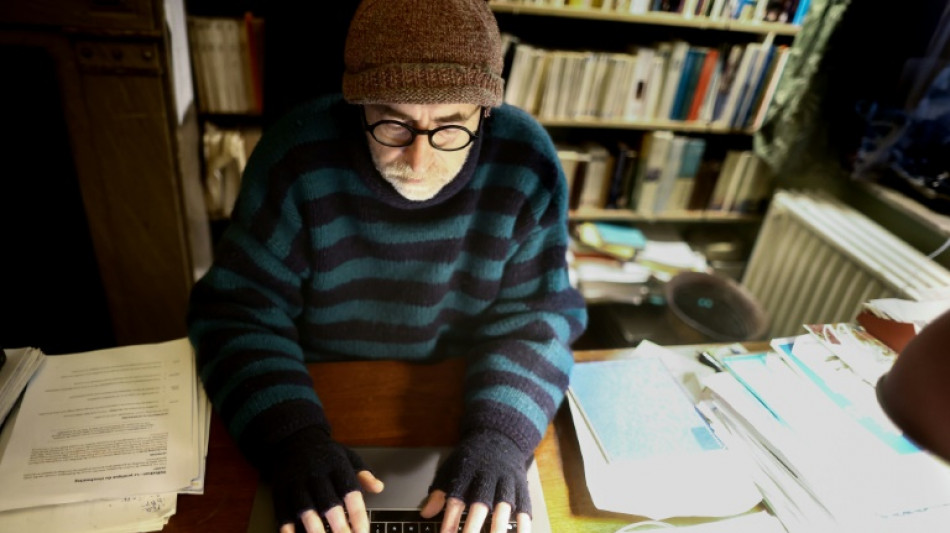
Belgian families don gloves for house-heating research / Photo: Kenzo TRIBOUILLARD - AFP

 Juventus, Palace cruise to Europa League wins, Bournemouth beat Sociedad
 Stocks climb as oil retreats, Fed calms inflation fears

 Russians begin voting in controlled election as war drags
 Hispanics feel 'betrayed' on immigration, Republican warns Trump
 High-scoring Bears face Vikings in battle of NFL unbeatens

 'In our lane': Fed's Warsh defies Trump but still fighting for credibility
 Trump admin makes major cut to endangered species protections

 Princess Diana's brother makes new explosive claims against Charles

 Ovechkin on Russian political video: 'I support my country'
 Can we shut down AI?
 Teenager Sullivan named in new-look US squad
 Travis Scott and Keith Richards feature on GTA VI soundtrack

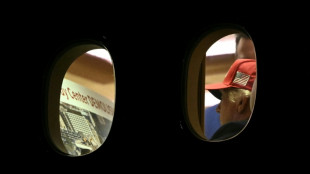 AFP photo shows Trump examining image of apparent Kennedy Center razing
 Pochettino rings changes for USA friendlies
 Alonso says Chelsea ambition 'very clear' after end of Boehly era

 Mbappe draws political fire over Ceuta t-shirt controversy
 Third malaria death in Germany from outbreak tied to Frankfurt airport
 AtlasClear Holdings Reports Preliminary Fiscal 2026 Revenue of Approximately $20.1 Million, Up 85%; Revenue Plus Interest Income of Approximately $21.9 Million
 Alonso says Chelsea ambition clear after end of Boehly era
 Micron's Taiwan workers say 68 months' bonus not enough
 'Another arrow to the quiver': World Bank posts record private capital mobilization
 Macron hosts Lebanon security talks as UN mission nears end
 From land to race laws: what's driving the US-South Africa rift?

 Beyond Investment Returns: Families Are Measuring Wealth by Freedom, Continuity, and Legacy, According to Nour Private Wealth
 King Charles disputes claims in book by Princess Diana's brother
Outside the family home, frost covers the ground and temperatures in the damp Belgian winter have plunged below freezing.
Inside the 200-square-metre (2,100 square foot) house it is slightly warmer -- the thermostat reads 14.5 Celsius (58 Fahrenheit) -- but the family of six is wrapped up warm.
Geoffrey Van Moeseke, an architect engineer from Louvain-la-Neuve, is putting his family through their third consecutive winter as "SlowHeat" pioneers.
The idea cooked up by academics is to save on the cost and the environmental toll of gas heating, by using directed heat where it's needed and leaving the unoccupied parts of the house chilly.
"Heat the bodies, not the walls" is the project's motto, and that starts with appropriate winter clothing.
"Right now, I'm wearing a classic cotton sweater and an old, fairly warm jacket," Van Moeseke said.
"Underneath, I have two more layers: a T-shirt and technical sports clothing," he explains.
For the feet, it's socks and "old, padded slippers which are extremely warm".
The second part of the project's advice is the use of electric radiant heaters, which provide intense and easy-to-direct heat.
- Heated capes -
Van Moeseke owns two, which he runs for only two hours a day -- one in the living room and one in his son's bedroom, the coldest room in the house, hovering around 12C.
These heaters can be placed on desks and warm only the person sitting in front of them, creating a bubble of comfort without wasting heat on unused parts of the room.
On the researchers' website is a third suggestion: electrically heated capes and neck warmers, which they claim pay for themselves in a month with reduced heating bills.
As they work on their research, the SlowHeat team sometimes wear fingerless gloves to type or use heated mouse mats.
When the project began in September 2020 many of their colleagues told them they were mad.
But this winter's energy crisis, soaring gas bills triggered by the war in Ukraine plus suddenly cold temperatures has sparked renewed interest in the project.
"We wondered what would happen if all of a sudden we ran out of gas," explained Denis De Grave, research assistant at the University of Louvain.
"At the beginning, we were taken for crazy," admitted Gregoire Wallenborn, researcher and teacher at the Free University of Brussels, bundled up in a big jacket and with a woolly hat screwed on his head.
In his apartment in Brussels, the average temperature fluctuates between 12 and 14C.
While gas and electricity bills are rising steeply, Van Moeseke only pays, on average, 70 euros ($74) per month for heating.
Needless to say, before submitting themselves as guinea pigs in their own experiment, the SlowHeat researchers had to convince their families.
- Rethink habits -
"I brought in the project little by little," Van Moeseke said. "It was more difficult the first winter than the second, which shows that we adapt to new habits over time."
His youngest child, 11-year-old Celestin, wears a woollen sweater -- and shorts with bare legs.
"The first winter was harsher, we were used to a warmer temperature, but I got completely used to it. I think it's hot here," Celestin smiled.
Not everyone adapted so readily.
Some really feared the cold or worried that friends and families would not visit, and that roommates and relatives would complain.
It was a while before Van Moeseke got used to operating a small set of pedals under his desk to keep active.
More ideological doubters see the project as an ultimatum to embrace poverty, but the researchers insist the project is not a one-size-fits-all solution, but rather a chance to rethink our habits.
"The objective is absolutely not to tell people: you are going to be cold," explained Amelie Anciaux, sociologist at the University from Leuven and member of SlowHeat.
"The idea is to keep the same level of comfort but with a few degrees less."
M.White--AT