ECB opts for smaller rate hike but inflation still 'far too high' / Photo: JOHN THYS - AFP/File

 AFP photo shows Trump examining image of Kennedy Center apparent demolition

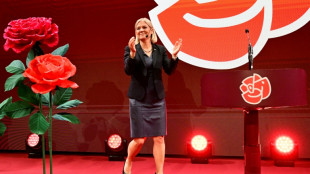 Andersson vows to take Sweden in 'new direction' after election win

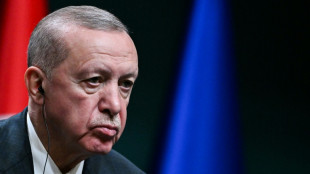 Turkey's Erdogan to run again in early 2028 vote, top adviser says

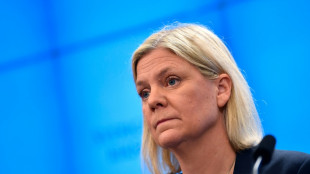 Sweden's Andersson: a trusted, no-nonsense political operator

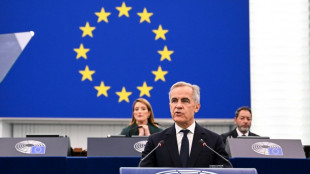 Canada's Carney pushes 'new alliance' with EU despite Trump threats

 Ireland to boycott Eurovision 2027 over Gaza

 India's Tata Sons reappoints N. Chandrasekaran as chairman

 Sweden's left-wing wins election thriller

 Germany urges EU action against China to defend carmakers

 Stocks mostly rise after US Fed rate hike, oil eases

 Palestinians turn rugged caves into homes after Israeli demolitions

 Two unseen Monet paintings to be sold in Paris: auction house

 Klopp wants German team to help reclaim national pride from far-right

 Ninth woman found dead in South Africa killing spree

 Smog scuppers Japan force helping fight Indonesia wildfires
 King Charles to call on tech giants for 'reassurances' over AI

 Lebanon security talks in Paris focus on replacing UN mission
 Most stocks rise as Fed hikes and oil prices drop

 'Vande Mataram': Why is India's freedom song in spotlight?

 Counterculture pop artist Peter Max dies at 88: US media

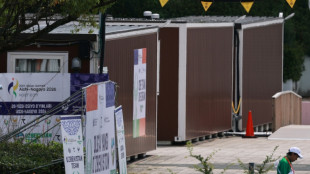 Asian Games chief defends 'functional' rooms after backlash

 Leader's sister says only 'idiots' think N. Korea to give up nukes

 World's water cycle becoming more unpredictable, UN warns

 Where the US-China tariff row stands ahead of White House summit
 Croc-habitat gets green light for 2032 Olympic rowing

The European Central Bank opted for a smaller interest rate rise of half a percentage point on Thursday but warned it expects "significantly" further hikes as red-hot inflation was still "far too high".
The ECB has been lifting borrowing rates at an unprecedented pace in recent months to bring down record-high consumer prices after Russia's war in Ukraine sent energy and food costs surging.
But following two consecutive "jumbo" hikes of 75 basis points, the ECB's governing council downshifted to an increase of 50 basis points at their final meeting of 2022.
The move mirrors the half-point steps taken by the US Federal Reserve on Wednesday, and the Bank of England earlier on Thursday.
The ECB's latest, slightly less aggressive, increase comes after eurozone inflation eased in November for the first time in 17 months, partly thanks to efforts by European governments to ease the cost-of-living squeeze.
At 10 percent however, inflation remains five times higher than the ECB's target and president Christine Lagarde is likely to reiterate at her 1345 GMT press conference that more rate hikes are needed to bring price pressures under control.
"Inflation remains far too high and is projected to stay above the target for too long," the governing council said in a statement ahead of the press conference.
"Interest rates will still have to rise significantly at a steady pace," they said.
ING bank economist Carsten Brzeski said the ECB's comments were "surprisingly hawkish".
The ECB's closely-watched bank deposit rate -- one of the ECB's three key rates -- will now finish the year at 2.0 percent, the highest level since 2008. Just a few months earlier, it was in negative territory.
- 'Short-lived and shallow' -
Like other central banks, the ECB is walking a fine line between raising borrowing costs enough to cool inflation, without dampening demand so much it triggers a deep economic downturn.
The ECB's newest quarterly projections on Thursday showed that the 19-nation eurozone economy was expected to contract in the final quarter of 2022 and the first quarter of 2023.
But the ECB said the winter recession would likely be "relatively short-lived and shallow", echoing analysts' expectations as households and businesses feel the impact of government support packages and gas storage facilities are fuller than usual at this time of year.
The ECB however slashed its outlook for economic growth in 2023, from 0.9 percent previously to 0.5 percent. Stronger growth of 1.9 percent should then be achieved for 2024, it said.
The Frankfurt institution also unveiled its first-ever inflation projection for 2025, set to come in at 2.3 percent.
While the figure is still above the ECB's two-percent target, it's a far cry from the 6.3 percent inflation projected in 2023, followed by 3.4 percent in 2024.
The ECB has faced criticism in the past for underestimating price pressures and Thursday's projections are the latest in a long line of upward revisions. The ECB said the revisions come at a time of "exceptional uncertainty".
- Bloated portfolio -
The ECB also opened up another front in its battle against high inflation, outlining for the first time when and how it plans to start shrinking its five-trillion-euro bond portfolio after years of hoovering up corporate and government debt.
The bank said it would from March gradually stop reinvesting the proceeds from maturing bonds bought under a "quantitative easing" programme launched in 2015.
"The decline will amount to 15 billion euros per month on average until the end of the second quarter of 2023 and its subsequent pace will be determined over time," it said.
Further details of the "quantitative tightening" plan will be announced in February.
In line with its monetary policy tightening campaign, the ECB has already toughened the terms of an ultra-cheap bank loan scheme, aimed at keeping credit flowing during the pandemic, in a bid to incentivise early repayment of so-called TLTRO loans.
The move appears to be paying off, with eurozone lenders handing back around 750 billion euros ($790 billion) in TLTRO cash since October.
P.Hernandez--AT