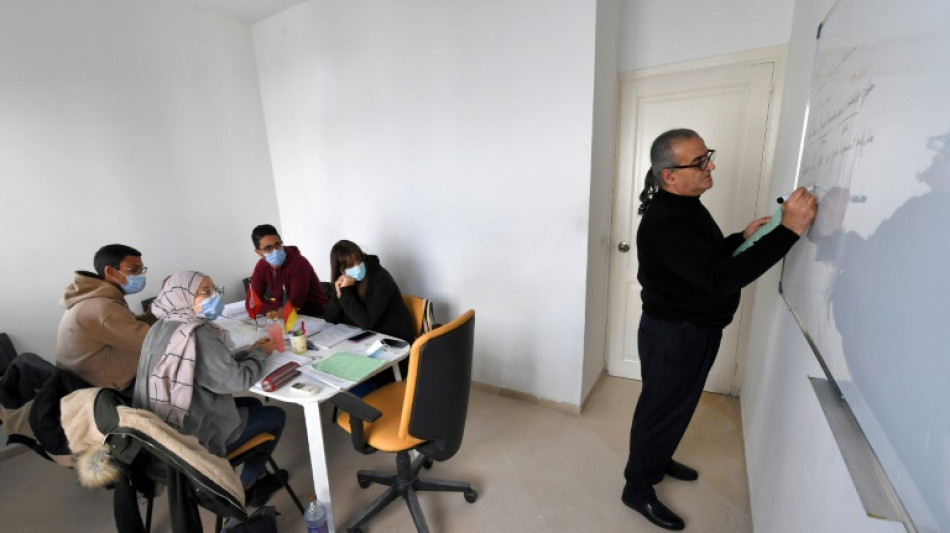
Tunisians dream of moving to Germany as crisis bites / Photo: FETHI BELAID - AFP

 Athletes 'can't take it any more' as Asian Games issues mount

 Allen lights up Bills' new stadium with 41-31 win over Lions

 Afghan medical students in Pakistan hope court stops college expulsions
 AI doomsday warnings unlikely to slow IPOs but questions linger
 ICC eyes China in bid to expand cricket

 Nkunku craving freedom and fun on RB Leipzig return

 Bhutan's traditional archers lose ground to development
 Asian stocks track Wall St rally as oil prices drop

 South Korea makes Asian Games complaint over Japan warlord ceremony

 US aid cuts are killing Kenyan sex workers

 October 7 survivors, families take centre stage in Israel vote
 Captain Mat Ryan axed from Socceroos squad for Brazil games

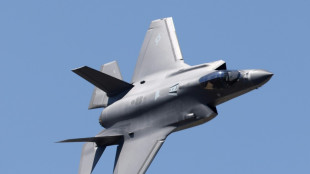 US approves sale of 48 F-35 jets to Saudi Arabia

 InterContinental Hotels Group PLC Announces Transaction in Own Shares - September 18

 Staging Your Home for Sale: Cheap Upgrades That Make a Difference

 Venezuela unblocks some censored news sites

 Samba stars on debut in Man City rout of Norwich

 Oversight Board blasts 'inadequate' Meta safeguards for AI deepfakes

 The Easter Island origins of buzzy Malkovich drama 'Wild Horse Nine'

 Third body recovered after Grand Canyon flash flood

 Harry makes first public appearance since return to UK

 Abhishek hits record T20 ton as India sweep series 3-0

 Abhishek hits record T20 ton as India sweep T20 series 3-0

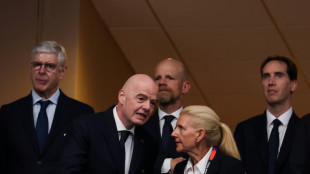 English FA calls for Infantino to release World Cup sell-off documents

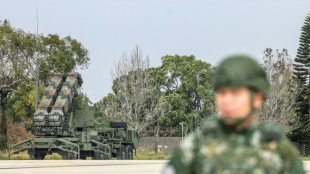 GM delivers first components for US interceptor missiles

Germany is becoming a key destination for disillusioned young Tunisians despite a language barrier and the North African nation's long history of ties with France.
Europe's biggest economy, with its low birth rate, is crying out for labour, and many Tunisians, exhausted by years of economic crisis, see an opportunity for a legal path to emigration.
Numbers are still small but rising fast. Germany granted 5,474 work permits to Tunisians from January to October -- up from 4,462 in the whole of last year and more than double the numbers for 2020.
The trend has been stimulated by the fact Germany has no quota restrictions for countries of origin and increasingly recognises foreign diplomas.
Germany "has a huge need for workers, not just in the health and IT sectors but also in hospitality, building, laying fibre-optic cables or driving heavy goods vehicles," said Narjess Rahmani, a Berlin-based Tunisian who heads the immigration agency "Get In Germany".
Some employers offer contracts to help ease the visa process and even pay for six months of language tuition to help their future workers.
Yeft Benazzouz, who runs a language school in Tunis, said demand for German classes has risen sharply since 2020.
"Before, I had groups of one or two people," he said. "Now it's gone up to six or seven."
Yeft also teaches basic German cultural norms, including the line of advice that "puenktlich ist schon spaet" -- "being on time is already late".
- High prices, few jobs -
Tunisia's history as a French colony means its people are used to foreign languages, Rahmani said. "We are also very open to other cultures, through tourism and the cultural mix throughout our history."
The language school's students are often highly qualified, thanks to one of the Arab world's most reputable education systems, but cursed by unemployment affecting 30 percent among young graduates.
Hydraulic engineer Nermine Madssia, 25, who wears a hijab, said she had chosen Germany over France, citing Islamophobia.
She said she hoped to get "respect, consideration and a decent salary", in contrast to Tunisia where the average pay is just 1,000 dinars (around 300 euros and dollars) per month.
Even highly sought-after IT technicians can expect to earn a maximum of 2,000 dinars early in their careers.
Like many who hope to leave Tunisia, Nermine has had help from her parents in financing German lessons and the visa application.
"With the increase in the cost of living, a salary isn't enough to start and support a family," she said.
Inflation topped 9.0 percent year-on-year in October and Tunisia has endured years of economic crisis, pre-dating even the 2011 revolution that toppled dictator Zine El Abidine Ben Ali.
With sluggish growth, vast public debt and many sectors closed off to new entrants, jobs are sparse, exacerbated by the Covid pandemic and fallout from the Ukraine war.
- Dangerous sea crossings -
President Kais Saied's 2021 power grab, which has placed Tunisia's decade-long democratic transition in doubt, has done little to improve economic confidence.
One in every two young people wants to leave, says the Tunisian Forum for Economic and Social Rights group.
Some leave legally -- including more than 40,000 engineers and 3,300 doctors in the past five years -- while many thousands more attempt dangerous journeys to Italy in makeshift boats, some drowning on the way.
Among the legal departees is Elyes Jelassi, 28, who packed a bottle of olive oil and some spices into his suitcase as he prepared for Germany.
As his family gathered in the town of Korba to wish him goodbye, he said he had never wanted to leave.
But "after three years of studies and internships in several hospitals, I decided not to make a career in Tunisia," he said.
Jelassi already has a job contract as a senior nurse in the German city of Wiesbaden, with free accommodation for the first six months.
As well as a good salary, he said he expects to find better working conditions than in Tunisia, where the health system has been crippled by the pandemic and years of neglect.
"Our hospitals suffer from a lack of equipment, which causes conflict with patients," he said. "It's really stressful."
He chose Germany over Canada, France or the Gulf because he already has friends there and will easily be able to further his studies.
But he probably won't stay there forever.
"I'd like to come back when I'm 50," he said.
Th.Gonzalez--AT