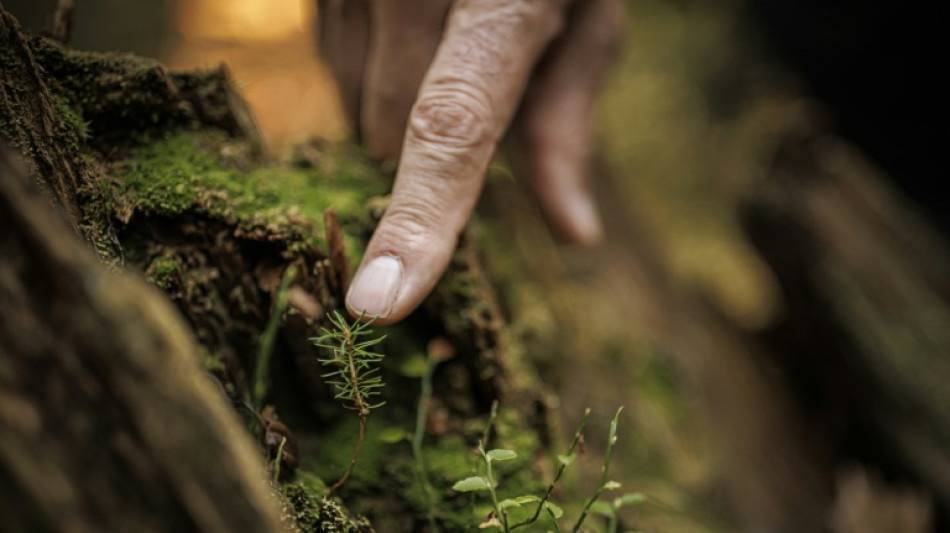
Climate's toll on trees threatens the sound of music / Photo: VALENTIN FLAURAUD - AFP

 Zverev, Shelton back on court for Davis Cup qualifiers

 Peace is a 'dangerous' word in Russian city heading to polls

 Meta chief pushes back on AI slowdown calls

 'Resident Evil' film brings video game's ethos to the big screen

 Court orders N. Korea pay Seoul $32.5 mn for blowing up office

 US military buildup in Palau stirs war fears
 US Fed to deliver rate decision with markets betting on hike
 Saudi, Egypt demand open Red Sea as Riyadh vows response to Houthi attacks

 Physical Gold IRA Investing Guide Released by Experts (2026 Update)

 Capitals say hockey star Ovechkin 'was asked' to film Putin ad
 Spurs in 'tough moment' after League Cup exit as De Zerbi says sorry

 Arteta salutes 'unbelievable' Dowman after Arsenal's teen star sinks Ipswich

 Empty seats as schools reopen in Venezuela's quake-hit Guaira

 Messi set for Argentina farewell in Benin friendly

 Ton-up Brook leads from the front as England hammer Sri Lanka in 1st T20

 AI giants pursue self-regulation as safety fears mount

 Argentina begin life after Messi with Bolivia friendly
 Helen Mirren delves into Patricia Highsmith's mind in 'A Talent for Murder'

 Sanders, Bannon warn of AI dangers in rare US left-right alignment

 US Senate crypto bill collapses amid partisan deadlock
 Raptors confirm Leonard return after Clippers salary cap scandal

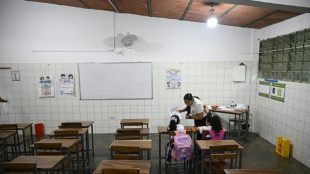 Empty benches as schools reopen in Venezuela's quake-hit Guaira

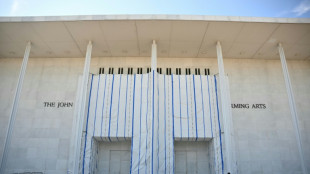
 US judge rules Trump's name must remain off Kennedy Center

 Samson fires India to T20 series win over Afghanistan

 Carney sells Canada to global investors but says US ties still key

Stroking a tiny spruce sapling, Swiss forest ranger Francois Villard fears the tree will not withstand global warming and live to a ripe old age like its ancestors.
The Risoud Forest, covering the border between France and Switzerland some 1,200 metres (3,900 feet) up in the Jura mountains, is filled with spruce trees which are hundreds of years old.
Their wood is perfect for crafting acoustic guitars, violins and other string instruments, making it sought after by luthiers around the world.
But climate change has brought drier, warmer weather, threatening the special tonal qualities of the wood.
"I have never seen so many dry trees," says Villard, who is now approaching retirement.
He is saddened by the sight of so many spruces turning red, losing their needles and drying up, and by spending his days marking trees for felling.
"When I arrived here 30 years ago, there was an average annual temperature of five to six degrees Celsius (40-43 degrees Fahrenheit). Now we are well above that," he tells AFP.
Recent winters have been nowhere near as cold as before.
- Risoud resonance -
Spruces are the most common tree in Switzerland, and the hitherto stable climate in the Jura made the species perfect for producing tonewood for acoustic string instruments.
Stiff yet light softwoods like spruce are used to make soundboards -- the top of the instrument -- which amplifies the vibrations of the strings.
The soundboard must resonate easily with good tonal qualities, while resisting the strain of the strings on the bridge -- characteristics that spruce possesses better than other woods.
The trees that meet the criteria perfectly are exceptionally rare -- one in 1,000 or even 10,000, some say.
The tree must be 200 to 400 years old, and the bottom of the trunk must have a diameter of at least 50 centimetres (20 inches). It must be without knots or flowing resin.
The tree must have grown straight, slowly and, above all, with regular annual growth so that the tree rings are uniform and tight.
- Wood stock -
In the workshop of Swiss Resonance Wood, in the village of Le Brassus close to the French border, Quentin Durey sketches the outline of a guitar on a thin sheet of wood. Thousands more sheets are piled up to dry out over the years.
"There are about 2,000 guitar tops -- classical, romantic and folk guitars," explains company boss Theo Magnin.
The company sells to Europe, Japan and Mexico amongst other destinations.
But Magnin is worried.
"I don't know where people who make musical instruments are going to get their supplies in 10 or 20 years," he says.
"If there is no more wood, there will be no more instruments."
Philippe Ramel, a luthier whose workshop overlooks Vevey and Lake Geneva, makes two to four guitars a year, using spruce from Swiss Resonance Wood.
"We have to stock up, on the assumption that one day these trees will no longer be there" or will lose their special qualities, he tells AFP, noting that cedar wood from Lebanon, though not as good, could end up being the replacement.
Spruce tonewood should therefore be used wisely, he said, questioning whether factories should be churning out a thousand guitars a month.
"The guitar is a popular instrument. It may become a luxury instrument," he says.
- Music of the future -
Dry conditions weaken the spruce trees, which then attract forest-ravaging bark beetles.
And extreme weather conditions can affect their growth, altering the regularity of the tree rings.
"If it continues like this, the stress on these trees will be greater and greater and it's not clear that they will be able to get through it," Villard says.
Normally the trees bear fruit every two to three years. But they are now doing so more frequently, driven by the need to reproduce and thereby ensure they continue to exist, Villard explains.
All is not lost. Letting hardwoods, particularly beech trees, grow in the spruce forests helps to retain moisture in the soil, as their broader span and foliage helps keep the sun's rays off the ground.
Others note the millions of spruces already growing in the mountains.
"In the places which are sheltered from climate extremes, particularly north-facing ones, there really will be spruces for a very long time," forest engineer Philippe Domont tells AFP.
"With the altitude, they can take advantage of a slight increase in temperatures -- if the precipitation does not decrease too much," he insists.
But Magnin, thinking further down the line, says: "We will have to find another wood to replace spruce."
"That's the music of the future."
H.Gonzales--AT