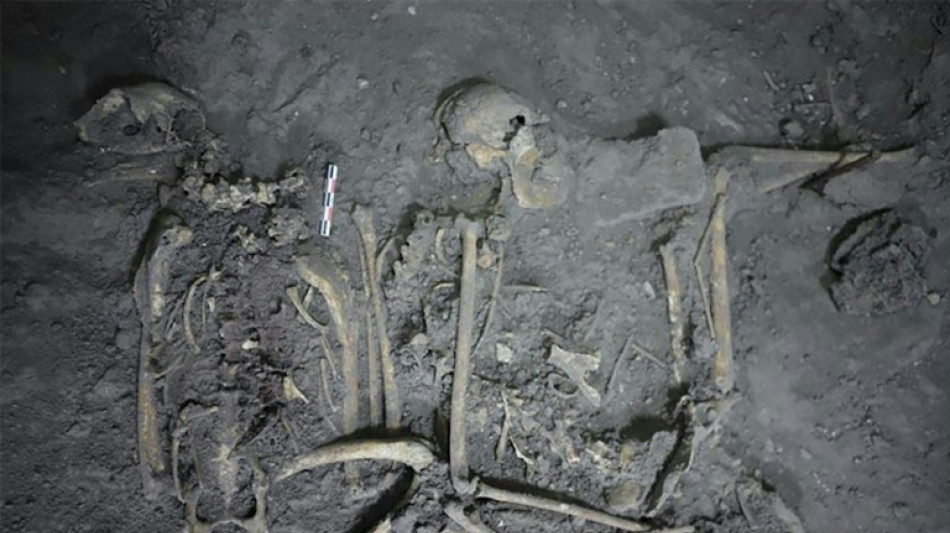
To strengthen ties, ancient Maya gifted neighbors a spider monkey / Photo: Nawa Sugiyama - UC Riverside/AFP

 Wellalage and Mendis star as Sri Lanka level England ODI series
 Guyana urges Venezuela at UN to respect ICJ's ruling on Essequibo region

 Argentina coach says Messi deserves to go out on own terms

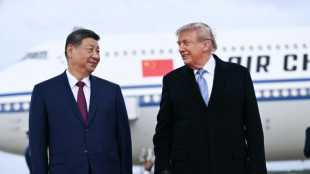
 Xi sets red lines for Trump despite lavish White House welcome

 Cowboys, Ravens happy with footing for first Rio NFL clash

 Starbucks to close 250 more cafes in North America

 French actress Marina Vlady dies at 88

 CNN, MS NOW, Politico allowed back in White House after judge's order

 Morocco's ruling coalition dominates low-turnout parliament election

 Napoli hoping to build new stadium, says owner

 What's behind the Pakistani strikes on Afghanistan?
 Hundreds protest for return of Nobel peace laureate Machado to Venezuela

 Aubameyang to miss two months for Deportivo after knee surgery

 Newsom says Trump presidency 'as we know it' ends in November

 Stocks fall as oil prices rise and bonds back under pressure

 Russell leads Mercedes 1-2 in Azerbaijan GP practice

 Ukrainian kills priest, wounds four at Polish abbey

 Sri Lanka captain Mendis hits century in 321-6 against England

 Oscar-winner Cotillard fears being moved by AI actor

 Agassi demands proper break for exhausted tennis stars

 Seixas 'crushes' teammates in training to draw Pogacar comparisons
 Trump welcomes Xi to White House, touting agreement on AI

 Stocks fall, oil prices rise as global bonds back under pressure
 UK man died putting women, children first in Mozambique jihadist siege: coroner

 Russell leads Mercedes 1-2 at Azerbaijan GP practice
Seventeen hundred years ago, a female spider monkey was presented as a treasured gift -- and later brutally sacrificed -- to strengthen ties between two major powers of pre-Hispanic America, according to a new study.
The paper, published Monday in the Proceedings of the National Academy of Sciences (PNAS), compared the offering by Maya elites to Teotihuacan to China's panda diplomacy that accompanied the normalization of Sino-US relations in the 1970s.
By using multiple techniques -- including extraction of ancient DNA, radiocarbon dating and chemical dietary analysis -- researchers were able to reconstruct the life and death of the primate, finding she was likely between five and eight years of age when buried alive.
"It's such an exciting time to be doing archaeology because the methodology is finally here," lead author Nawa Sugiyama of the University of California, Riverside told AFP.
The work began with Sugiyama's surprising discovery in 2018 of the animal's remains in the ruins of Teotihuacan, a UNESCO World Heritage Site in the arid Mexican Highlands.
Spider monkeys (Ateles geoffroyi) aren't native to the elevated region, leaving Sugiyama with a puzzle to solve: What was the animal doing there, who brought it, and why was it sacrificed?
Vital clues came from the remains' location. Teotihuacan (pronounced tay-uh-tee-waa-kaan), which lies 30 miles (48 kilometers) northeast of Mexico City, was an important site of cultural exchange and innovation in Classic Mesoamerica.
It's perhaps best known for the pyramids of the Moon, Sun and Feathered Serpent. But there is increasing interest in another monument called Plaza of the Columns, a complex where neighboring Maya maintained a presence likened to a modern day embassy.
- Feasts, treasures and murals -
The monkey's skeletal remains were found in the complex alongside a golden eagle -- an emblem of Mexico even today -- and surrounded by a collection of high-value items, including obsidian projectile points, conch shells, and precious stone artifacts.
Over 14,000 ceramic shards from a grand feast were also discovered, as well as a Maya mural depicting the spider monkey.
This, said Sugiyama, was further evidence of an exchange that took place at the highest levels, and preceded the Teotihuacan state's later rise and military involvement in Maya cities by the year 378 CE.
Results from chemical analysis involving two canine teeth that erupted at different points in the monkey's life indicate that prior to captivity, she lived in a humid environment and ate plants and roots.
After being captured and brought to Teotihuacan her diet was closer to that of humans, including corn and chili peppers.
The spider monkey may have been "an exotic curiosity alien to the high elevations of Teotihuacan," wrote Sugiyama and colleagues, with the fact she was a fellow primate possibly adding to her charisma and appeal.
Ultimately, the animal met a grisly demise: "Hands bound behind its back and tethered feet indicate en vivo burial, common among human and animal sacrifices at Teotihuacan," the authors wrote.
Though savage to modern eyes, "we need to understand and contextualize these cultural practices... and what it meant to be able to give up that which is most precious to you," said Sugiyama.
Y.Baker--AT