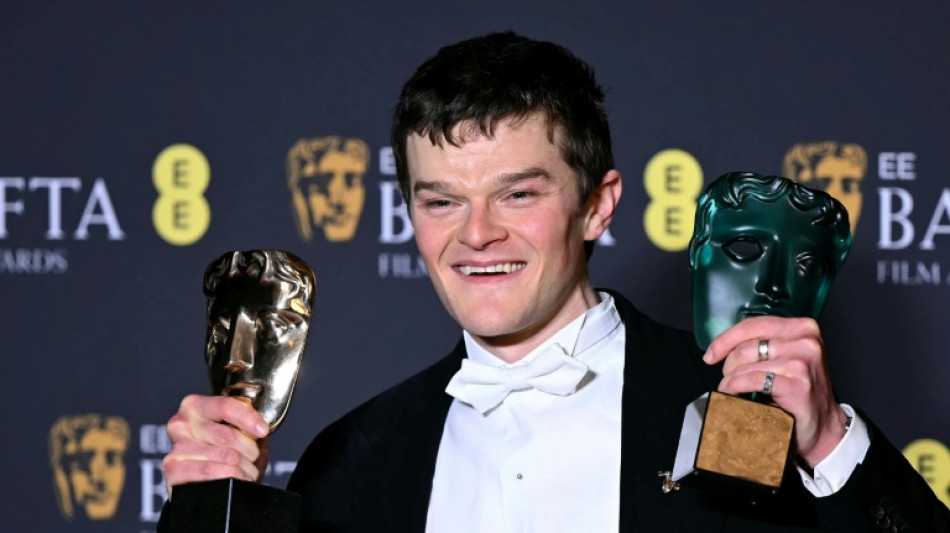
BBC apologises for 'involuntary' Tourette's racial slur during BAFTA awards / Photo: JUSTIN TALLIS - AFP/File

 Steve Young Says 49ers' 'Grinding Personalities' Prevent Early Peak
 Oil Prices Drop Nearly 3% on Libyan Pipeline Restart and Middle East Supply Concerns
 Construction Boarding to Launch AI Training Program for Vocational Students in October 2026
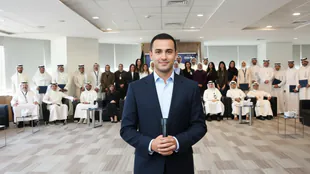 Kuwait’s CMA to Launch Fourth Strategic Plan in April 2027
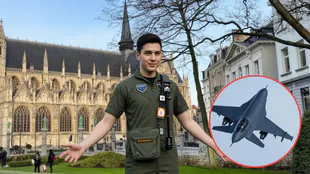 Belgian F-16s Deploy Counter-Drone Rockets in Riga for First Time

 The Historical Origins of Thanksgiving: From Pilgrims to National Holiday

The BBC apologised Monday for not editing out a racial slur during the BAFTA awards, saying it was an "involuntary" verbal tic by a Tourette's sufferer who inspired a winning film.
British actor Robert Aramayo triumphed over established stars Timothee Chalamet and Leonardo DiCaprio to win the best actor prize for his portrayal of a man with Tourette's syndrome in "I Swear".
The film was inspired by the real life story of Tourette's campaigner John Davidson whose life has been irrevocably changed by the condition.
Davidson shouted the N-word as "Sinners" actors Delroy Lindo and Michael B Jordan, who are both black, presented the award for special visual effects.
Actor Alan Cumming, the ceremony's host, apologised for the language viewers may have heard during the broadcast.
But the BBC did not edit the offending language out of its broadcast which was shown on a two-hour delay on Sunday evening. It was edited out of the version on the BBC's streaming service on Monday morning.
"Some viewers may have heard strong and offensive language during the Bafta Film Awards," a BBC spokesperson said.
"This arose from involuntary verbal tics associated with Tourette syndrome, and as explained during the ceremony it was not intentional.
"We apologise that this was not edited out prior to broadcast and it will now be removed from the version on BBC iPlayer."
A spokesperson for the charity Tourettes Action said it "deeply" understood the offence and harm caused by racial slurs.
But they said it was "vital that the public understands a fundamental truth about Tourette syndrome -- tics are involuntary. They are not a reflection of a person's beliefs, intentions or character.
"People with Tourette's can say words or phrases they do not mean, do not endorse and feel great distress about afterwards," the spokesperson added.
The charity added it was "incredibly proud" of Davidson and others involved in the film.
A.Taylor--AT