
Analysts warn US could be handing chip market to China / Photo: JUSTIN SULLIVAN - GETTY IMAGES NORTH AMERICA/AFP/File

 ハウプト・コレクション:お金が人間について明かすこと

 Колекція Гаупта: Що гроші розповідають про нас, людей

 German far-right AfD poll winner says Merz 'twilight' has begun

 Flights scrapped, evacuations urged as Typhoon Dujuan nears Japan

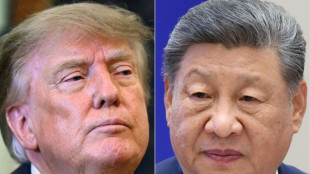 China confirms Xi to visit US this week for Trump talks

 مجموعة هاوبت: ما يكشفه المال عنا نحن البشر

 Colecția Haupt: Ce ne dezvăluie banii despre noi, oamenii

 Sisters of jailed Pakistan ex-PM Imran Khan arrested

 African players in Europe: Semenyo brace helps City top table

 'For my family': India boxer beats hardship, injury to go for Games gold
 Indonesia doing 'everything' but still struggling to curb fires

 Once decried as 'human cockfighting', MMA wants Olympic spot

 China's Yu, 13, great for swimming says multiple Olympic medallist

 Putin's party set to retain power after Russia vote hit by cyberattacks, drones

 Germany's Merz under pressure after bruising state election losses

 Messi, Miami frustrated in 2-2 draw with San Diego

 Thousands march in France against 'licence to kill' draft law

 4 Hacks for Yearlong Savings on Your Kids' Wardrobes
 Crexendo Expands AI Portfolio Through Meetric Partnership, Adding Omnichannel Conversation Intelligence for More Than 250 Platform Licensees

 Guardian Metal Resources PLC Announces Positive Tempiute Tungsten Drilling Results

 Braves clinch division title as Red Sox reach MLB playoffs

 Bordeaux-Begles hammer Stade Francais despite Jalibert injury

 Milan and Juventus end blips with home wins

 Bridgeman wins PGA Biltmore title with sizzling 61

 Williams injured as Bears shut down by Vikings

As the Trump administration attempts to choke off exports of strategically important computer chips to China, experts say the effort might well backfire, fueling innovation at Chinese firms that could help them seize the world semiconductor market.
"What's actually happening is that the US government right now is handing China a big win as it tries to get their own chip business going," said Jack Gold, principal analyst at J.Gold associates.
"Once they're competitive," he told AFP, "they'll start selling around the world and people will buy their chips."
When that happens, he added, it will be difficult for US chip makers to reclaim lost market share.
Silicon Valley semiconductor star Nvidia and its US rival Advanced Micro Devices (AMD) expect big financial hits from new US licensing requirements for semiconductors exported to China, they notified regulators this week.
Nvidia expects the new rules to cost it $5.5 billion, while AMD forecast it could sap as much as $800 million from the company's bottom line, according to filings with the US Securities and Exchange Commission (SEC).
Administration officials told Nvidia it must obtain licenses to export its H20 chips to China because of concerns they may be used in supercomputers there, the company said.
The United States had already restricted exports to China, the world's biggest buyer of chips, of Nvidia's most sophisticated graphics processing units (GPUs), designed to power top-end artificial intelligence models.
Nvidia essentially developed the H20 chip for the Chinese market, aiming to maximize performance while meeting previous US export rules, but the new licensing requirements pose a roadblock, according to Gold.
For AMD, the new US export control measure applies to its MI308 GPUs, which are designed for high-performance applications like gaming and artificial intelligence, it said in a filing.
It noted that there is no guarantee licenses for sales to China will be granted.
- Opportunity for China? -
Independent tech analyst Rob Enderle predicted Chinese chip makers -- likely led by the huge Huawei corporation -- will ramp up efforts to snatch the lead in the market.
"It's going to be a godsend for China as they spin up their own microprocessor business," Enderle said of the tightened US export rules.
"This will be a really quick way to hand over US leadership in microprocessors and GPUs."
The Chinese government has ample resources and motivation to bolster its chip industry, according to Gold.
He said while US President Donald Trump might think he can "bully people" to achieve his objectives, "the worldwide economy is not like that."
Instead, Trump's tariffs have alienated allies, increasing their incentive to turn to China for chips, the analyst said.
"Across the board, this is going to create real problems for US companies competitively," Enderle said.
"Companies located overseas are suddenly going to be in much better shape to compete."
Nvidia chief executive Jensen Huang has said publicly that the AI chip powerhouse can comply with the new US requirements without sacrificing technological progress, adding that nothing will stop the global advancement of artificial intelligence.
"Nvidia is one of the most important pieces in this (US) chess game with China," Wedbush analyst Dan Ives said in a note to investors.
"The Trump administration knows there is one chip and company fueling the AI Revolution and it's Nvidia," he said, and so it placed "a 'Do Not Enter' sign in front of China" to slow its progress.
Ives warned, however, that the chip wars are not over. He expects "more punches to be thrown by both sides."
W.Morales--AT