Stars and 'unscrupulous doctors': Perry death highlights toxic history / Photo: Chris Delmas - AFP/File

 Missing F-35 fighter parts 'not sensitive', says Australia minister

 Cambodia showcases scams crackdown with global conference
 Afghan cyclist who disguised herself as man wins Asian Games silver

 Typhoon Dujuan leaves four dead in Japan, 45,000 houses without power

 G7 leaders condemn Houthi strikes on Saudi Arabia
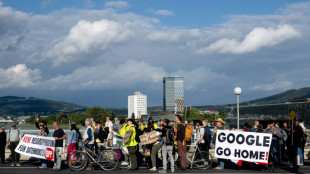 Google data centre sparks protests in Austria
 Shin Ohashi: Junk food-loving teen and Japan's next big swimming hope
 Stocks rise on AI buzz, drop in oil prices

 China's robot dancers limber up for America's Got Talent final
 Despite military might, Saudi struggles to crush the Houthis
 Trump to tout deals, defend Iran war in UN speech
 Sri Lanka to issue verdict in landmark Easter attack trial

 Coretura Selects Alloy Kore to Advance a Unique Software-Defined Vehicle Platform for Its Commercial Vehicle Customers

 Akkodis and Hamburg Public Transport Association Showcase hvv mia at InnoTrans 2026, Demonstrating the Future of AI-Powered Mobility
 Macron says talks with Trump on Red Sea, Ukraine 'constructive'

 Green policies just good politics, says UK minister
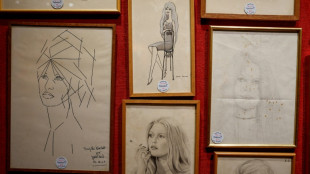 Bardot auction in Paris fetches nearly one million euros
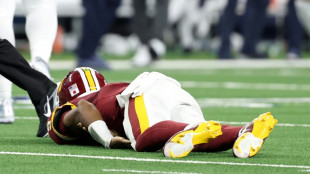 No timeline on Daniels injury return, says Commanders coach

 British Columbia sues OpenAI in US court over Canada school shooting

 French star Batum retires after 18-year NBA career
 Zidane leads first France training session
 Man shot by ICE agent in Texas detained with bullet inside him: lawyer
 California declares state of emergency ahead of El Nino

 South Africa arrests three more suspects, after nine women murdered
 Carse needs time away from England, says captain Brook
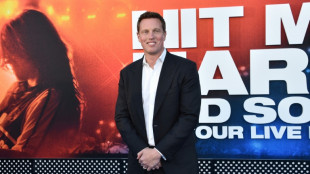
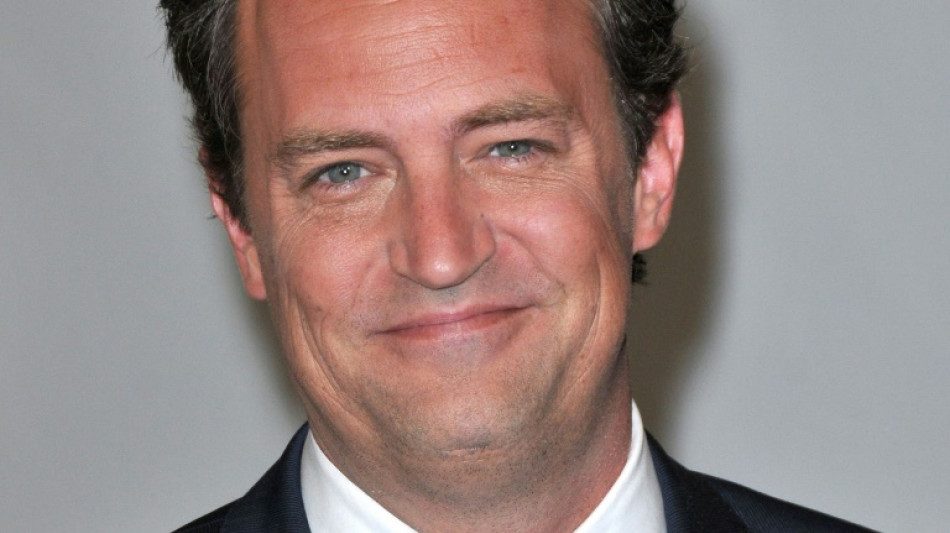
"Friends" actor Matthew Perry's tragic death has highlighted the secretive and toxic relationship that has long existed between troubled celebrities and the doctors who service their addictions.
Perry, who had a long history of substance abuse, was found dead in the hot tub of his luxury Los Angeles home last year with extremely high levels of ketamine in his system.
Federal drug officials said the star had become addicted while seeking treatment for depression and "turned to unscrupulous doctors" when legal sources refused to increase his dosage.
"Instead of 'do no harm,' they did harm so that they could make more money," Anne Milgram of the Drug Enforcement Administration told a press conference this week.
The allegations against doctors Salvador Plasencia, who has pleaded not guilty, and Mark Chavez, who agreed to plead guilty to conspiracy to distribute ketamine, appear eerily reminiscent of other celebrity cases.
For instance, Michael Jackson's doctor Conrad Murray was convicted in 2011 of involuntary manslaughter for administering a lethal dose of a powerful surgical anasthetic to the megastar.
The deaths of pop icons from Elvis Presley and Marilyn Monroe to Prince and Tom Petty have all been linked to the fatal consumption of controlled substances obtained from medical professionals.
"The rules go out the window with famous people, and it constantly leads to tragedy," said Harry Nelson, a prominent Los Angeles-based healthcare attorney. "It's crazy."
- ' A trap' -
Financial gain is often a key motive.
Plasencia is alleged to have sold vials worth $12 for up to $2,000 to Perry, even messaging Chavez "I wonder how much this moron will pay... Lets [sic] find out."
But Nelson, who has been personally involved in more than a dozen "front-page, headline-news tragedies" involving famous actors, rock stars and athletes, said the full picture is often more complicated.
Celebrities have a genuine need for privacy. Going to a doctor for a prescription, followed by a pharmacy to collect the drugs, is not feasible for troubled A-listers who are frequently hounded by paparazzi.
Yet doctors can quickly become awed by the "romance and excitement" of proximity to world-famous stars, who are likely to display a higher "sense of entitlement" regarding their treatment demands than typical patients.
In order to "stay in the good graces of that person and continue to have this privileged role," doctors can end up rationalizing: "I'm gonna do what that person wants, even if it's against better judgment," said Nelson.
"But it's a trap. It's a trap for both the celebrity patient, and for the doctor," he added.
- 'Ketamine parties' -
Ketamine's use as a "party drug" due to its dissociative and hallucinatory effects exploded onto the scene in the 1990s.
During the mid-2000s, "ketamine parties" held at private homes around Los Angeles were frequently attended by major stars, according to Nelson.
"You had a handful of doctors around Los Angeles who facilitated these, literally, parties, where everybody would be doing infusions of ketamine in a celebrity home, in Malibu, on the beach," he said.
The medical board cracked down on these doctors, disciplining or removing the licenses of several.
Today, the drug is increasingly used for legitimate treatment of depression and PTSD.
Southern California has become a hub for private rehab clinics that offer absolute privacy -- for extravagant fees -- to celebrities and the ultra-wealthy, said Nelson.
In the Perry case, Chavez previously operated a ketamine clinic.
- 'Liberties' -
But the drug, which can cause health effects including loss of consciousness and respiratory problems, should only be administered under supervision of a doctor, and patients are meant to be monitored closely.
Plasencia is alleged to have handed over vials of ketamine to Perry's assistant -- even meeting him on a street corner at midnight a few weeks before the actor's death for a $6,000 cash exchange, according to the indictment.
"The idea that someone would be allowed to just take it at home and get in the hot tub while on this drug is criminal, it's irresponsible," said Nelson.
"The doctors who did this undoubtedly felt that they could take some liberties, because they were dealing with a famous person who had a need for greater privacy."
Ch.Campbell--AT