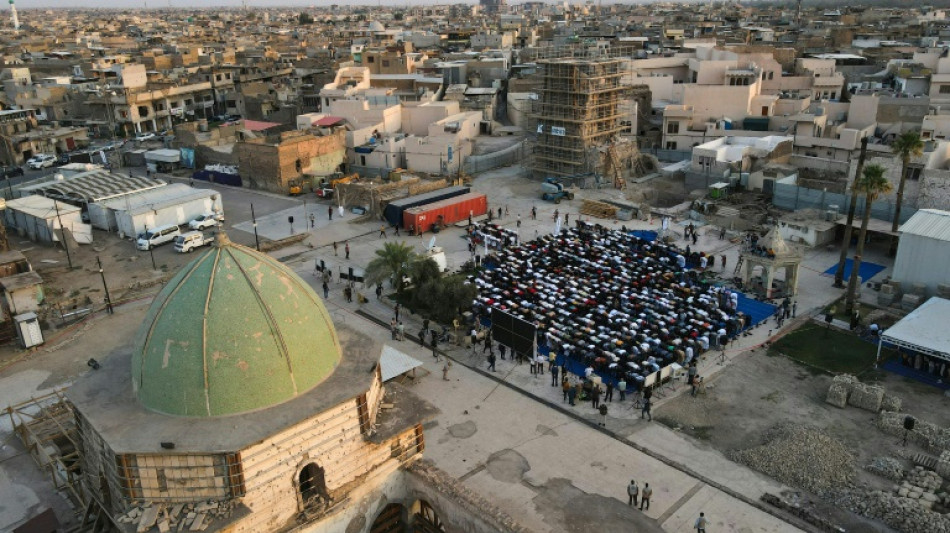
Five IS bombs found hidden in iconic Iraq mosque: UN agency / Photo: Zaid AL-OBEIDI - AFP/File

 Magnificent Mandhana's 79 helps India to Asian Games cricket gold

 Marchand 'stressed' about racing Japanese rivals at LA Olympics
 Mobile boat clinics bring healthcare to India's remote islands
 Former India paceman Zaheer Khan named Chennai coach in IPL

 Six-year-old Chinese girl sets world record with Rubik's Cube
 Swimming prodigy Yu, 13, says 'interviews way harder than racing'
 Star coaches make their bows as Nations League returns

 Rams bounce back as Giants reel from Dart injury

 In Bangladesh, Pakistan's Jinnah photo stirs anger

 Two New Zealand naval ships transit Taiwan Strait

 Zidane gets down to work as France start new era
 Inside the Venezuelan prison meant to 'drive you insane'
 UK king braces as memoir by Diana's brother goes on sale
 GFS Chemicals Partners With Bioz to Turn Data Into Deeper Product Engagement

 Coretura Selects Alloy Kore to Advance a Unique Software-Defined Vehicle Platform for Its Commercial Vehicle Customers

 Akkodis and Hamburg Public Transport Association Showcase hvv mia at InnoTrans 2026, Demonstrating the Future of AI-Powered Mobility
 Macron says talks with Trump on Red Sea, Ukraine 'constructive'

 Green policies just good politics, says UK minister

 Bardot auction in Paris fetches nearly one million euros
 No timeline on Daniels injury return, says Commanders coach

 British Columbia sues OpenAI in US court over Canada school shooting

 French star Batum retires after 18-year NBA career
 Zidane leads first France training session
 Man shot by ICE agent in Texas detained with bullet inside him: lawyer

 California declares state of emergency ahead of El Nino
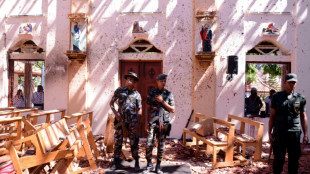
A United Nations agency said it has discovered five bombs in a wall of Mosul's iconic Al-Nuri mosque, planted years ago by Islamic State group jihadists, during restoration work in the northern Iraqi city.
Five "large-scale explosive devices, designed to trigger a massive destruction of the site," were found in the southern wall of the prayer hall on Tuesday by the UNESCO team working at the site, a representative for the agency told AFP late Friday.
Mosul's Al-Nuri mosque and the adjacent leaning minaret nicknamed Al-Hadba or the "hunchback", which dates from the 12th century, were destroyed during the battle to retake the city from IS.
Iraq's army accused IS, which occupied Mosul for three years, of planting explosives at the site and blowing it up.
UNESCO, the UN cultural agency, has been working to restore the mosque and other architectural heritage sites in the city, much of it reduced to rubble in the battle to retake it in 2017.
"The Iraqi armed forces immediately secured the area and the situation is now fully under control," UNESCO added.
One bomb was removed, but four other 1.5-kilogram (3.3-pound) devices "remain connected to each other" and are expected to be cleared in the coming days, it said.
- 'Complex manufacturing' -
"These explosive devices were hidden inside a wall, which was specially rebuilt around them: it explains why they could not be discovered when the site was cleared by Iraqi forces" in 2020, the agency said.
Iraqi General Tahseen al-Khafaji, spokesperson for the Joint Operations Command of various Iraqi forces, confirmed the discovery of "several explosive devices from ISIS jihadists in Al-Nuri mosque."
He said provincial deminers requested help from the Defence Ministry in Baghdad to defuse the remaining munitions because of their "complex manufacturing".
Construction work has been suspended at the site until the bombs are removed.
It was from Al-Nuri mosque that Abu Bakr Al-Baghdadi, the then-leader of IS, proclaimed the establishment of the group's "caliphate" in July 2014.
The jihadists took over large swathes of territory in Iraq and neighbouring Syria, which they ruled with brutality.
Iraqi forces backed by a US-led coalition drove IS out of Mosul in 2017.
The Al-Nuri mosque derives its name from Nureddine al-Zinki, the unifier of Syria who also reigned for a time over Mosul and ordered its construction in 1172.
It was destroyed and rebuilt in 1942 in a renovation project, with only the ancient minaret remaining from the original structure.
The current restoration of Al-Nuri, largely funded by the United Arab Emirates, is still expected to be completed in December 2024.
This, said UNESCO, will finally erase "the stigma" of IS occupation.
The minaret -- which will be reconstructed at a slant upon the request of locals -- is being rebuilt with 45,000 of the original bricks saved from the rubble, only a third of the original structure.
The bomb scare was not the first surprise discovery at Al-Nuri. In January 2022, restoration teams unearthed an underground prayer room from the original 12th century building.
A.Clark--AT