Forgotten D-Day cameramen out of shadows, 80 years on / Photo: Brendan Smialowski - AFP

 Hurricane Polo strengthens to top category 5 off Mexico

 11 hurt as teen opens fire outside school in western Turkey

 UN chief says 'Big Oil' treats atmosphere as open sewer

 Tunisia says 2026 summer hottest on record

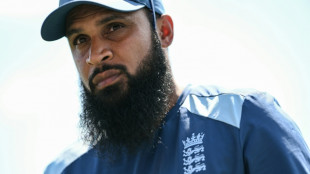 England's Rashid out of Sri Lanka ODIs with hand injury
 Houthis accuse Saudi Arabia of deadly strikes as thousands flee

 Stocks climb as oil slides, AI buzz returns

 India cricketers win in style as Afghan savours 'special' Games silver

 La Liga president hits out at Real Madrid refereeing 'conspiracy' claims

 MEXC Launches “Real Stocks, Real Friends” with Rewards for Bringing Friends to Wall Street

 Mbappe continues media push for Ballon d'Or recognition

 Stocks rise on AI buzz, oil prices cool

 India narrowly survive huge scare against minnows Japan

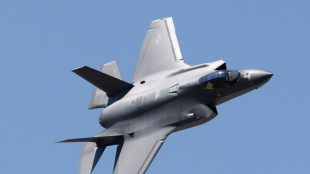 Missing F-35 fighter parts 'not sensitive', says Australia minister

 Cambodia showcases scams crackdown with global conference

 Afghan cyclist who disguised herself as man wins Asian Games silver

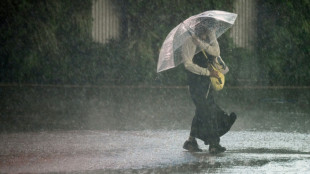 Typhoon Dujuan leaves four dead in Japan, 45,000 houses without power

 G7 leaders condemn Houthi strikes on Saudi Arabia

 Google data centre sparks protests in Austria

 Shin Ohashi: Junk food-loving teen and Japan's next big swimming hope
 Stocks rise on AI buzz, drop in oil prices
 China's robot dancers limber up for America's Got Talent final

 Despite military might, Saudi struggles to crush the Houthis
 Trump to tout deals, defend Iran war in UN speech
 Sri Lanka to issue verdict in landmark Easter attack trial

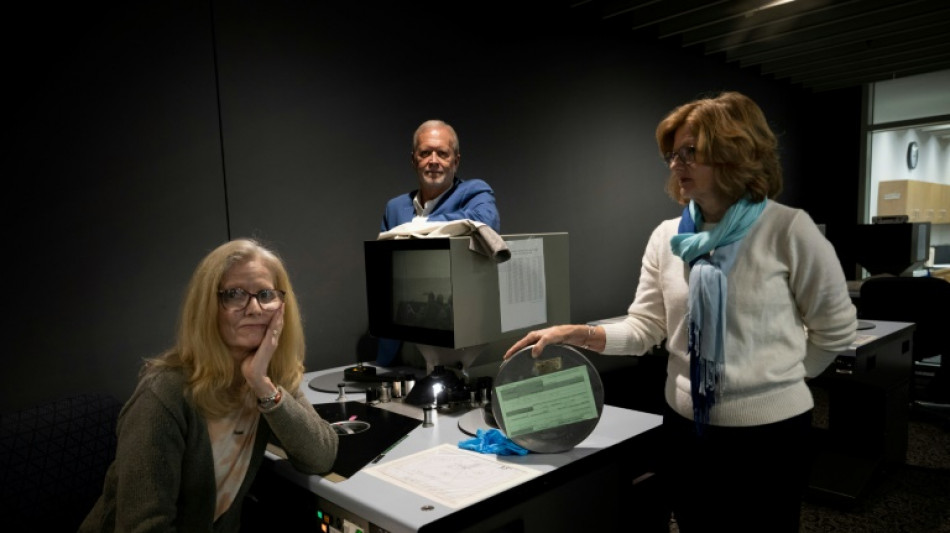
Seated side by side behind an antiquated viewer, the sisters run and rerun the 35 mm black-and-white film reel, whispering to each other about the images captured by their father, the only cameraman on Omaha Beach on D-Day.
In the footage taken on June 6, 1944 in northern France, a handful of US soldiers advance on shore. One falls to the ground, a victim of German bullets. And even though he suffered a wound to his left arm, Sergeant Richard Taylor kept filming.
Ahead of the 80th anniversary of the Allied beach landings in Normandy, Taylor's daughters are working hard to honor his memory, one of the many stories largely lost in the dustbin of history.
Jennifer Taylor-Rossel, 66, and Patricia Spae, 65, have come to a darkened room at a National Archives facility outside Washington for the first time to look at the film, at the invitation of French documentarian Dominique Forget.
Taylor-Rossel will be in Normandy in June to retrace her father's footsteps.
"It's going to be emotional," Spae told AFP, which accompanied Forget to the meeting.
Taylor-Rossel struggled to hold back tears.
"What he saw..." she said, trailing off.
- 'Resentful' -
The world's collective memory of D-Day is often summarized by the work of Robert Capa -- 11 indelible yet blurry photos of Omaha Beach that have become legendary.
But, under German fire, Taylor was also documenting history.
His unit was meant to take images of the landings, but he was the only one to bring home video footage of American troops that day in Colleville-sur-Mer.
His reels, like millions of other military documents from World Wars I and II, are kept in the massive cement National Archives facility in College Park, Maryland.
These records are at the heart of an upcoming two-part television documentary by Forget, who has been tracing the images for years until he found the descendants of Taylor and others who were in Normandy that fateful day.
"They're the ones that went in. And they're the ones that took the risk of their lives, and went in and filmed and continued to film when they got shot," said Taylor-Rossel, admitting she was a "little resentful" about the aura around Capa's work.
"I think it's time that these photographers got the recognition that they so deserve."
Taylor-Rossel has been digging through her father's souvenirs and belongings for several years. He died in 2002 at the age of 95.
She showed AFP a German beret with a swastika. She found it in an inside pocket of her father's uniform, which bore a patch on the sleeve that read: "Official US Army photographer."
- 'Bits and pieces' -
Taylor, who had worked as a photographer in New York, enlisted in December 1942, and then insisted on being sent to the front as a combat photographer.
After being wounded on D-Day, he returned to the battlefield to document the advance of Allied forces into Germany -- a journey he detailed in about 200 letters sent to his family.
Page by page, Taylor-Rossel came to know, posthumously, her father, who she remembered as "tough" and "difficult to love."
He dismissed the scar on his left arm simply by saying "I got shot on D-Day," Taylor-Rossel recalled, over the din of the film reel spooling out.
"He didn't elaborate, never did elaborate," said Spae.
Taylor-Rossel replied: "No, it would just come out in bits and pieces. (...) He's like, 'Yeah, I was on the third wave.' Okay, but then that was it."
For Spae, his letters to his family made clear that his war experiences were "just so emotional, and just devastating."
- Jack Lieb: the other forgotten one -
In another featureless room at the Archives facility, the sisters find rare pictures from that era. The US Army extracted still shots from their father's video footage.
On the back of some of them was typed "Taylor."
"To see his name on the back..." Taylor-Rossel said. "All these stories that he told us about the war... I was trying to find the proof, and now we have the proof."
"I don't know, it's like I'm touching him back then," she said, her voice choked with emotion.
A few steps away, Robert Neal Marshall was also perusing some images -- those taken by his grandfather Jack Lieb at Utah Beach.
"I'd never seen that, that's new," the 63-year-old said in French as he looked at the rare color footage. Lieb shot both black-and-white footage for American newsreels and personal images in color.
"It's like looking through my grandfather's eyes," he then said in English, visibly moved as he gazed at the screen.
"I wish I could talk to him and tell him how powerful this is."
R.Lee--AT