
'Worse than Covid': UK gig venues sing the Blues / Photo: BENJAMIN CREMEL - AFP

 Trump rejects international regulation of AI

 How is the EU approaching record fuel prices?

 Sri Lanka's Colombage strikes on debut as England dismissed for 265 in first ODI

 Hurricane Polo strengthens to top category 5 off Mexico

 11 hurt as teen opens fire outside school in western Turkey

 UN chief says 'Big Oil' treats atmosphere as open sewer

 Tunisia says 2026 summer hottest on record

 England's Rashid out of Sri Lanka ODIs with hand injury

 Houthis accuse Saudi Arabia of deadly strikes as thousands flee

 Stocks climb as oil slides, AI buzz returns

 India cricketers win in style as Afghan savours 'special' Games silver

 La Liga president hits out at Real Madrid refereeing 'conspiracy' claims

 MEXC Launches “Real Stocks, Real Friends” with Rewards for Bringing Friends to Wall Street

 Mbappe continues media push for Ballon d'Or recognition

 Stocks rise on AI buzz, oil prices cool

 India narrowly survive huge scare against minnows Japan

 Missing F-35 fighter parts 'not sensitive', says Australia minister

 Cambodia showcases scams crackdown with global conference

 Afghan cyclist who disguised herself as man wins Asian Games silver

 Typhoon Dujuan leaves four dead in Japan, 45,000 houses without power

 G7 leaders condemn Houthi strikes on Saudi Arabia

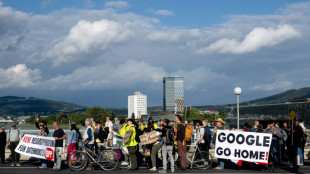 Google data centre sparks protests in Austria

 Shin Ohashi: Junk food-loving teen and Japan's next big swimming hope

 Stocks rise on AI buzz, drop in oil prices

 China's robot dancers limber up for America's Got Talent final

The hall may have been packed when the lights came on at singer Cosmo Sheldrake's gig at "Earth Hackney", but the coffers of the east London venue are anything but full.
"There's a paradox here that you can sell out shows and yet you can lose money," Auro Foxcroft, Earth's boss, told AFP.
UK music venues are facing a perfect storm, with a surge in costs -- particularly for electricity and rent -- coinciding with reduced purchasing power for customers.
"Everything costs about 15 percent more on average than it did before the pandemic and... sales are down some 20 percent," he explained.
Some 125 independent venues closed in Britain last year, more than a third of the total.
They included stately institutions such as "Moles" in Bath, southwest England, which hosted Oasis, The Cure and Eurythmics before they made it big.
"There is no profit to be made anymore in this industry," Jack Henry, operations director of "Studio Spaces", a performance and events venue in south London, told AFP.
"It's the worst it ever has been. Covid was a massive hit for the night-time economy, but this is far worse," he added.
Concert halls, nightclubs and bars had to close for months during the pandemic. However, they had no operating costs and received substantial government aid.
Even before the pandemic, the 2008 financial crisis and the rise of digital devices, which changed how people consumed music, had set alarm bells ringing.
Since then it has been an increasingly uphill struggle.
"In a climate like this, you end up making artistic decisions about your programme on how much beer you're going to sell," Foxcroft said with a sigh.
- Plea for help -
But even this revenue stream is drying up with young people drinking less than their elders due to expense and as part of efforts to lead healthier lifestyles.
"I tend personally to not buy alcohol," 21-year-old student Indy Firth told AFP at the Cosmo Sheldrake gig. It is too expensive, she added.
"In my age group, a lot of people are drinking less alcohol."
While alcohol sales are falling, ticket sales are doing well.
But cashing in by raising prices runs the risk of driving away customers, especially the young people vital to the industry's survival.
"People don't start going to concerts in their 40s," pointed out Foxcroft.
The Night Time Industries Association, a trade group, has asked the government to reduce value added tax (VAT) in order to boost consumer spending.
Mark Davyd, director of the Music Venues Trust association, is also campaigning for a portion of each ticket sold for a stadium or large arena concert to be redistributed to the independent sector.
Davyd pointed out that the biggest names in British music, from Adele to Coldplay and the Rolling Stones, all cut their teeth in small venues before finding global fame.
Industry leaders highlight the example of France, where concert halls fared better last year, thanks in part to a policy under which 3.5 percent of the cost of concert tickets is redistributed.
R.Lee--AT