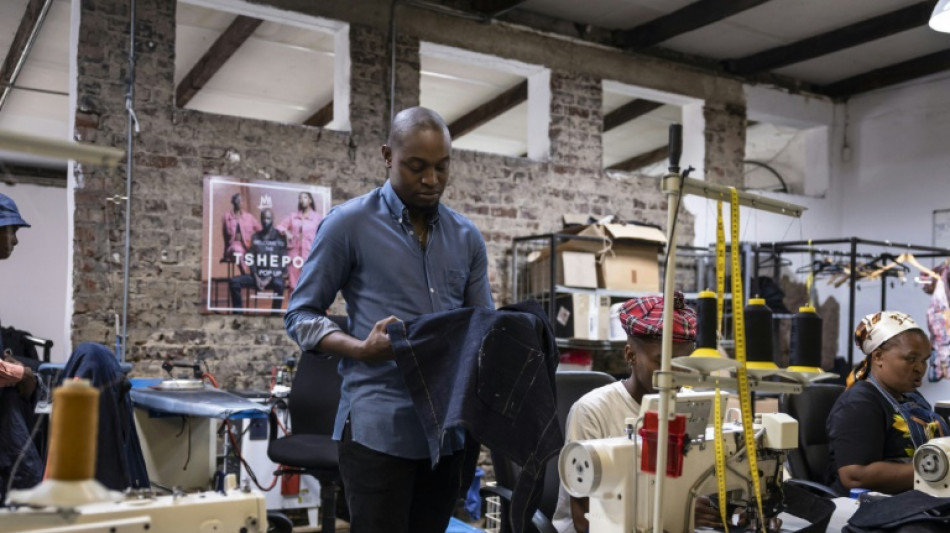
S. Africa's Tshepo Jeans, from township to stars' closets / Photo: OLYMPIA DE MAISMONT - AFP

 Voting opens in Alaska's annual Fat Bear Week

 MLS coach axed for telling female ref 'It's a man's game'
 US refuses to give Sudan's de facto leader visa for UN

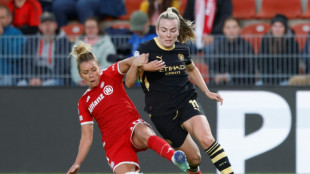
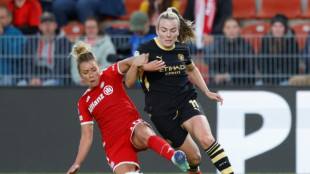 Man City hold Bayern to start Women's Champions League, Arsenal win late

 Trump threatens Iran with 'hell' but reveals fresh talks
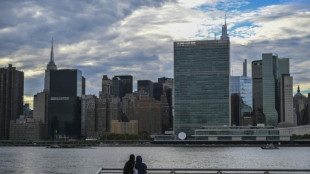
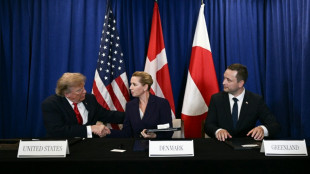 Trump signs security deal with Greenland, Denmark at UN

 Trump threatens Iran with 'hell' but unveils fresh talks

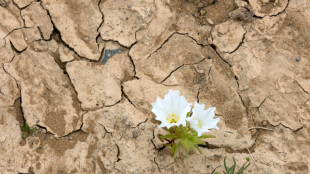 Chile's Atacama Desert blossoms with life after El Nino rains
 Sri Lanka hands 220-year jail terms to 15 convicted of Easter bombings

 Typhoon Dujuan leaves 7 dead in Japan from landslides, flooding: media

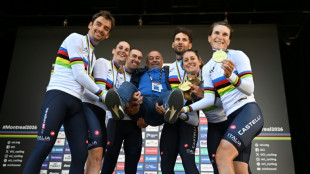 Ganna and Borghini lead Italy to mixed relay gold at cycling worlds
 Drug cocktail killed former child star Hayden Panettiere: coroner

 Moldova declares energy, water emergency

 French Holocaust denier jailed for eight months

 Oil prices slide, AI stock buzz fades

 Trump threatens to 'annihilate' Iran in bombastic UN speech

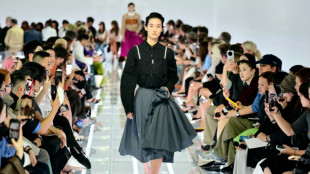 Prada's skirts take centre stage as Milan Fashion Week begins
 Quoin Pharmaceuticals Announces FDA Fast Track Designation for QRX003 for the Treatment of Peeling Skin Syndrome
 Brazil's Flavio Bolsonaro turns scandal into poll gains

 Republican senator seeks probe of Trump Jr Russian-funded wedding

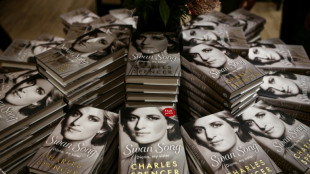 Memoir by Diana's brother goes on sale after rocking UK monarchy
 Newcomers South Korea face holders Italy in Davis Cup finals

 Japan's Kojima sounds Marchand warning with Asian Games gold

 England rugby star Pollock signs new Northampton deal

 STARTRADER Expands Its Chinese Equity CFD Range with CXMT and Unitree Robotics

Growing up in a rough township outside Johannesburg, Tshepo Mohlala was mocked for wearing skinny jeans before they were popular.
More than a decade later, ridicule has turned into admiration as the 32-year-old is now a successful fashion designer making denim praised by global celebrities including Beyonce and Meghan Markle.
"The township was never ready for my sense of style," he quips, sitting in his atelier in a trendy redeveloped industrial building in Johannesburg.
The South African entrepreneur has made a name for himself in recent years with tailor-made jeans targeting African women who, poorly served by Western brands, struggled to find a perfect fit.
"A whole lot of African women have a tiny waist and big booties and big hips and tiny legs," says Mohlala, a slender man with close-cropped hair and a goatee framing a broad smile.
"We created a range of jeans using raw denim with no stretch that is super tailored for women."
Before they were clients, women were a source of inspiration for Mohlala.
The logo of Tshepo Jeans, his firm, is a stylised crown with three spikes representing the three women who marked his life.
His mother taught him resourcefulness, his grandmother to behave like a gentleman, and a stylish aunt introduced him to fashion.
- 'Dude, listen' -
Later, when he was short of money and forced to drop out of fashion school, it was a fourth woman he was dating who helped him set up his business in 2015.
"She was like: 'Yo, dude, listen, I see you're obsessed with this thing, here is access to 8,000 (rand) and go ahead and start your business'," he recalls.
"I took that loan and went to buy myself some fabric and created the first range of jeans."
The line got traction as he cleverly advertised it on social media, creating anticipation -- "Something big is coming" -- and telling his own story.
Now about 10 tailors sew away behind large windows under the high ceiling of his workshop.
Tshepo Jeans' top range denim is made from cotton produced in neighbouring Zimbabwe, which is then sent to a mill in Japan before being cut and assembled back in Johannesburg.
Many local customers like a light denim "with a bit of stretch" that is "comfortable" and "breathable", making it well suited for the hot African weather, he says.
Personalised pairs sell for around $375, a small fortune in South Africa.
- Royal jeans -
But orders come from all over the world.
In 2019 the brand got a massive boost from Meghan Markle, who bought a pair during a trip to the continent.
"A lot of South Africans at the time would say: 'why would I buy Tshepo?' and then you have the Duchess of Sussex coming here, really calling me and begging, 'I need to get a pair of jeans from you before I leave the country'," Mohlala recalls.
A year later, US pop star Beyonce listed Tshepo Jeans among brands she admired.
"Celebrity endorsement has really helped build our brand and opened up doors for us on a global scale," says Mohlala, sporting a denim shirt and leather shoes.
"He is winning hearts abroad and in South Africa," says denim fanatic Thando Made, who runs a fashion blog about jeans.
Decades ago, jeans were considered a worker's clothing in South Africa, as miners would don overalls when digging gold, copper, coal and other minerals, he says.
Things changed after the advent of democracy with the election of Nelson Mandela as president in 1994.
The country opened up and US and Italian brands finally established themselves, turning denim into urban wear.
"Denim is like religion: you choose the one that works for you," says Made.
"In this space that Tshepo is in, he speaks to somebody who wants to embody the pride of being South African."
L.Adams--AT