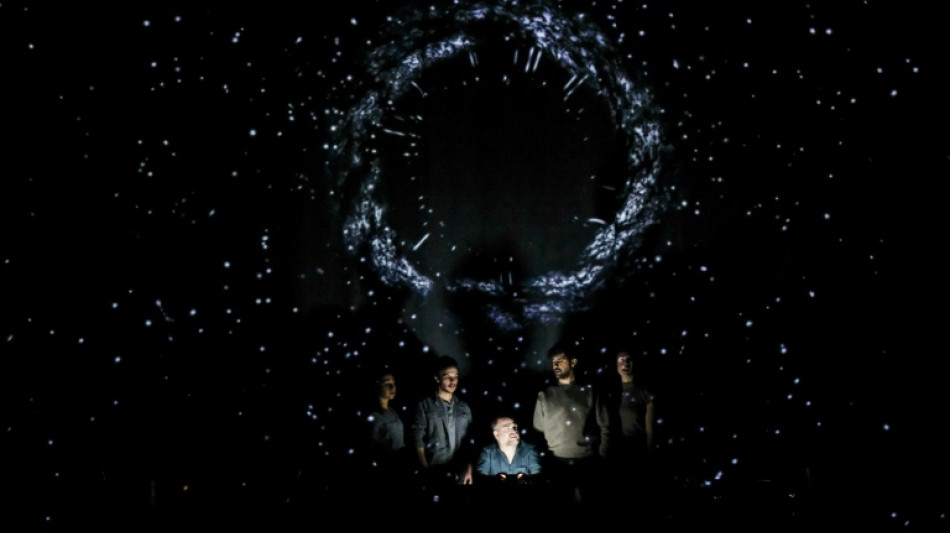
Reality takes center stage in Quebec documentary theater / Photo: YVES RENAUD - Theatre du Nouveau monde/AFP

 Italy hope for new dawn under Mancini

 Mongolian herders enlist new tech against harsher, drier climate

 Tata turmoil shines light on India succession woes

 World Cup 'not enough' as Spain begin next chapter
 Meta acts against 3.7 mn scammers' accounts with Singapore police help
 Australia PM says draft social media rules about taking back control

 Is Pet Insurance Worth the Monthly Cost?
 US-led Americas coalition backs sanctions against crime groups

 'Star Wars' fans and art lovers line up for new Lucas museum
 Trump renames AI 'super intelligence' as leaders jostle over dangers
 Oil prices retreat as markets welcome US-Iran talks

 US refusing to give Sudan's de facto leader visa for UN: diplomatic sources, UN
 Macron urges world to choose UN over 'law of the jungle'

 All-rounder Jacks stars as England beat Sri Lanka in 1st ODI

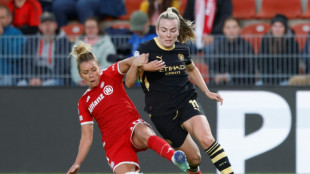 Man City peg back Bayern to start Women's Champions League
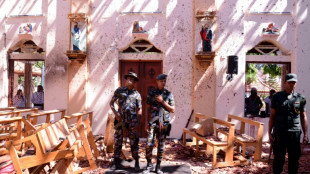
 Trump beats 'America first' drum at UN as allies tread carefully
 Snedeker backs Spaun for Ryder Cup after Presidents snub
 French prosecutors probe secret filming of women with smart glasses

 Trump renames AI "super intelligence," rejects international oversight
 Trump rejects international regulation of AI
 How is the EU approaching record fuel prices?

 Sri Lanka's Colombage strikes on debut as England dismissed for 265 in first ODI

 Hurricane Polo strengthens to top category 5 off Mexico
 11 hurt as teen opens fire outside school in western Turkey

 UN chief says 'Big Oil' treats atmosphere as open sewer
Mass shootings, artificial intelligence and genetically modified foods are topics not often associated with theater.
But audiences in Canada's Quebec province are flocking to documentary plays that seek to take on difficult topics and spur debate.
"Bringing reality to a stage is challenging," especially when "tackling complex subjects," says Marie-Joanne Boucher, an actress who co-produced a play about the 1989 Ecole Polytechnique massacre, an anti-feminist university mass shooting that left 14 people dead and deeply scarred the nation.
In the play, "Project Polytechnique," two main actors recount the horrors of the attack and press the audience to consider what can be done to prevent more mass shootings.
The words of one of the survivors and of a police officer who was among the first to arrive at the grisly scene are recited, along with comments from a firearms enthusiast and anti-feminists who continue years later in online forums to justify the attack and adulate the killer.
"We say to the spectator: Come to the theater and you will be entertained, but you will also leave with a better overview of today's society," says Annabel Soutar, co-founder of Porte Parole, a pioneer of the genre in Quebec.
Over the past two decades, her theater company has produced about 20 plays on themes as diverse as hydroelectricity, genetically modified foods and health care. Since then, many other docu-theater companies have followed suit.
- One in four plays -
Debuting in the 1920s, in Germany and then in Russia, documentary theater initially developed to support communist ideology. It then spread during the 20th century throughout the world and moved away from propaganda to focus on social topics.
In Canada, it was more in the English-speaking part of the country that the genre was embraced in the 1970s, but it has now taken on new life in Quebec.
Approximately one in four theater productions in Quebec today is a docu-play, according to Herve Guay, an academic who edited a book on the genre.
Part of the reason for this runaway success is the broad "aesthetic variety" of docu-plays, says Guay.
Montreal resident Emilie Cabouat-Peyrache recently saw "Project Polytechnique" and loved it.
"Documentary theater allows you to explore a lot of subjects, sometimes surprising ones," she said.
- 'Apotheosis of documentary theater' -
Another popular docu-play, "Run de lait" (Milk Run), deals with the disappearance of small Quebec farms, Canada's milk quota system and the mental health of farmers.
"We are at the apotheosis of documentary theater and Quebec society is ripe to be challenged in this way on social issues," believes Justin Laramee, who produced the show.
In an interview with AFP, he said he was pleased to perform it for both urban dwellers and farmers alike. "It started conversations, and we need that in our society now."
Allowing audiences to explore new worlds were key objectives for the creators of "Pas perdus," a documentary play about identity, heritage and memory featuring non-actors performing tasks silently while a recording of their voices plays over speakers.
"We live in a society with a lot of noise, a lot of positions taken, not necessarily a lot of depth, and I think we need a return to authenticity," explains the play's co-writer Anais Barbeau-Lavalette
The play has elicited strong responses from audiences. "We get a lot of feedback," Emile Proulx-Cloutier, who wrote the play with Barbeau-Lavalette. "Spectators often tell me that they leave shaken."
N.Mitchell--AT