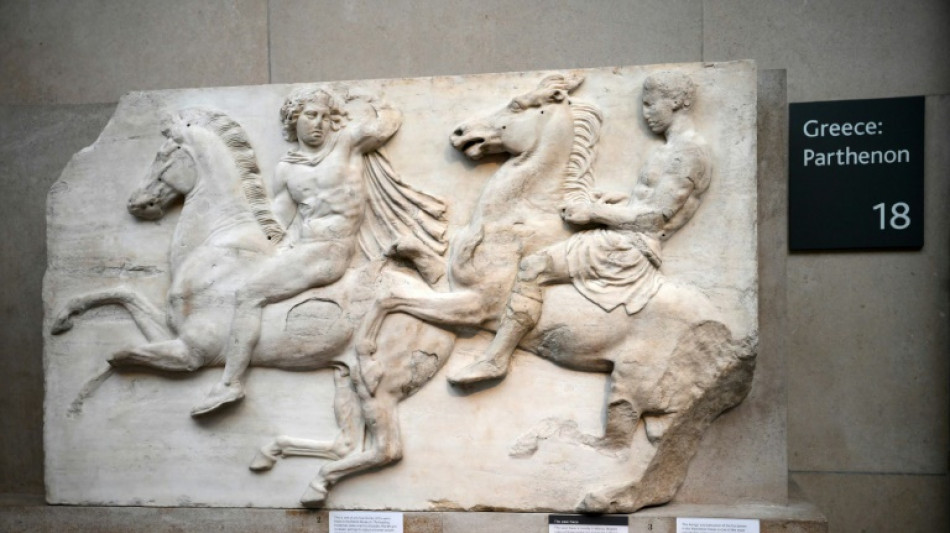
UK archives show Parthenon marbles role in 2012 Olympics lobbying / Photo: Daniel LEAL - AFP

 Black Sea drone attacks spell terror for Turkish sailors

 Canada judge to decide prison term for suicide poison seller

 Weinstein faces resentencing in New York for 2006 sex assault

 Outgoing UN chief makes climate push at New York summit
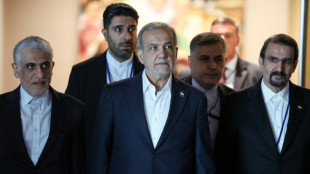 AI risks, Iran war to take center stage at UN
 Badminton no.1 An tells dad to keep it down at Asian Games
 Runaway leader Antonelli eyeing third straight win

 Schoolgirl Yu, 13, fastest again in bid for third Asian Games gold

 Oil prices fall after Trump hails 'good' talks with Iran

 AI political ads warp reality ahead of US midterms
 Kenneth Branagh embraces action hero role -- to get in shape

 'New one' Klopp promises fresh approach as Germany reign begins
 Milne returns to New Zealand squad for India T20 series

 Warpaint London PLC Announces Interim Results

 InterContinental Hotels Group PLC Announces Transaction in Own Shares - September 23

 Is Pet Insurance Worth the Monthly Cost?

 US-led Americas coalition backs sanctions against crime groups

 'Star Wars' fans and art lovers line up for new Lucas museum
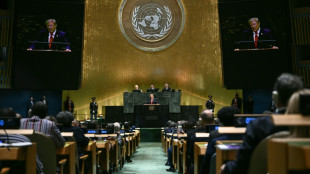 Trump renames AI 'super intelligence' as leaders jostle over dangers

 Oil prices retreat as markets welcome US-Iran talks
 US refusing to give Sudan's de facto leader visa for UN: diplomatic sources, UN
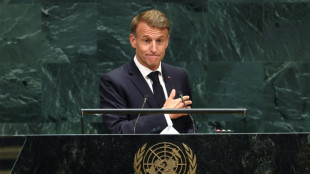 Macron urges world to choose UN over 'law of the jungle'
 All-rounder Jacks stars as England beat Sri Lanka in 1st ODI

 Man City peg back Bayern to start Women's Champions League

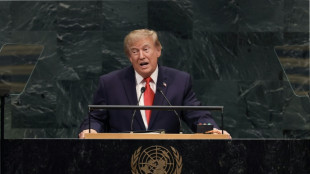 Trump beats 'America first' drum at UN as allies tread carefully

The UK government tried to help Greece secure the Parthenon Marbles on loan two decades ago in a bid to drum up support for London's 2012 Olympics' bid, according to files released Friday.
Internal British government correspondence from 2002 and 2003 about the Parthenon friezes, also known as the Elgin Marbles, were revealed as the issue continues to dog UK-Greece relations.
Just last month, the Elgin marbles caused a fresh diplomatic spat with UK Prime Minister Rishi Sunak axing a meeting with his Greek counterpart Kyriakos Mitsotakis at the last minute.
It followed a BBC interview with Mitsotakis the previous day in which he aired frustrations over the long-contentious issue.
The 2,500-year-old sculptures were taken from the Parthenon temple at the Acropolis in Athens in the early 19th century by British diplomat Thomas Bruce, the earl of Elgin, and subsequently handed to the British Museum.
Greece maintains the marbles -- a major draw for visitors at the world-famous London museum -- were stolen, while the UK insists they were obtained legally and should remain on display in the British capital.
In the early 2000s, progress on resolving the thorn in bilateral ties appeared imminent.
Greece proposed a then-novel solution, suggesting the friezes return to Athens in the form of a long-term loan, bypassing the issue of ownership.
The country was keen for the sculptures to go on display in the Greek capital -- at a new museum being built on the Acropolis -- to coincide with the 2004 Olympic Games set to be held there.
At the same time, then-UK leader Tony Blair and his government were stepping up lobbying efforts to secure the 2012 Olympics for London.
- 'Blinkered intransigence' -
Against that backdrop Sarah Hunter, Blair's lead adviser on culture, media and sport policy issues, sent him an April 2003 memo arguing "there are good reasons for us to change tack" on the marbles.
Several months earlier, Blair had discussed the loan proposal with his Greek counterpart Konstantinos Simitis, but had subsequently written to him saying "this is not an issue on which the UK govt (government) would seek to intervene" on.
London had long maintained it was a matter for the British Museum and its trustees alone.
But noting it could be a "powerful bargaining chip" in International Olympic Committee votes for the 2012 Games, Hunter now suggested the government "privately and publicly encourage" the museum "to find an accommodation over the next 12 months".
The top aide acknowledged the Greek case had "become more sophisticated" with its loan plan, and accused the museum of "blinkered intransigence to consider any compromises".
She goes on to suggest supporting a recent proposal from former British foreign secretary David Owen for a UK-Greece treaty governing the loan arrangement.
"It seems sensible: rational policy-making favours the Greeks," Hunter wrote, while adding the museum's trustees must ultimately make the decision.
Blair appears amenable, replying "yes" in a handwritten note on the memo.
He suggests putting Owen "in charge of negotiating this", adding that the veteran politician could "probably help with the BM (British Museum), whilst distancing it a little from govt".
However, the initiative appears to have quickly stalled, with the museum issuing a statement four months later in August 2003 saying "the trustees cannot envisage any circumstances under which they could accede to the Greek government's request".
Britain nonetheless succeeded in securing the 2012 Olympics, but two decades on, it remains at loggerheads with Athens over the Parthenon Marbles.
A.Taylor--AT