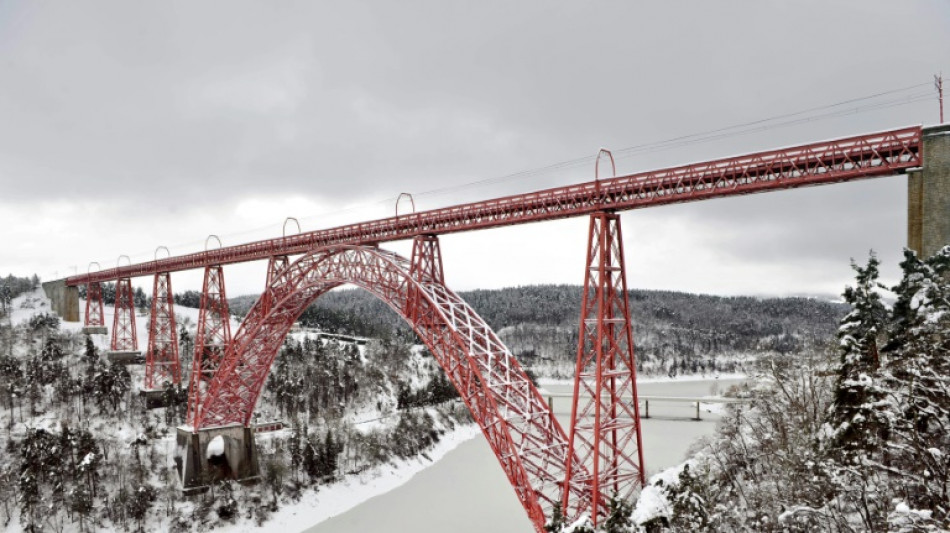
Gustave Eiffel: French tower builder who sparked skyscraper frenzy / Photo: THIERRY ZOCCOLAN - AFP/File

 Black Sea drone attacks spell terror for Turkish sailors

 Canada judge to decide prison term for suicide poison seller

 Weinstein faces resentencing in New York for 2006 sex assault

 Outgoing UN chief makes climate push at New York summit
 AI risks, Iran war to take center stage at UN
 Badminton no.1 An tells dad to keep it down at Asian Games
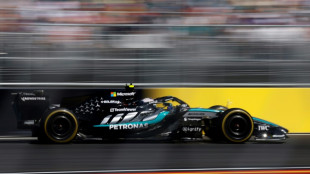 Runaway leader Antonelli eyeing third straight win
 Schoolgirl Yu, 13, fastest again in bid for third Asian Games gold
 Oil prices fall after Trump hails 'good' talks with Iran

 AI political ads warp reality ahead of US midterms
 Kenneth Branagh embraces action hero role -- to get in shape

 'New one' Klopp promises fresh approach as Germany reign begins
 Milne returns to New Zealand squad for India T20 series
 Warpaint London PLC Announces Interim Results
 InterContinental Hotels Group PLC Announces Transaction in Own Shares - September 23

 Is Pet Insurance Worth the Monthly Cost?
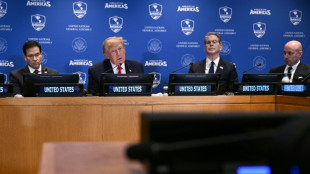 US-led Americas coalition backs sanctions against crime groups

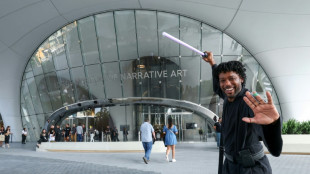 'Star Wars' fans and art lovers line up for new Lucas museum
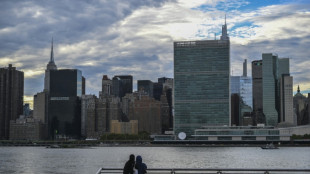
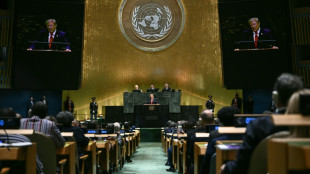 Trump renames AI 'super intelligence' as leaders jostle over dangers

 Oil prices retreat as markets welcome US-Iran talks
 US refusing to give Sudan's de facto leader visa for UN: diplomatic sources, UN
 Macron urges world to choose UN over 'law of the jungle'
 All-rounder Jacks stars as England beat Sri Lanka in 1st ODI

 Man City peg back Bayern to start Women's Champions League
 Trump beats 'America first' drum at UN as allies tread carefully

French engineer and entrepreneur Gustave Eiffel will forever be remembered for building the much-loved tower that has dominated the Paris skyline for over a century.
But the father of the Eiffel Tower also designed hundreds of other landmarks across the globe, and even patented a system of underwater "bridges" to run under the Channel.
Here are five things to know about the engineer and inventor, who died 100 years ago on December 27, 1923, at the age of 91.
- Bonickhausen Tower? -
Eiffel designed the tower that would bear his name for the World Fair in Paris in 1889.
But the tower, which came to symbolise France, could very easily have had a German name.
Eiffel, who had German roots, was born Alexandre Gustave Bonickhausen dit Eiffel in 1832 in Dijon but he dropped the German part of his surname after the 1870 Franco-Prussian war, fearing it could damage his career.
Erected in record time, the 7,000-tonne, 300-metre (1,052-foot) "Iron Lady" was the tallest human-made structure in the world for four decades.
Commenting on its place in history, the Bureau International d'Expositions, which organises World Expos, says it "marked the pinnacle of iron architecture, and set the pace for the skyscraper frenzy that would follow in the 20th century".
- Projects on five continents -
The Tower came towards the end of Eiffel's career, during which he built around 500 structures across five continents.
He built his reputation as a builder of railway bridges but also used his metal wizardry to build the Pest railway station in Hungary, lighthouses in Finland and Madagascar, the structure of the Saigon Central Post Office in Ho Chi Minh City and the iron framework of the Statue of Liberty in New York.
He also designed portable bridges, delivered around the world in kits.
- Channel tunnel 100 years early -
Never short of ideas, Eiffel proposed to build what he described as a bridge under the Channel to link France with Britain.
His 1890 design envisaged a system of concrete-coated metal tubes built on supports resting on the sea bed.
The project never saw the light of day, but 104 years later the Channel Tunnel linking Britain and France, which measures 169 Eiffel Towers placed end-to-end, was launched to great fanfare.
- Panama fiasco -
Eiffel was as much an entrepreneur as engineer. In 1887, his company won the contract to build locks for the Panama Canal -- the biggest deal of his career.
But poor management by Ferdinand de Lesseps, the Frenchman who had overseen the successful Suez Canal, caused the project to collapse, resulting in one of the biggest financial scandals of 19th century.
De Lesseps and Eiffel were both charged with fraud and sentenced to prison and hefty fines.
Although their convictions were later overturned, Eiffel's reputation had taken a battering and he retired from business.
- Radio Eiffel -
He devoted the last 30 years of his life to scientific research, with a particular focus on meteorology and aerodynamics.
The wind tunnel he built in a hangar at the foot of the Eiffel Tower was used to test more than 20 planes.
It is still used today by the construction, aviation, shipping and automotive industries to test the effects of wind and air.
He also used research to save his illustrious tower, which was commissioned on the understanding that it be dismantled after 20 years.
He installed a meteorology station on the third floor, but it was the addition of a giant radio antenna in 1921 that saved it from the wrecking ball.
M.Robinson--AT