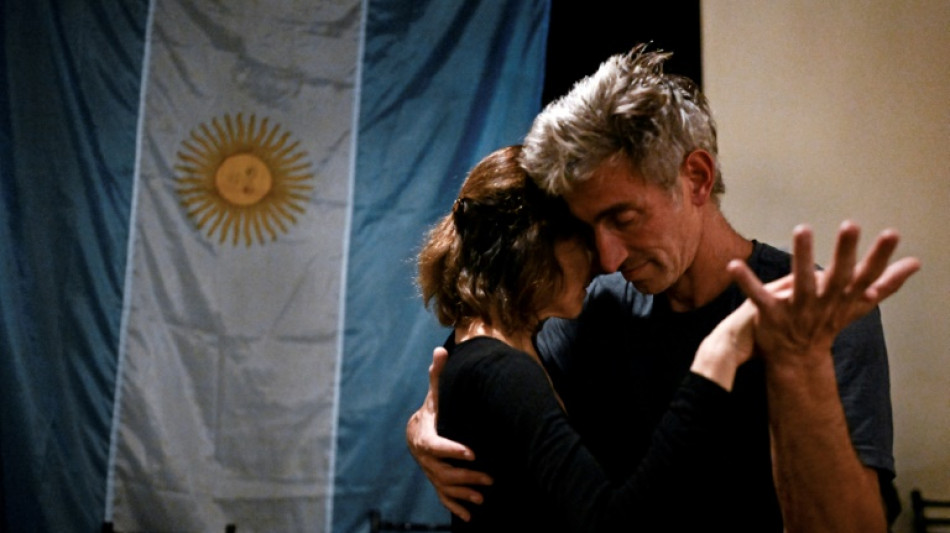
In inflation-hit Buenos Aires, tango enthusiasts sway the blues away / Photo: LUIS ROBAYO - AFP

 Trump invites Putin to G20 summit in Miami

 Archaelogical 'breakthrough' could confirm origins of Paris

 ILO financial crisis takes centre stage in leadership race

 Stocks dip, oil soars despite Trump hailing "productive" Iran talks

 China's Xi to get rare airport welcome from Trump

 Turkey reassures investors over investment fund crisis

 Saka says England still have 'scar' from World Cup semi-final loss

 アレックス・ボディ氏とシュテファン・ハウプト教授、ルーマニアの伝説的な美術コレクションをめぐり提携に合意
 亞歷克斯·博迪與史蒂芬·豪普特教授就羅馬尼亞傳奇藝術收藏達成合作協議

 Алекс Боди и проф. д-р Стефан Хаупт договорились о сотрудничестве в рамках легендарной коллекции произведений искусства в Румынии

 French foreign minister says Palestinians 'must' hold polls

 Fresh Russian strikes on Ukraine's infrastructure kill seven

 Eriksen to return to Denmark after parting ways with Wolfsburg

 Brad Pitt says working with dog co-star was 'really moving'

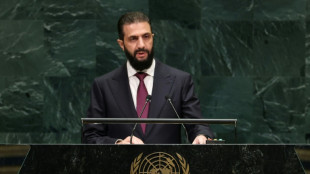 Golan will remain Syrian, vows President al-Sharaa at UN

 Blueberry Strengthens MENA Presence with CMA Category 5 License and Dubai Office Launch
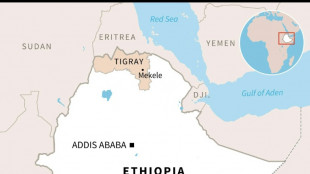
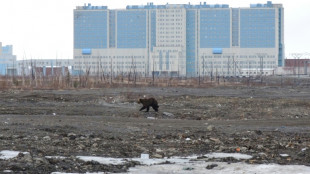 Russia probes bear attacks, as official says town under 'siege'

 Robertson tells Spurs to 'forget' past woes
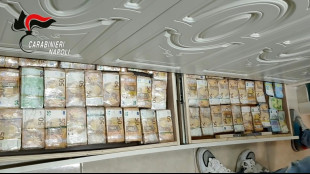 Italy police find 3 million euros stashed in mobster's house

 Renard versus Queiroz in AFCON qualifying blockbuster

 Former Mexico boss Aguirre returns to Spain with Valencia

 China swimmer, 13, seals Games hat-trick as North Korea win first gold

 China's Xi heads to US for talks with Trump: state media

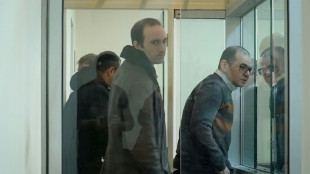 Azerbaijan pardons Frenchman after EU lifts sanctions on oligarchs

 Hadjar extends Red Bull contract for 2027 F1 season
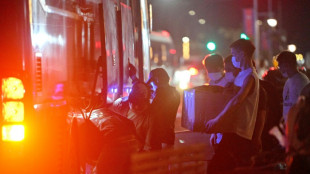
Argentina's biting economic crisis cannot keep tango enthusiasts from seeking out the haunting tunes of piano and concertina music at a dwindling number of dance halls in the capital.
For many, in fact, the deepening hardship is exactly what drives them to seek solace in the arms of a dance partner at places called "milongas" to the sway of a musical genre closely associated with working class struggle.
At a milonga, "you feel... a connection with yourself and with others. It's an investment for the heart and the spirit," explained 36-year-old tango dancer Andrea Censabella, a regular at the tiny dance club "La Tierra Invisible" in a middle class suburb of Buenos Aires.
"For me, this is a priority... So it (the economic crisis) doesn't stop me. For now," she told AFP.
The club is small -- only about 20 square meters (215 square feet) -- and fits around a dozen dancers. The tables are concocted of old doors resting on trestles.
It hosts one or two sessions a week, charging an entry fee of about 400 pesos (just under one US dollar at the fast-changing official exchange rate).
Many milongas in the capital have had to close amid spiraling inflation that reached 95 percent last year.
Fewer and fewer can afford to hire live musicians.
But dozens of increasingly lower-budget milongas continue to attract the tango faithful and the Argentine capital continues to host about 30 of them on average every night of the week -- from fancy to informal, traditional to queer, for all styles, all budgets.
"The milonga survives because it is a necessity. There has always been and will always be a crisis," tango pianist Nicolas di Lorenzo, a co-manager at "La Tierra Invisible," told AFP.
- People pay what they can -
"In the lyrics, tango has always reflected the crises and suffering of the working class" in a country that is no stranger to economic crashes, added historian Felipe Pigna.
A case in point: One of the most popular tangos, "Yira Yira," was written by Enrique Santos Discepolo about the widespread suffering that followed the Wall Street crash of 1929.
It tells the story of someone running out of hope and "mate" -- a herbal infusion very popular in Argentina -- walking around in worn-out shoes and desperate for money for food.
"With each crisis, the social tangos of Discepolo are updated. We listen to tangos that are almost 100 years old, and unfortunately they are still relevant," Pigna told AFP.
At some Buenos Aires milongas, the entry fee of about $5 on average has been halved, even completely eliminated for those who cannot afford it.
There are also free, open-air events such as "La Otra" (The Other) hosted under trees on the square outside parliament -- where participants dance under the gaze of homeless people camped out nearby.
"We are here to offer a free, inclusive space where we can dance tango without major expense... because right now people are finding it difficult to spend money," said Valentin Rivetti, a 24-year-old tango dancer and instructor.
"We pass around a hat, people put in what they want, what they can."
W.Morales--AT